

[Mar 13, 2022] UpdateDumps 3V0-643 Exam Practice Test Questions (Updated 23 Questions)
Pass VMware 3V0-643 Exam Info and Free Practice Test
Objective 1.2 - Prepare Host Clusters for Network Virtualization:
- Add/Remove Hosts from cluster
- Configure VXLAN Transport parameters according to a deployment plan
- Configure the appropriate teaming policy for a given implementation
- Prepare a cluster for NSX
- Prepare vSphere Distributed Switching for NSX
For more info read reference:
Objective 1.3 - Configure and Manage Transport Zones
- Remove clusters from Transport Zones
- Add clusters to Transport Zones
- Create Transport Zones according to a deployment plan
- Configure the control plane mode for a Transport Zone
2. Create and Manage VMware NSX Virtual Networks
Objectives covered by this section:
NEW QUESTION 13
Management requires you to build a new logical topology for a new application that will include a hardware search appliance (HAS). The new application must contain a web tier and database tier on separate IP domains. Use the existing App01-DLR to complete the task.
Requirements:
vCenter: vcsa-01.corp.local
Credentials: [email protected] / VMware1!
vDS: vds-mgt-edge-a
Existing DLR Name: App01-DLR
New object prefix - App01
New object suffic - New
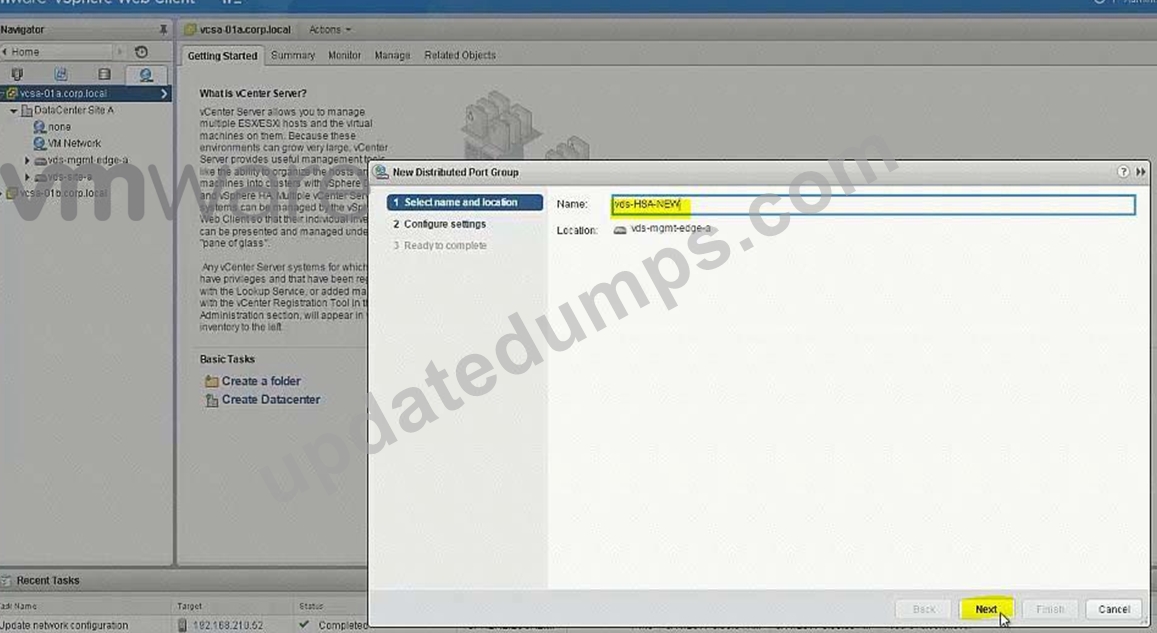
Create a new distributed port group for this task named vds-HSA-NEW.
The HAS must reside on the same IP subnet as the database.
The new application must contain a web tier and database tier on separate domains to be used at a future date.
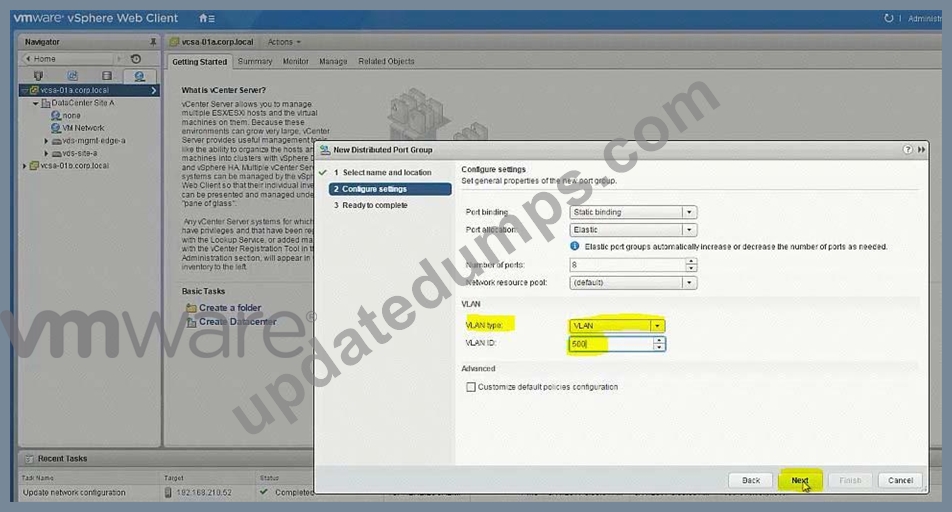
Once deployed the HAS will be connected to a network with VLAN ID 500.
The proper physical switch ports for the uplinks have already been trunked to include VLAN 500.
VLANs configured in the compute racks are isolated to a single rack.
Any objects/items created must be named with a prefix of App01 and a suffix containing their function with NEW (for example: App01-Function-NEW) NOTE:
The hardware appliance and application virtual machines have not been deployed. Attempts to connectivity to the appliance will not succeed.
HOL LAB for Practice:
Bridging and other questions 7, 8, 9 and LAB - HOL-1925-02 Module 1
See the explanation part for complete solution.
Answer:
Explanation:
SOLUTION:
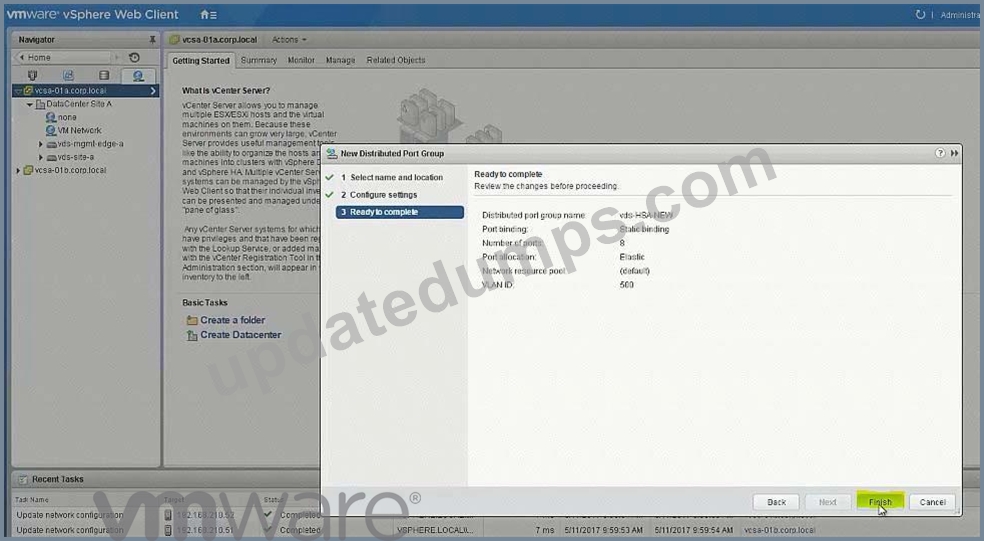
Step 1: From SiteA vCenter web client -> Networking -> Data Center SiteA -> create a new distribution port group named vds-HAS-NEW with VLAN ID 500 in vds-mgmt-edge.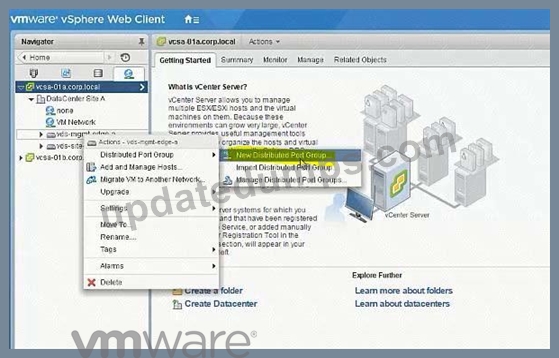
Create LS on 192.168.110.15 = App01-WebTier-NEW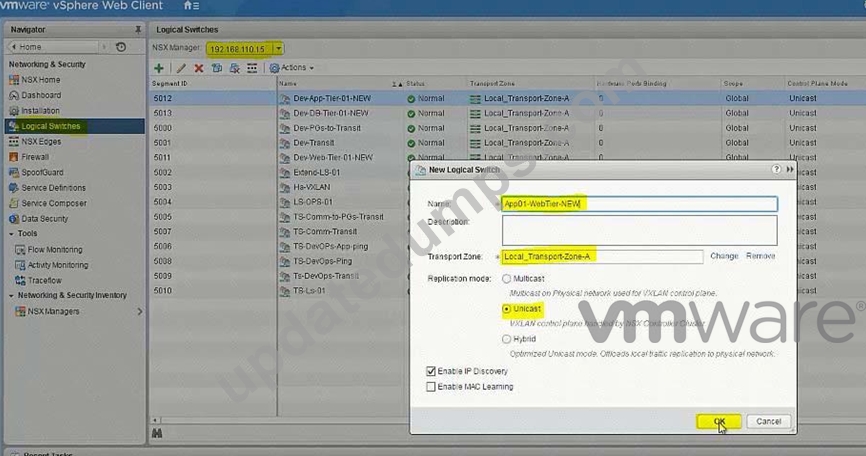
Create LS on 192.168.110.15 = App01-DBTier-NEW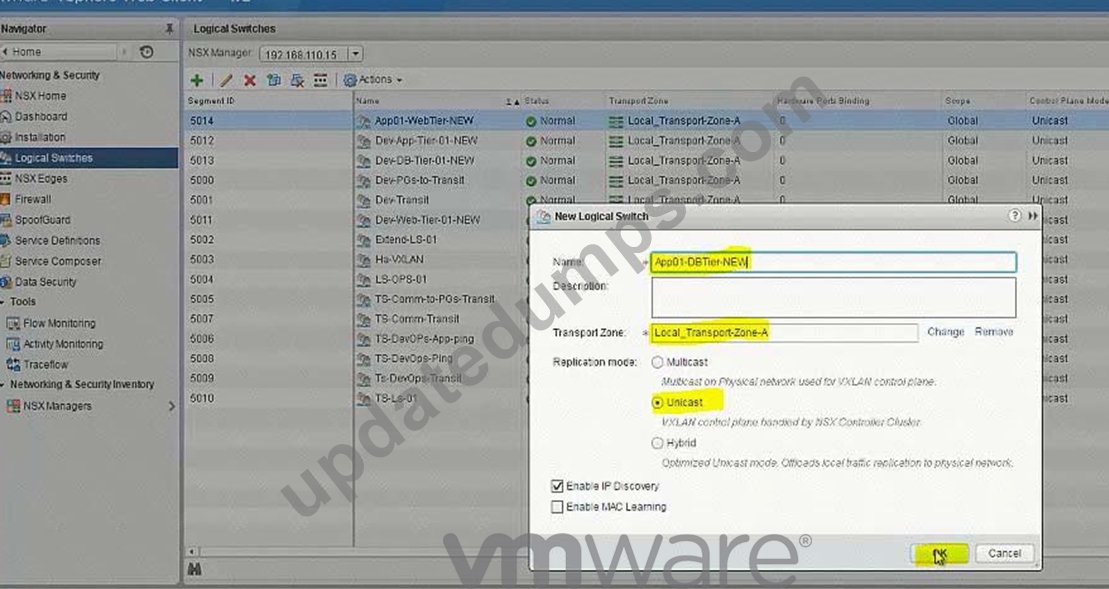
NSX Edges -> App01-DLR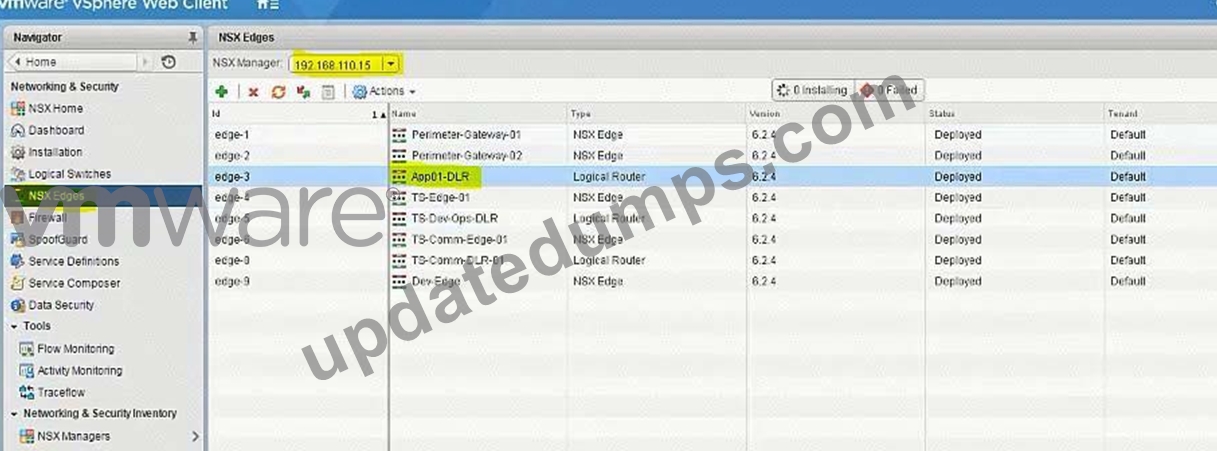
8) got NsX Edge and select App01-DLR. select Manage, select settings and click on + Sign (9) Enter interface name App01-Web-New, select type internal. select App01-Webtier-New LS Enter ip address 192.168.1.1/24. repeat the same steps for App01-DBtier-New but take ip addres
192.168.2.1 /24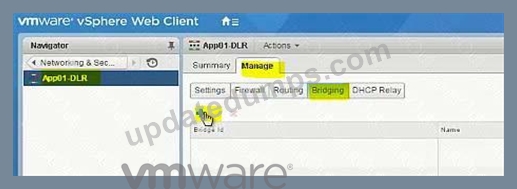
Name: App01-Bridge-NEW
Logical Switch: App01-DBTier-NEW
Distributed Port Group: vds-HAS-NEW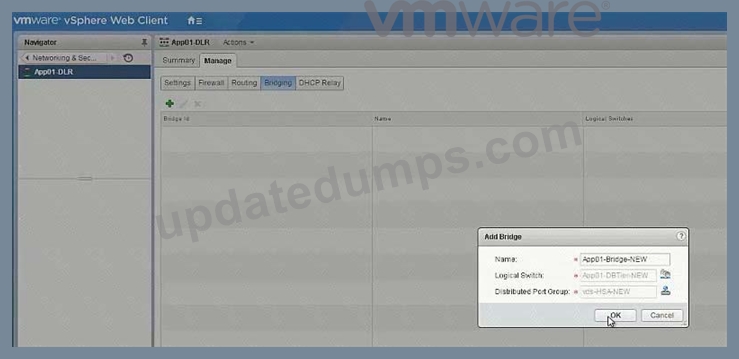
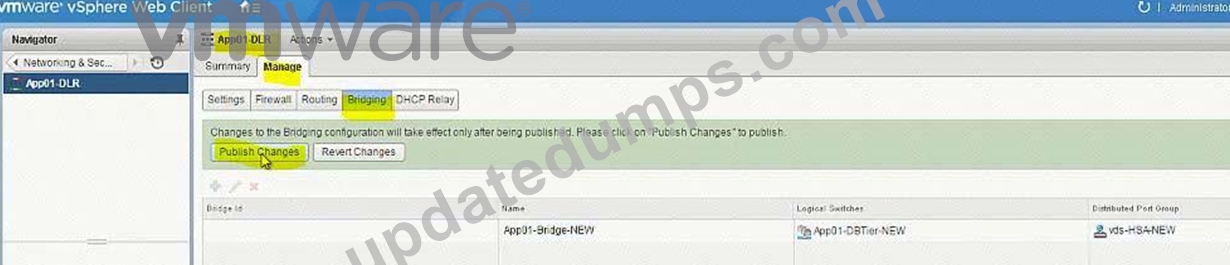
(11) be sure under App01-DB-New the bridging is enable.
NEW QUESTION 14
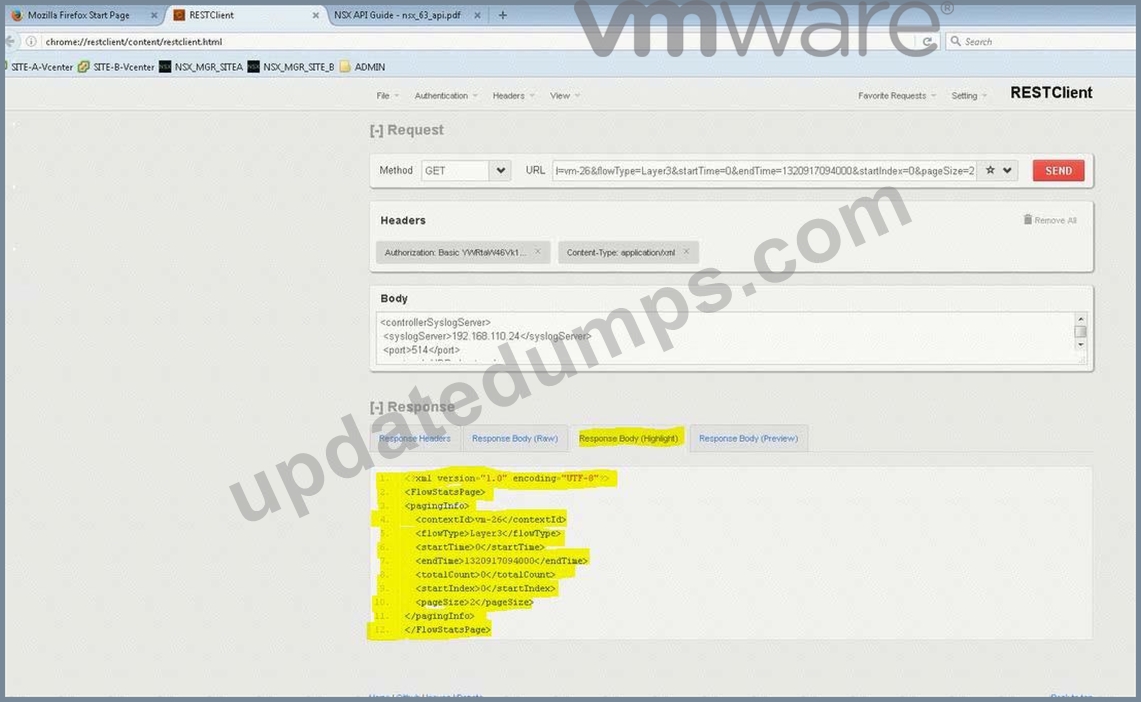
You have been tasked with modifying an existing NSX API call to capture flow information for an organization. The existing API call is located on the ControlCenter desktop in a file name flowapi.txt.
The API call should be modified to collect Layer3 flow statistics between the dev-web-01a and the ControlCenter virtual machine.
Requirements:
vCenter: vcsa01a.corp.local
Credential: [email protected] / VMware1!
File location: flowapi.txt on the desktop of ControlCenter.
Modify and Save the existing API call to capture the requested information.
A REST Client has been added to Chrome and Firefox for this exercise.
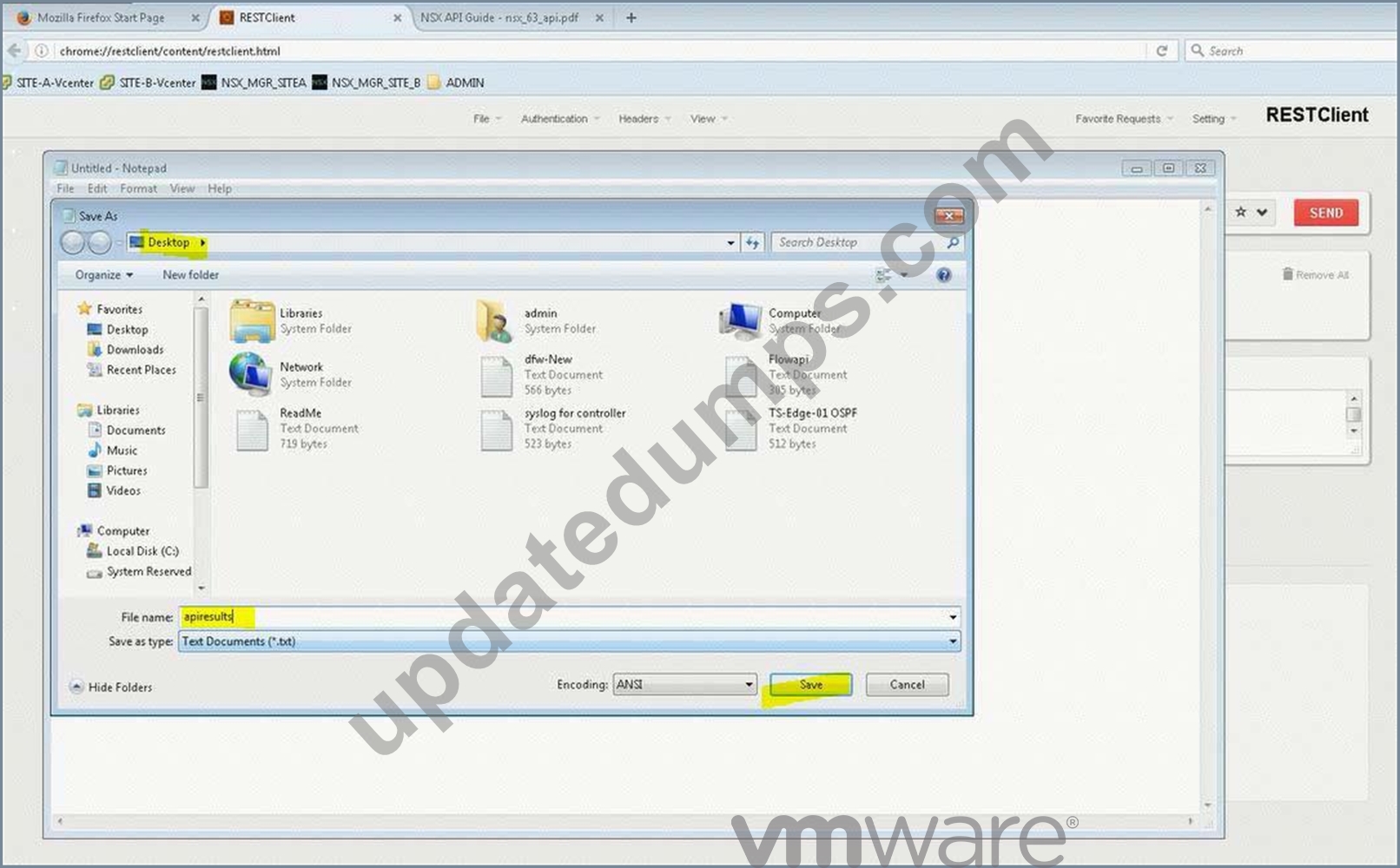
Output the Response Body to a text file called apiresults.txt on the desktop of ControlCenter.
******************flowapi.txt***********************
https://<nsxmgr-ip>/api/2.1/app/flow/flowstats?contextId=datacenter-21&flowType=TCP_UDP&startTime
=0&endTime=
https://192.168.110.15/api/2.1/app/flow/flowstats?contextId=vm-26&flowType=Layer3&startTime=0&endT ime=1320917094000&
******************flowapi.txt***********************
HOL LAB for Practice:
See the explanation part for complete solution.
Answer:
Explanation:
SOLUTION:
Access the MOB by entering the following URL
https://vcsa-01a.corp.local/mob
[email protected]
VMware1!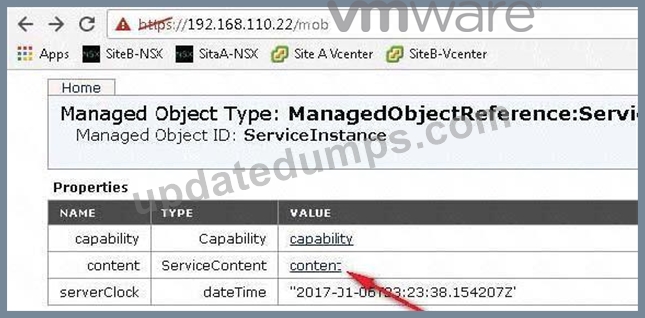
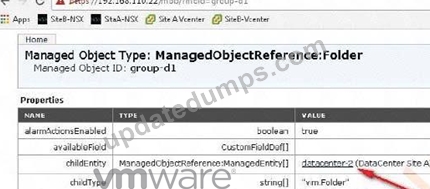
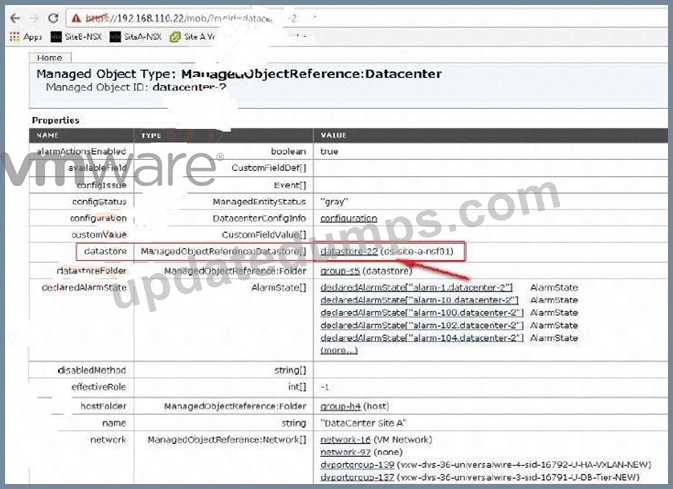
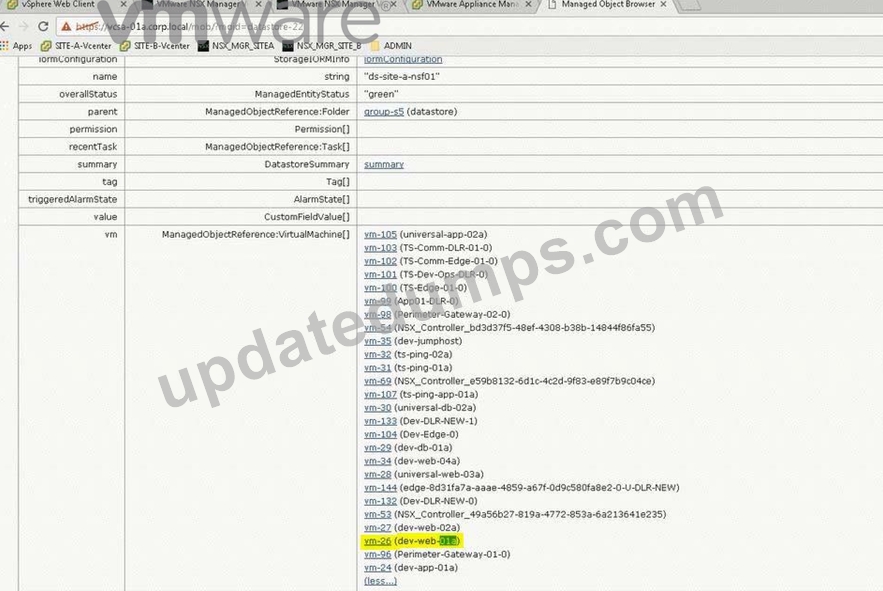
Note down the vm number of dev-web-01a (in exam its like vm-216)
Then update flowapi.txt as
******************flowapi.txt***********************
https://<nsxmgr-ip>/api/2.1/app/flow/flowstats?contextId=datacenter-21&flowType=TCP_UDP&startTime
=0&endTime=
https://192.168.110.15/api/2.1/app/flow/flowstats?contextId=vm-216&flowType=Layer3
&startTime=0&endTime=1320917094000&startIndex=0&pageSize=2
******************flowapi.txt***********************
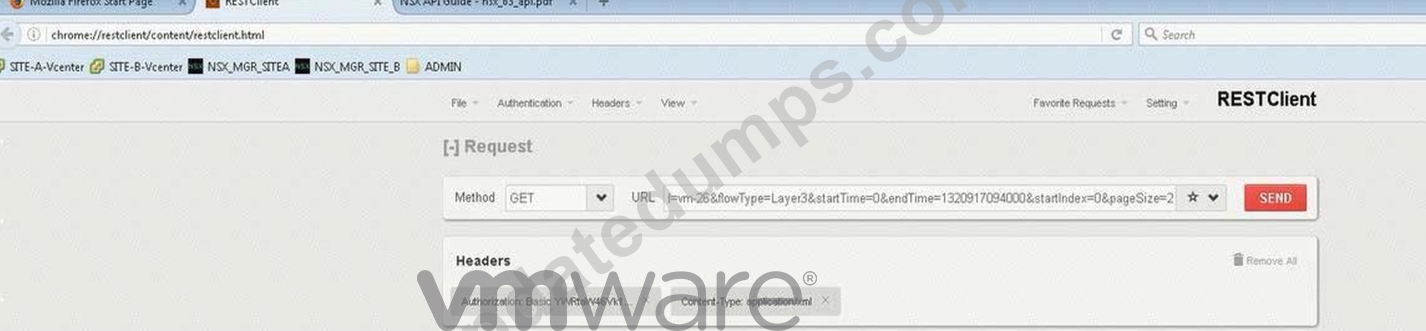
Then go to RESTClient.
GET
https://192.168.110.15/api/2.1/app/flow/flowstats?contextId=vm-216&flowType=Layer3
&startTime=0&endTime=1320917094000&startIndex=0&pageSize=2
SEND
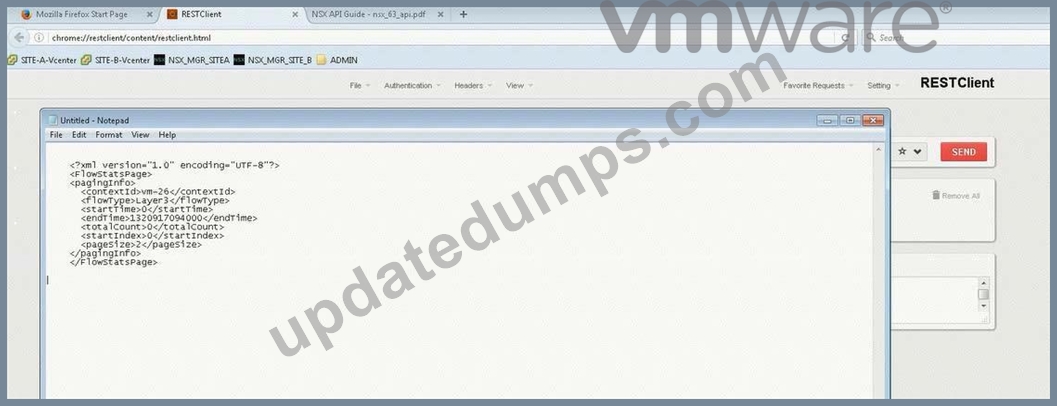
Copy the content of "Response Body"
Paste in notepad and Save As "apiresults.txt"on the desktop of ControlCenter.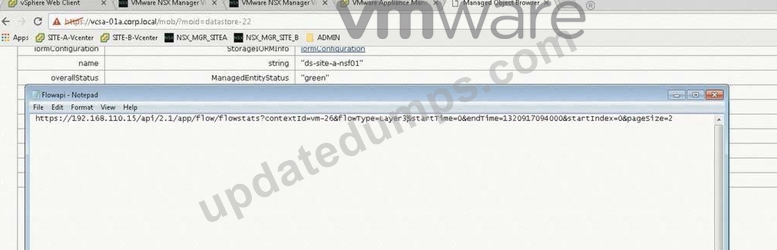
NEW QUESTION 15
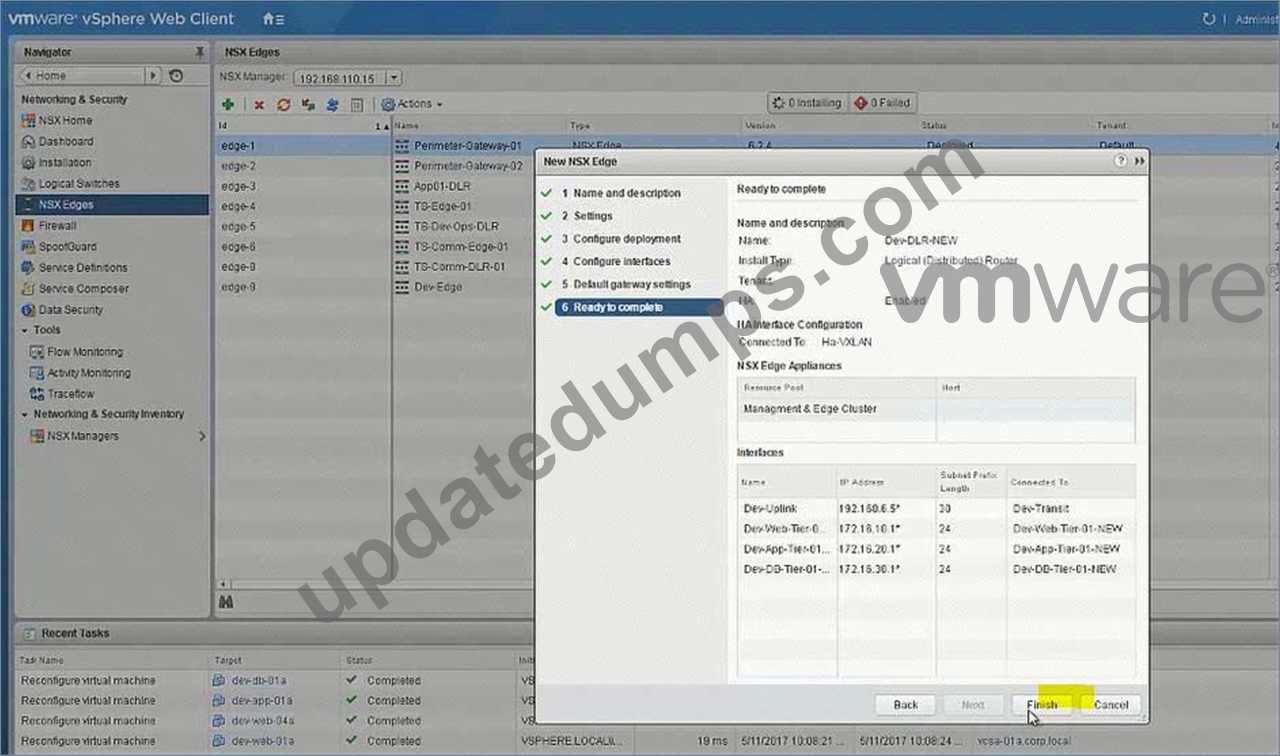
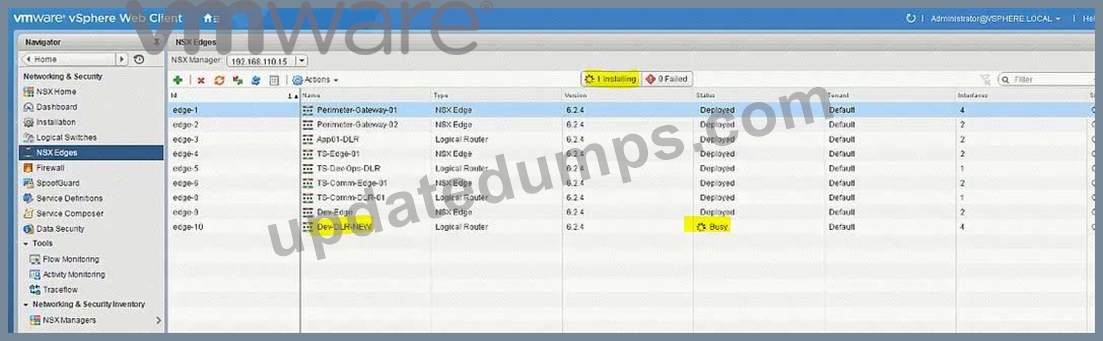
Configure the Layer 3 connectivity between the newly created Dev-segments by assigning them to a new DLR named Dev-DLR-NEW.
Requirements:
vCenter: vcsa-01a.corp.local
Ccredentials: [email protected] . VMware1!
Default GW for Dev-subnets:
Dev-Web-Tier-01-NEW172.16.10.1/24
Dev-App-Tier-01-NEW172.16.20.1/24
Dev-DB-Tier-01-NEW172.16.30.1/24
DLR Settings:
DLR Name: Dev-DLR-NEW
Uplink IP Address: 192.168.6.5/30
Interface: Dev-Transit
Password: VMware1!WMware1!
Cluster: Management & Edge Cluster
Ensure east-west routing has been optimized.
The control plane failover should begin 15 seconds on logical switch HA-VXLAN.
Ensure secure shell is available.
Connect the Web, App and DB virtual machines to their respective dev tiers.
Dev-web-01, Dev-web-02a, Dev-web-04a
Dev-app-01a
Dev-db-01a
HOL LAB for Practice:
also deploy Distributed logical router DLR in the same way the lab.
See the explanation part for complete solution.
Answer:
Explanation:
SOLUTION:
Add VMs to respective Logical Switches: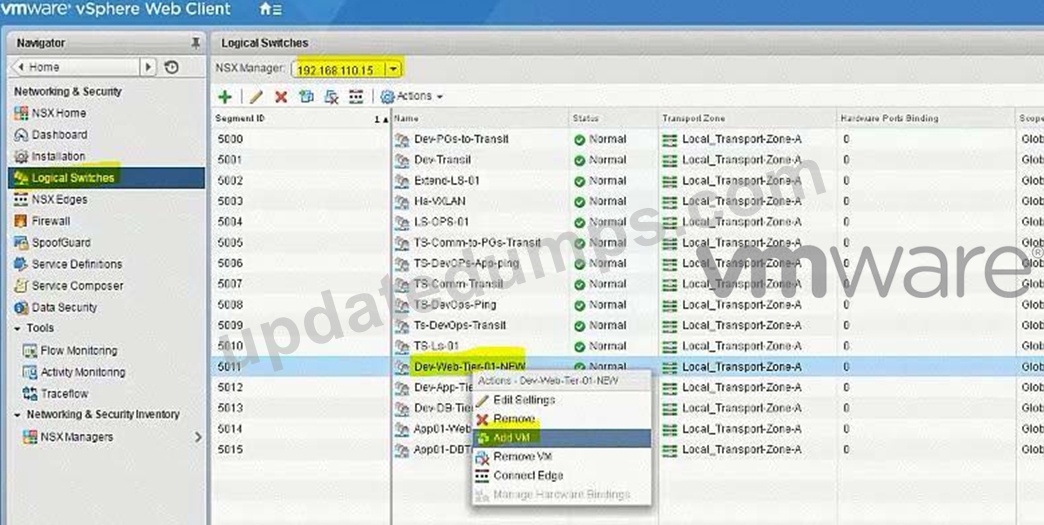
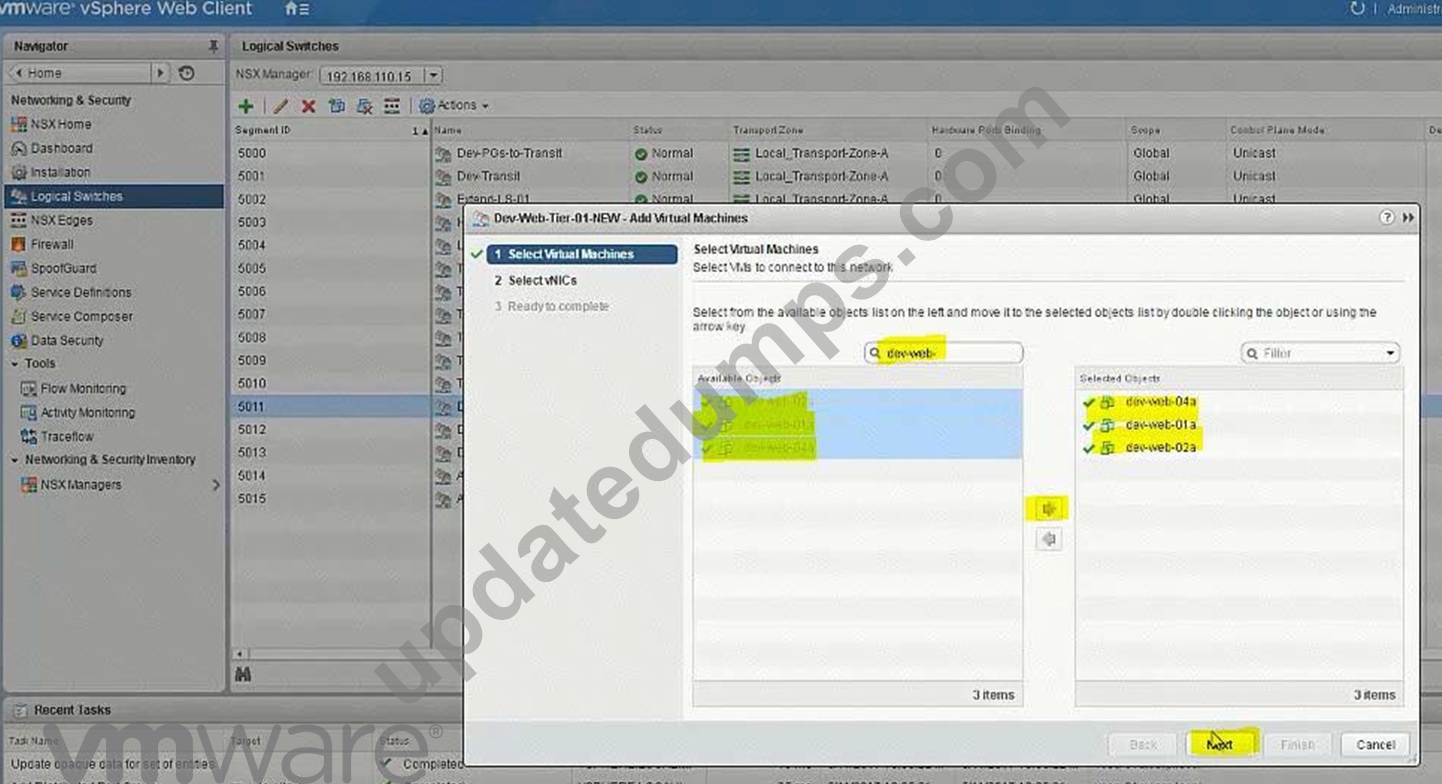
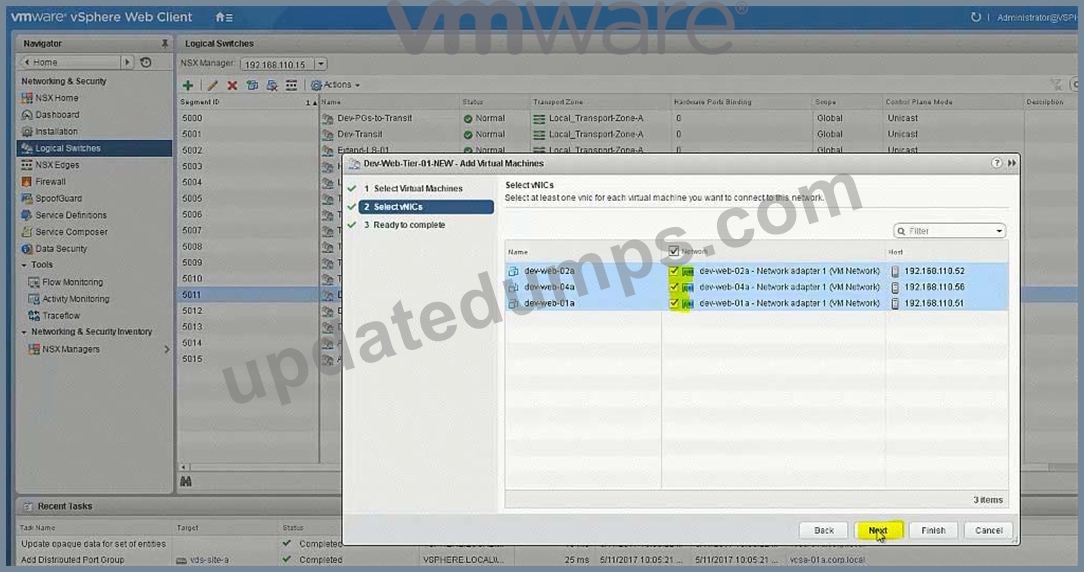
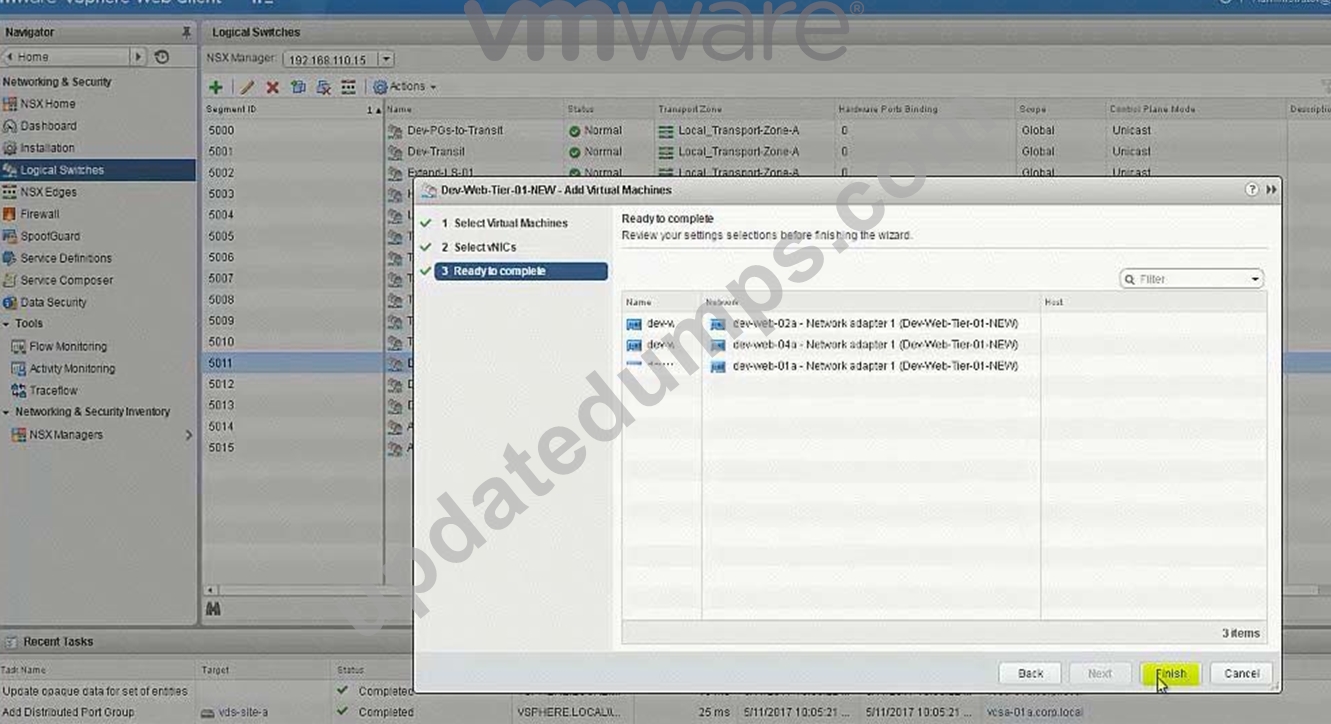
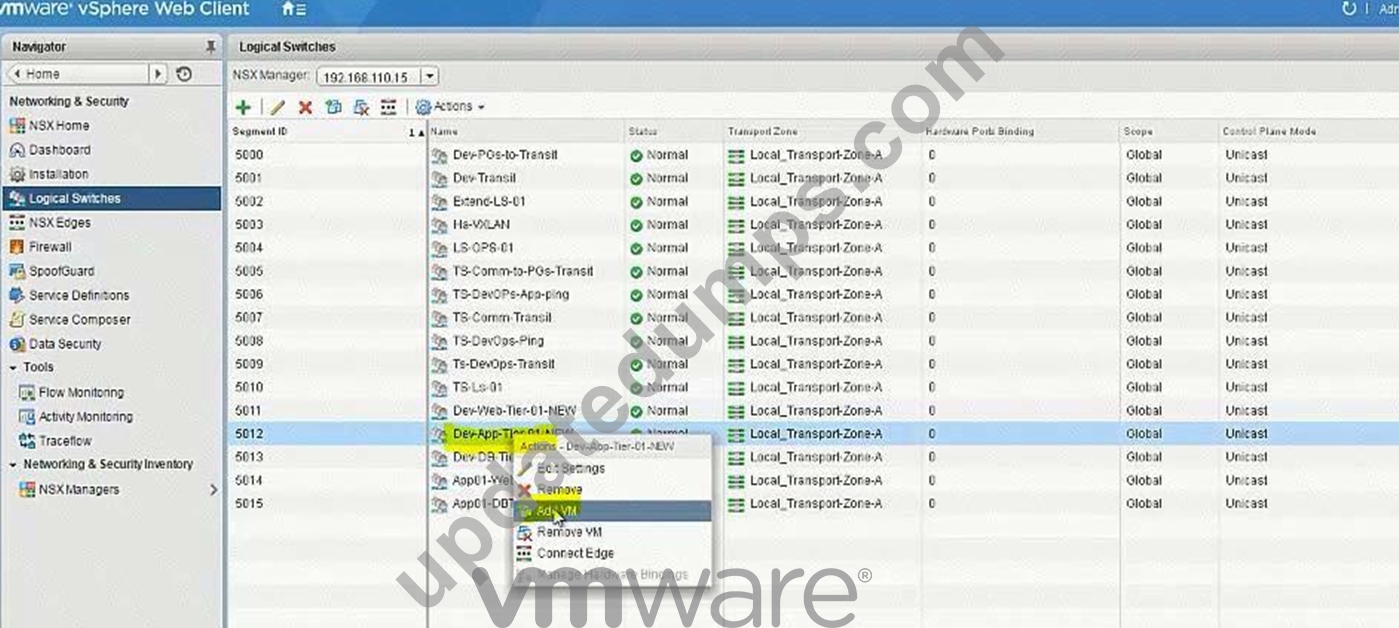
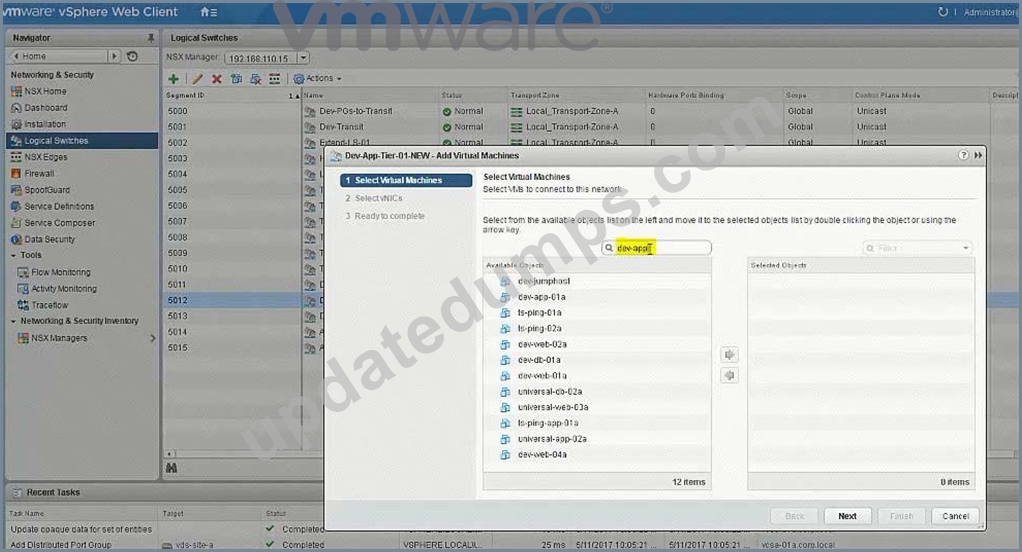
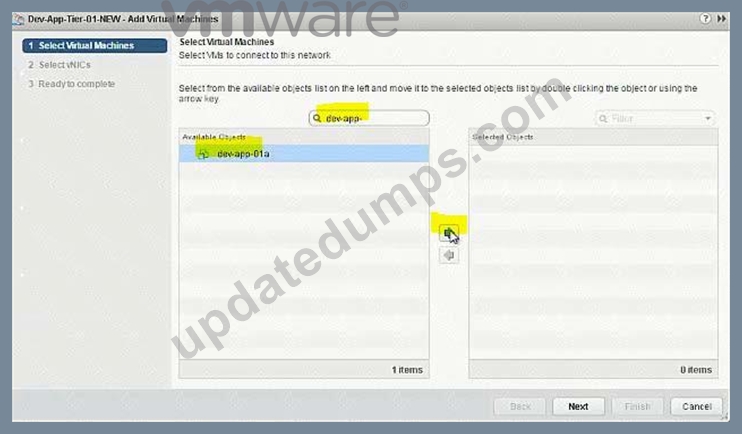
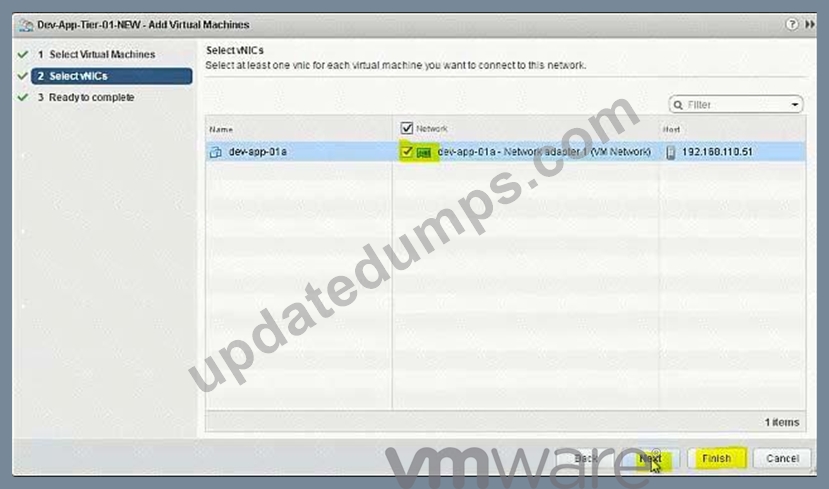
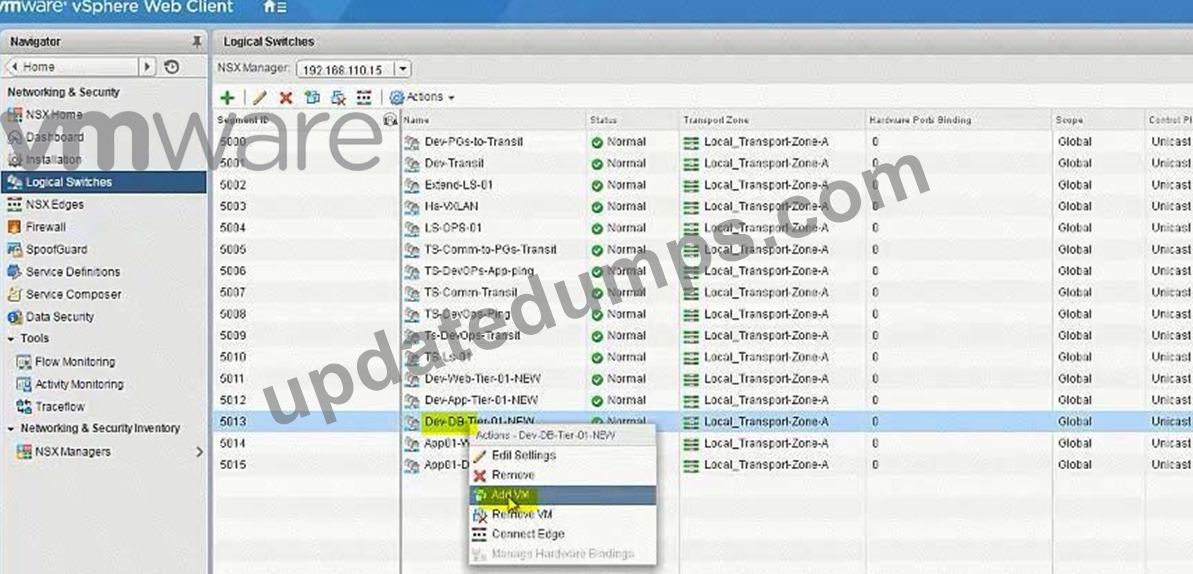
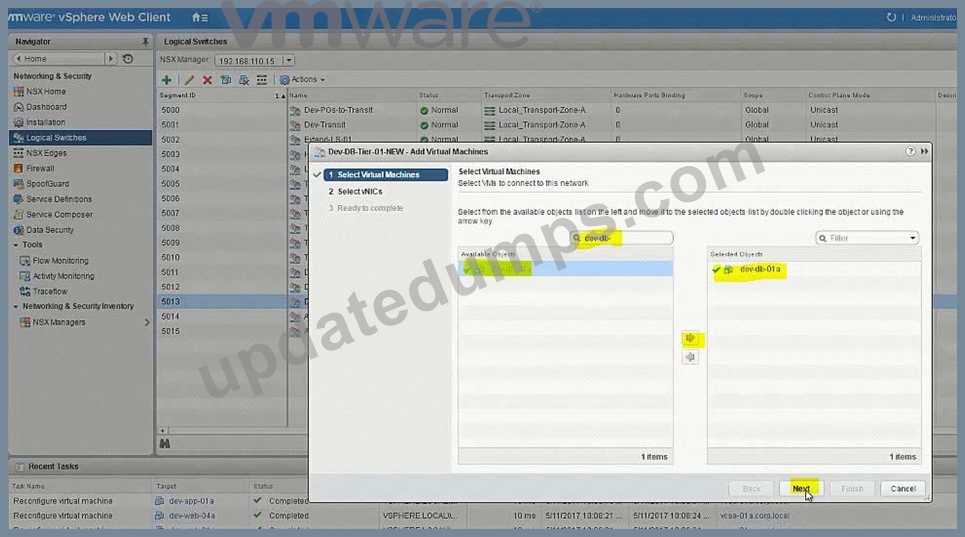
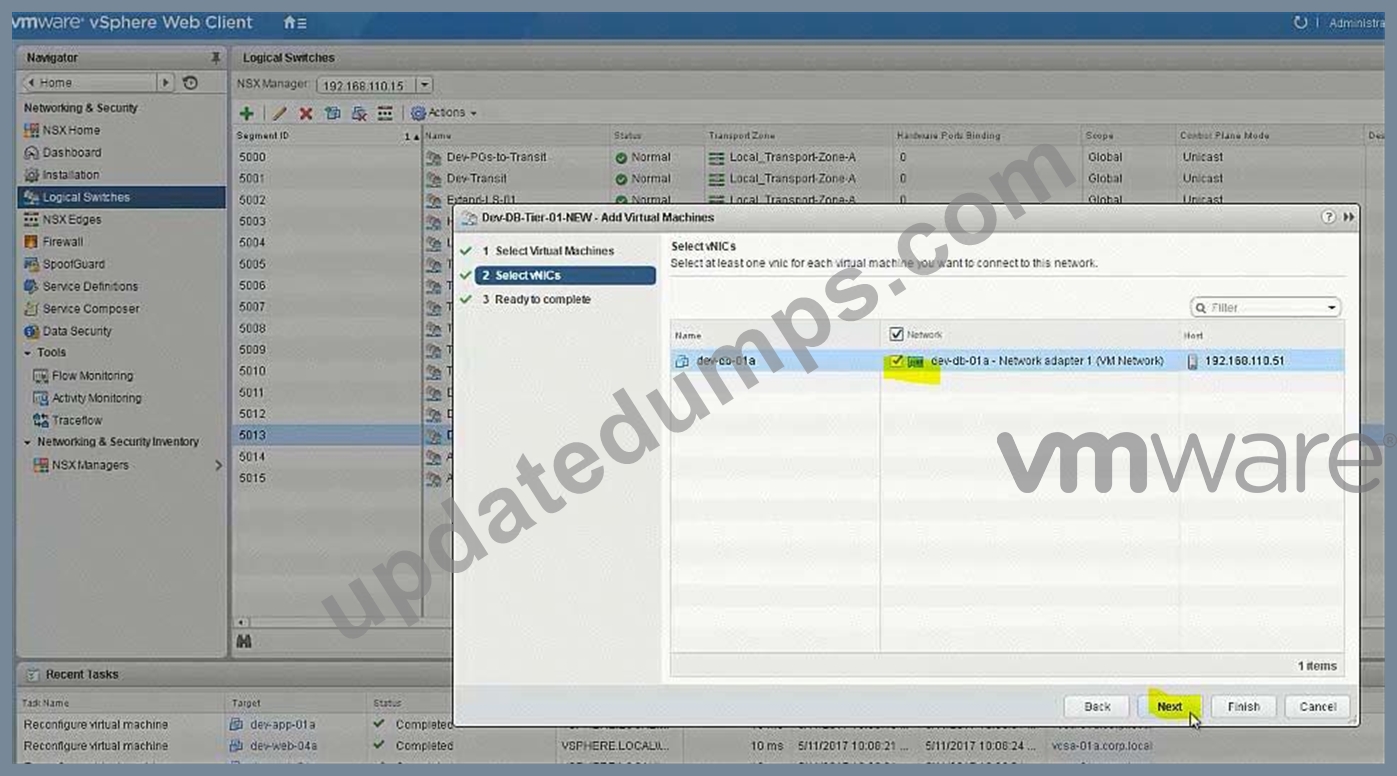
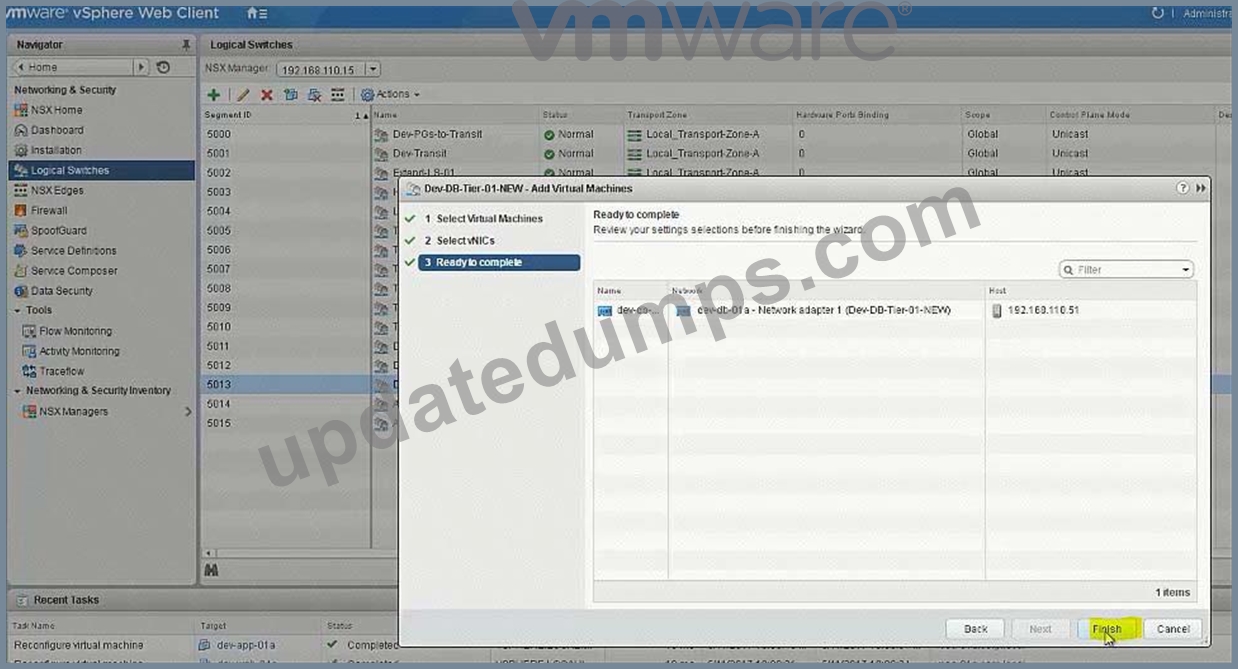
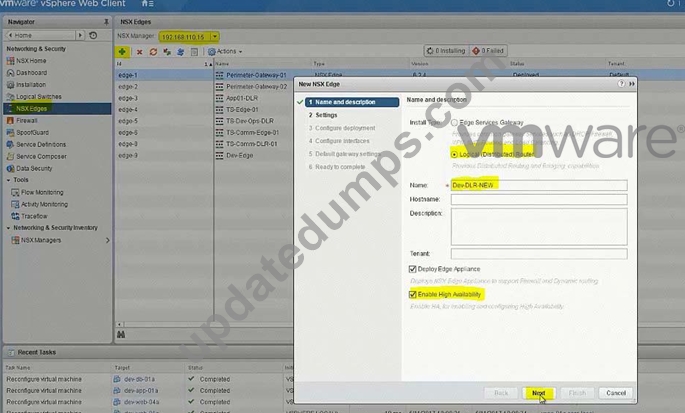
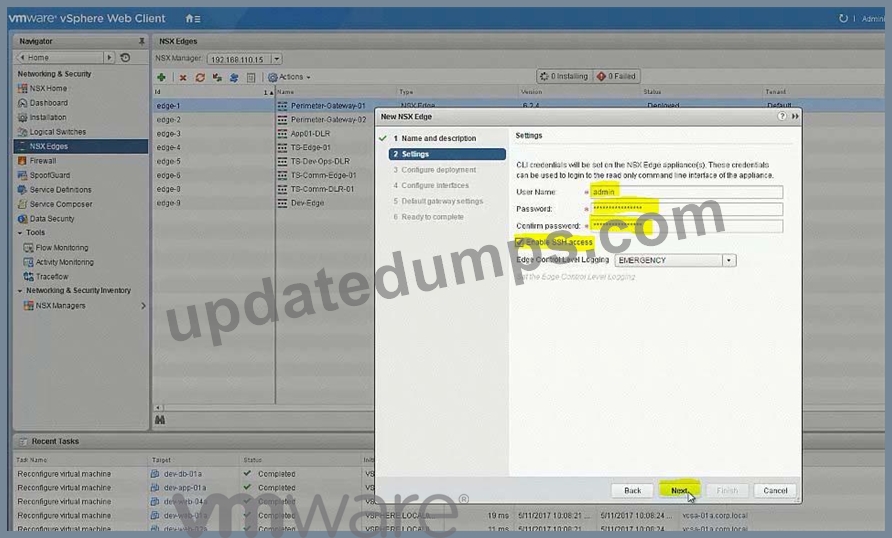
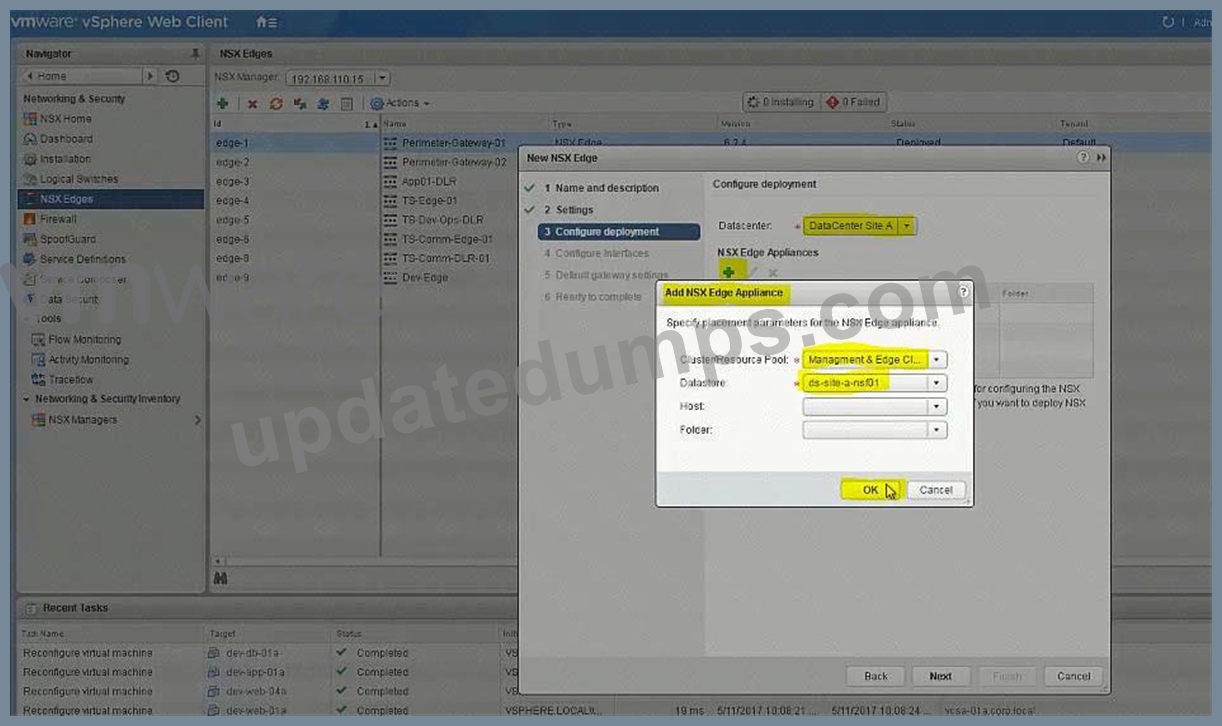
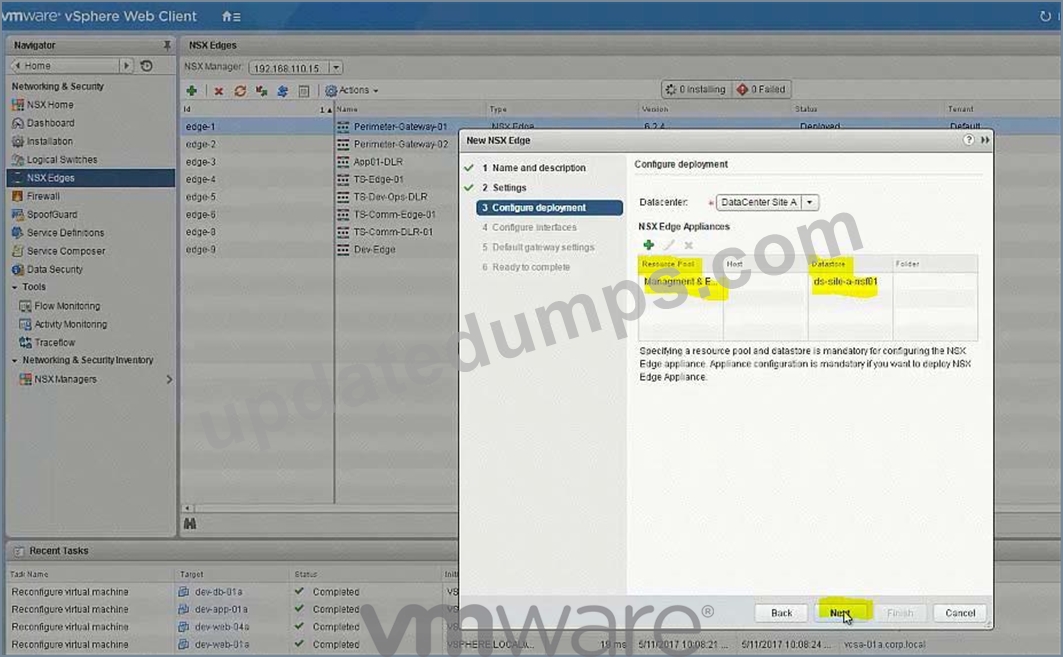
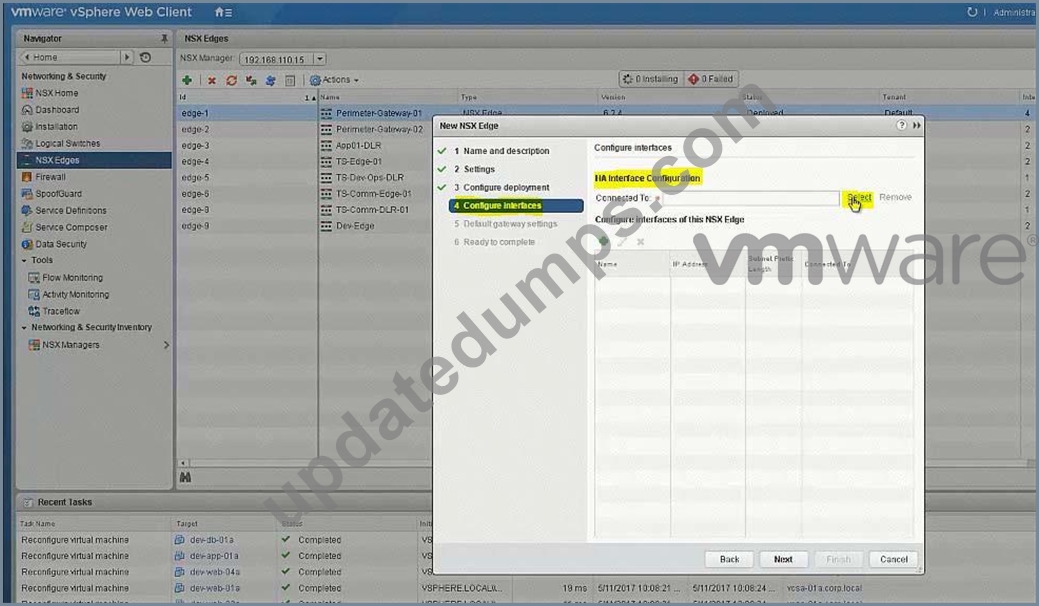
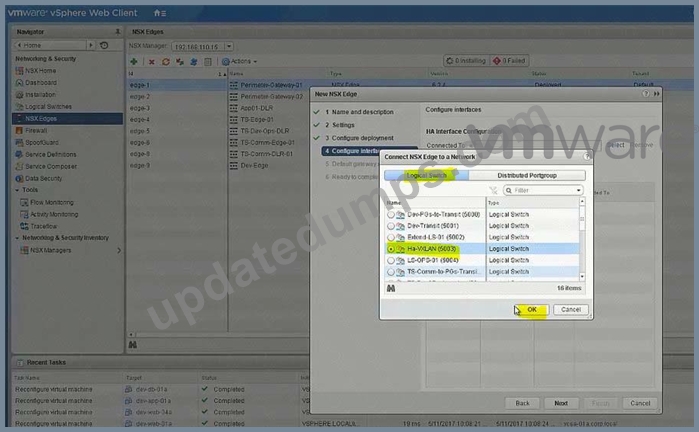
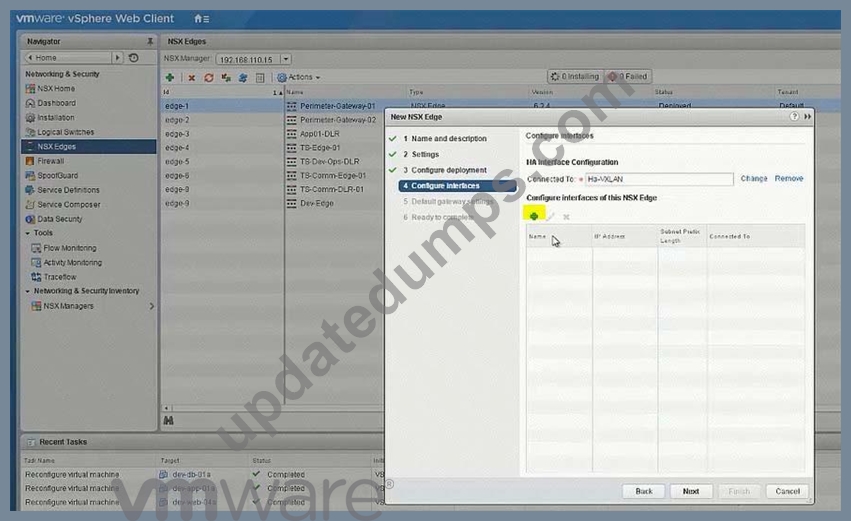
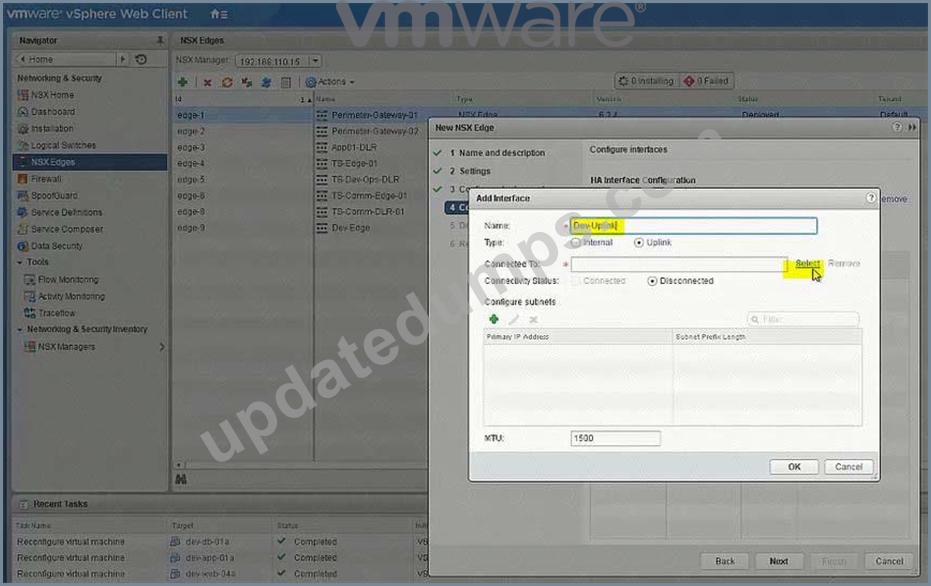
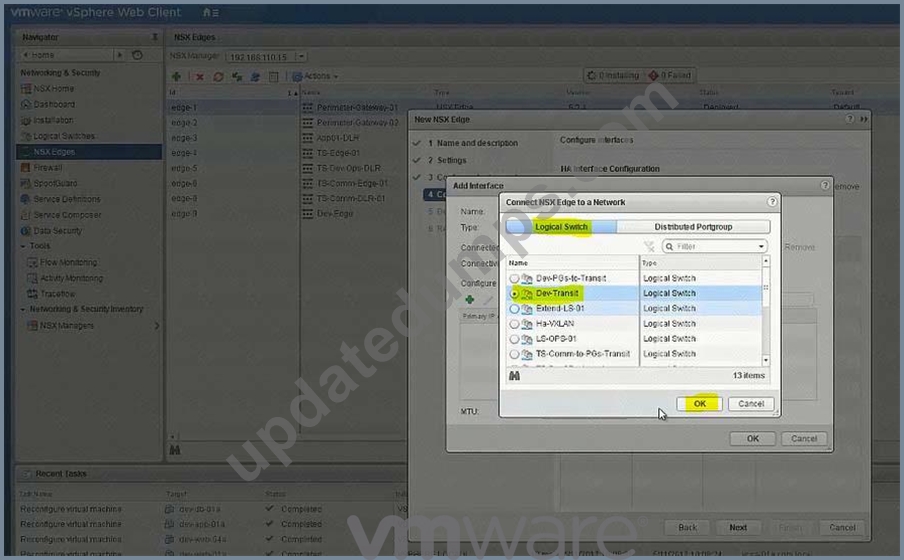
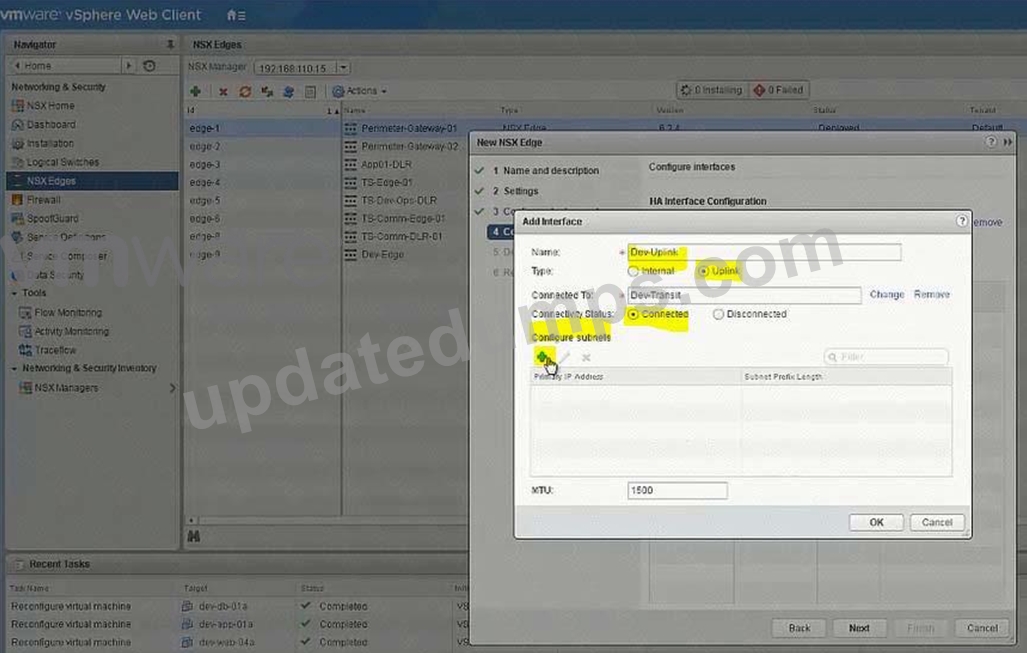
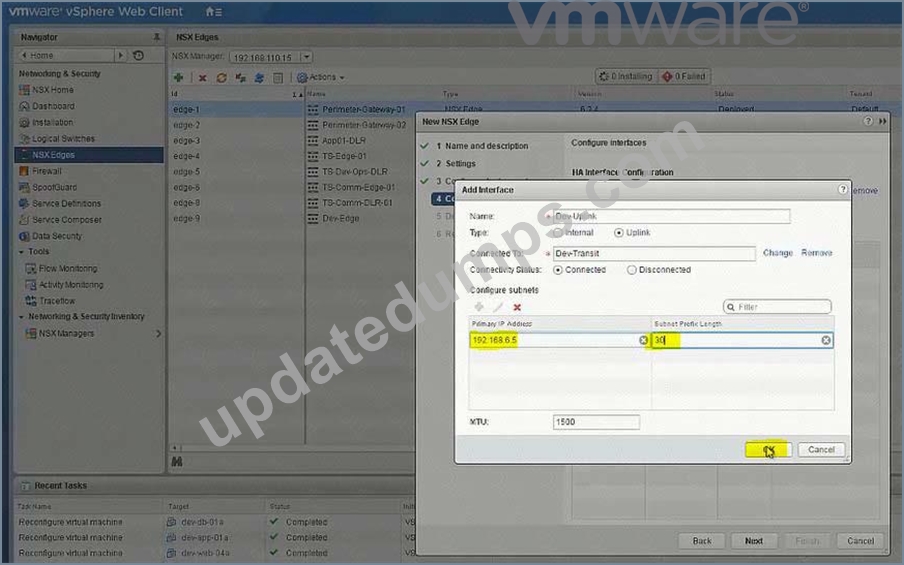
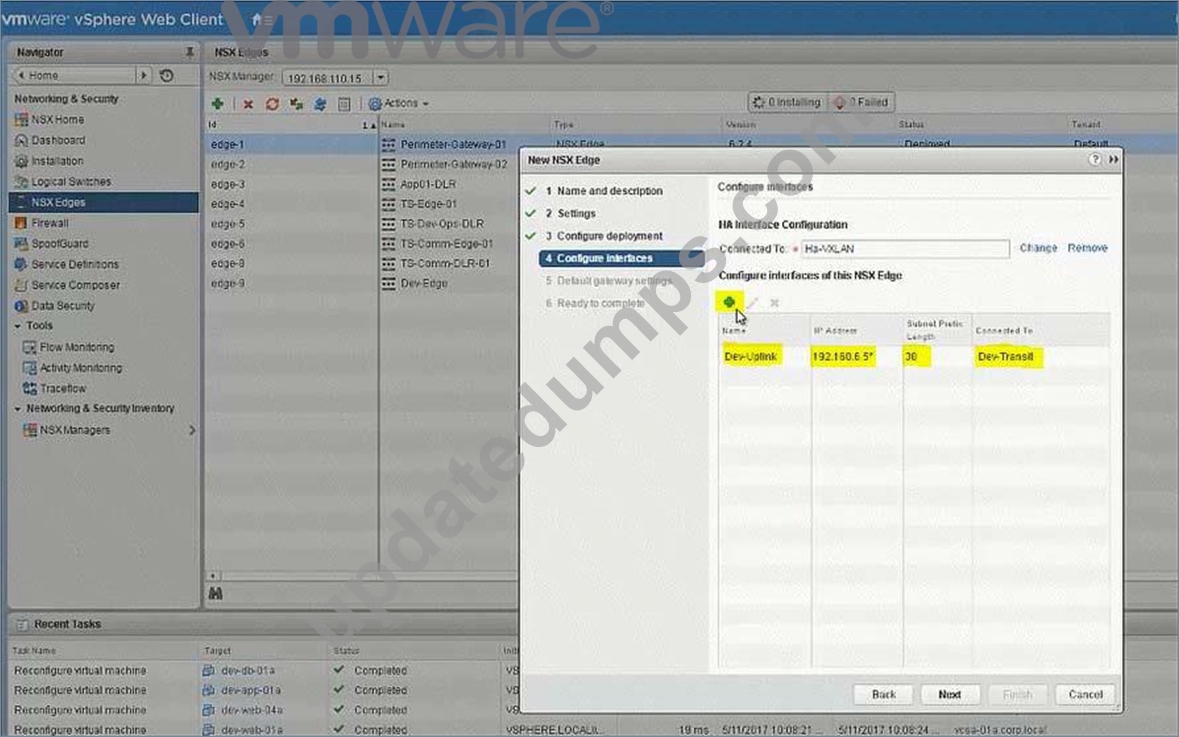
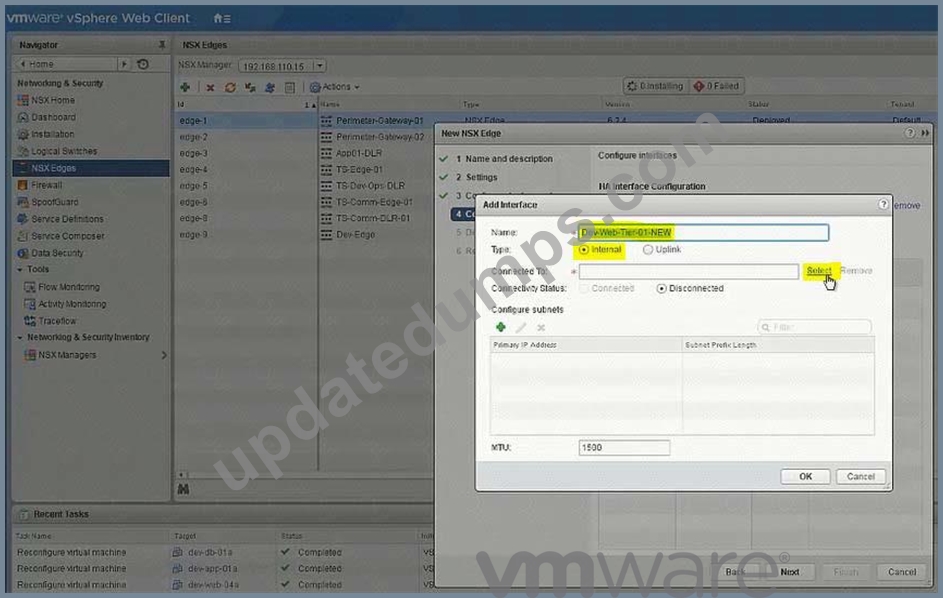
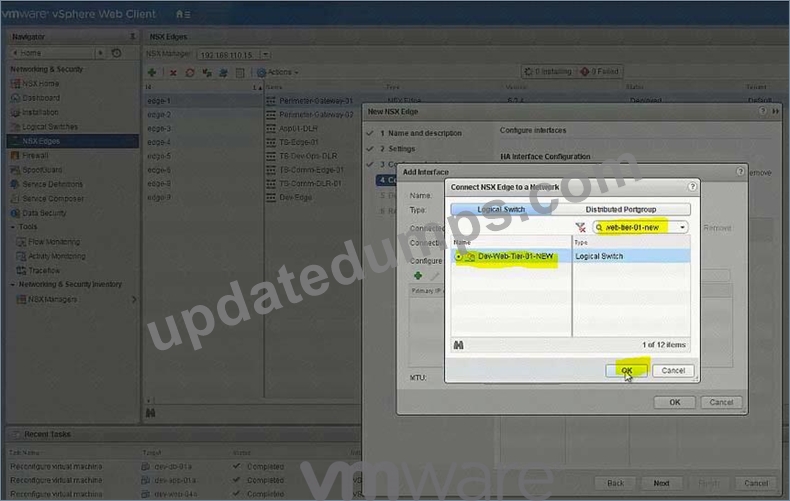
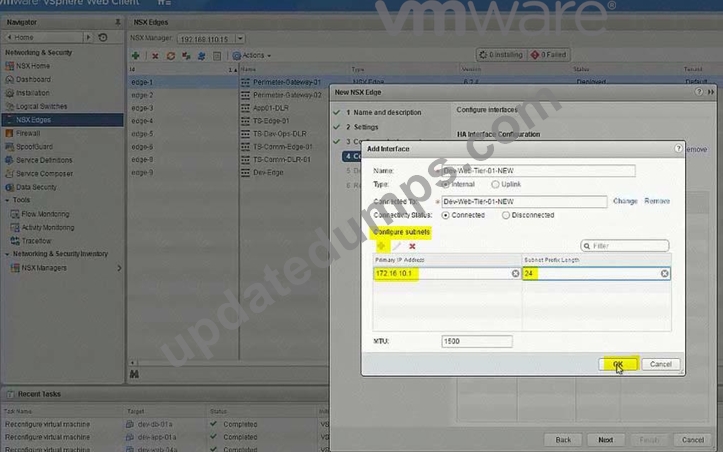
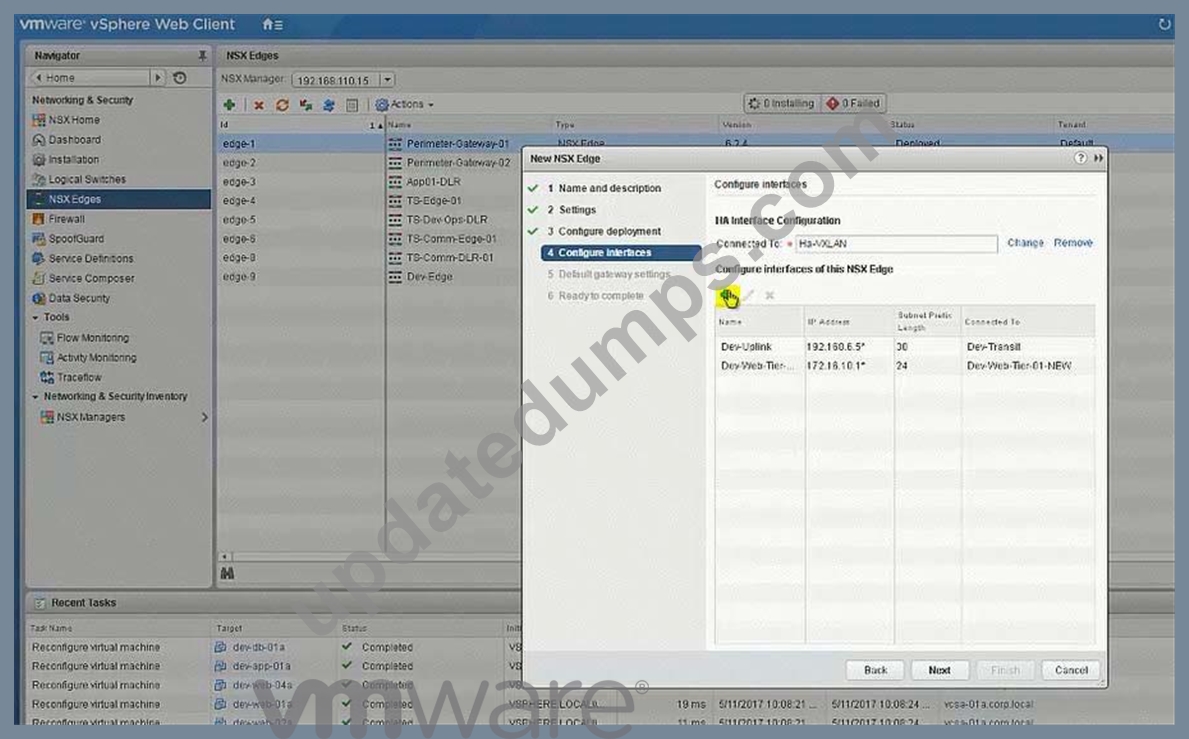
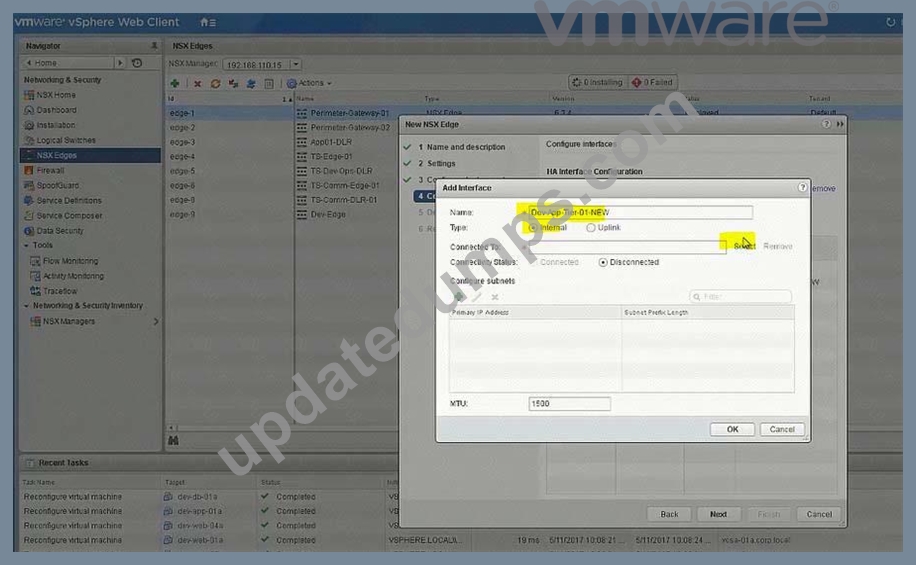
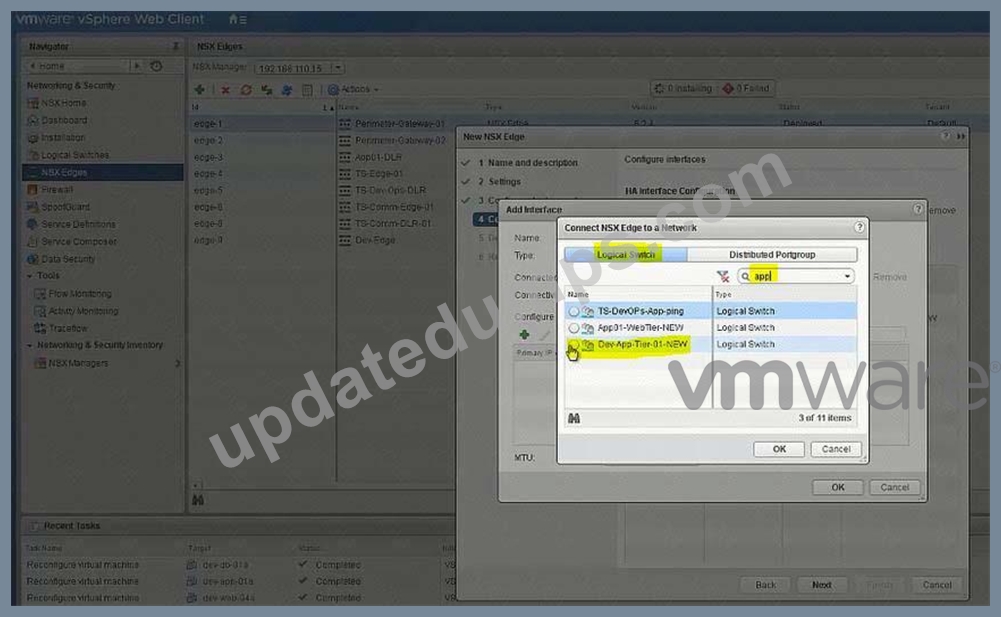
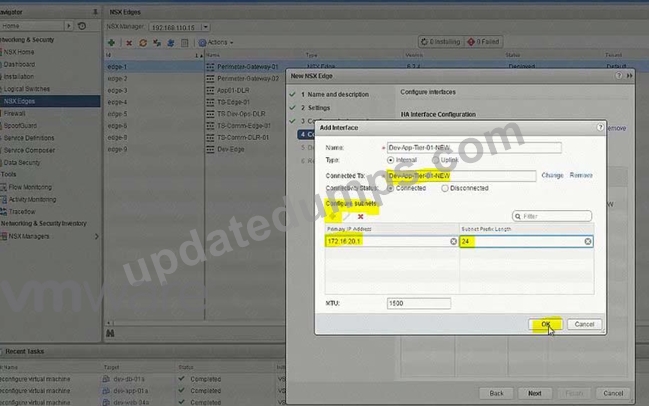
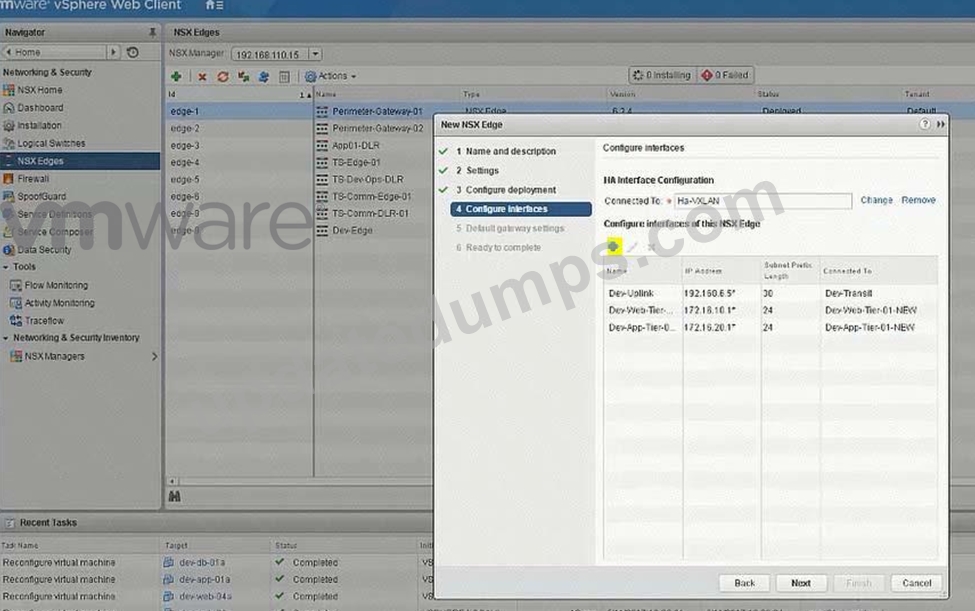
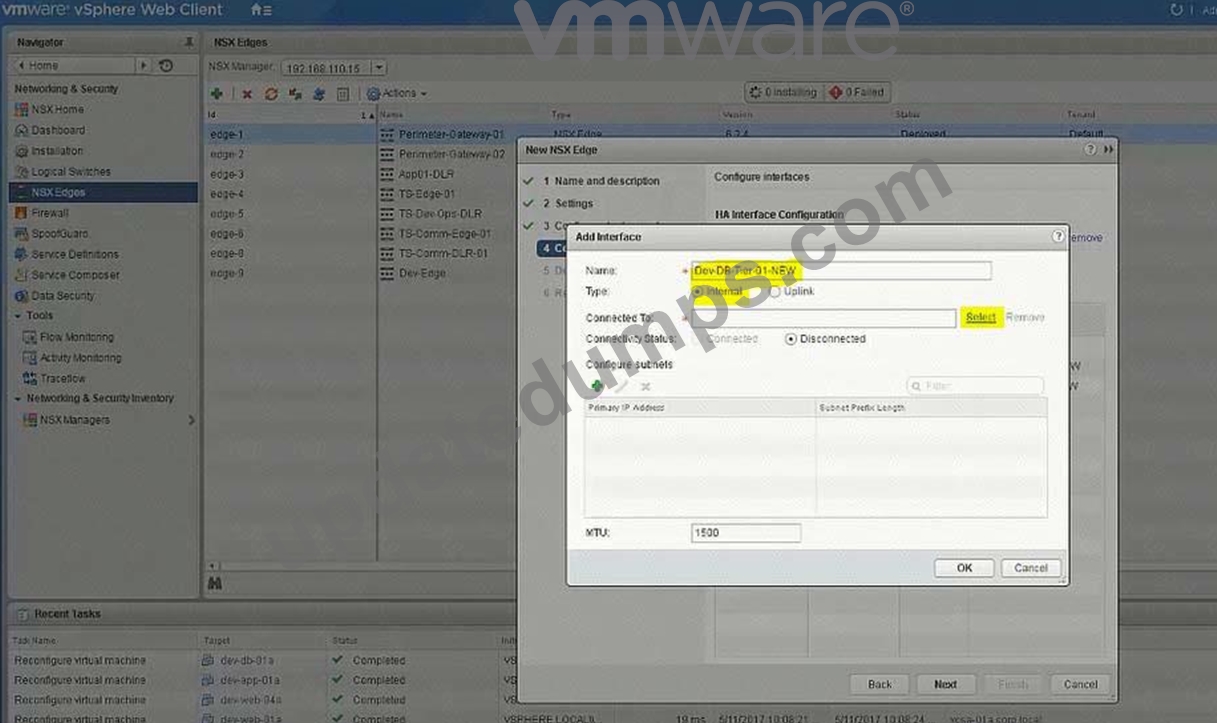
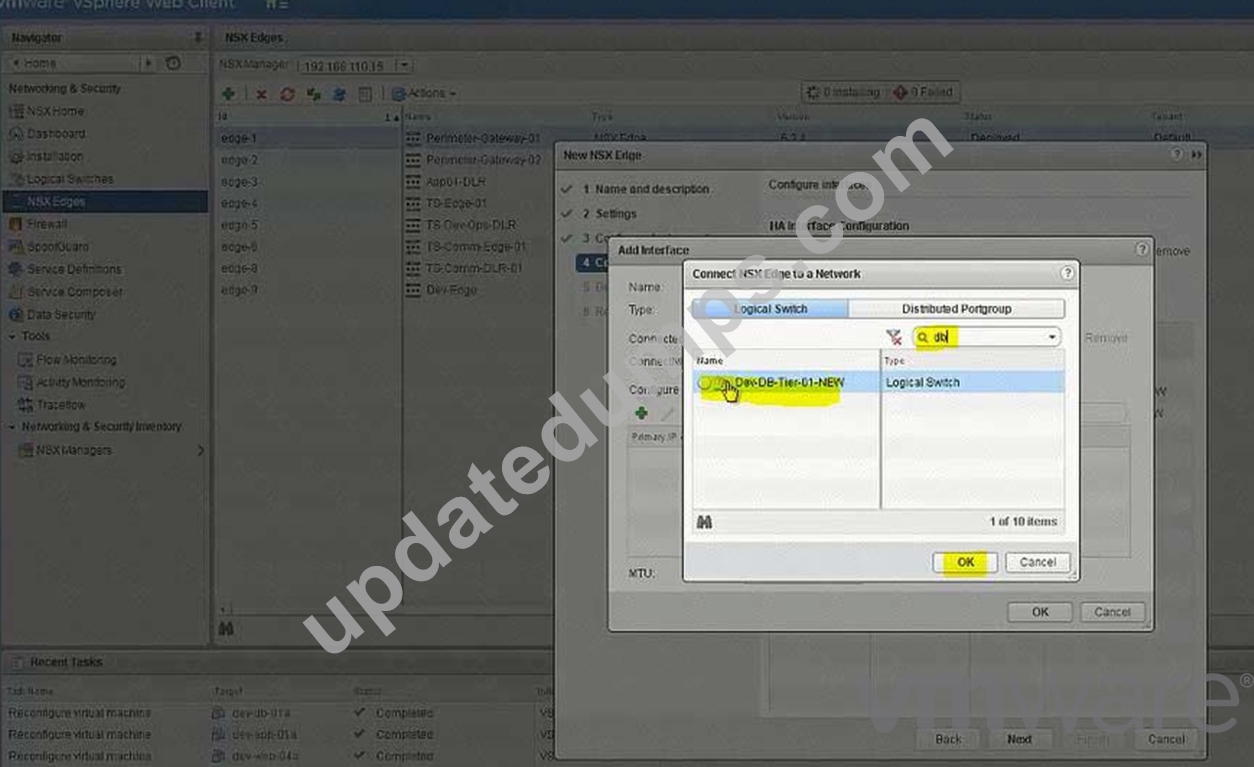
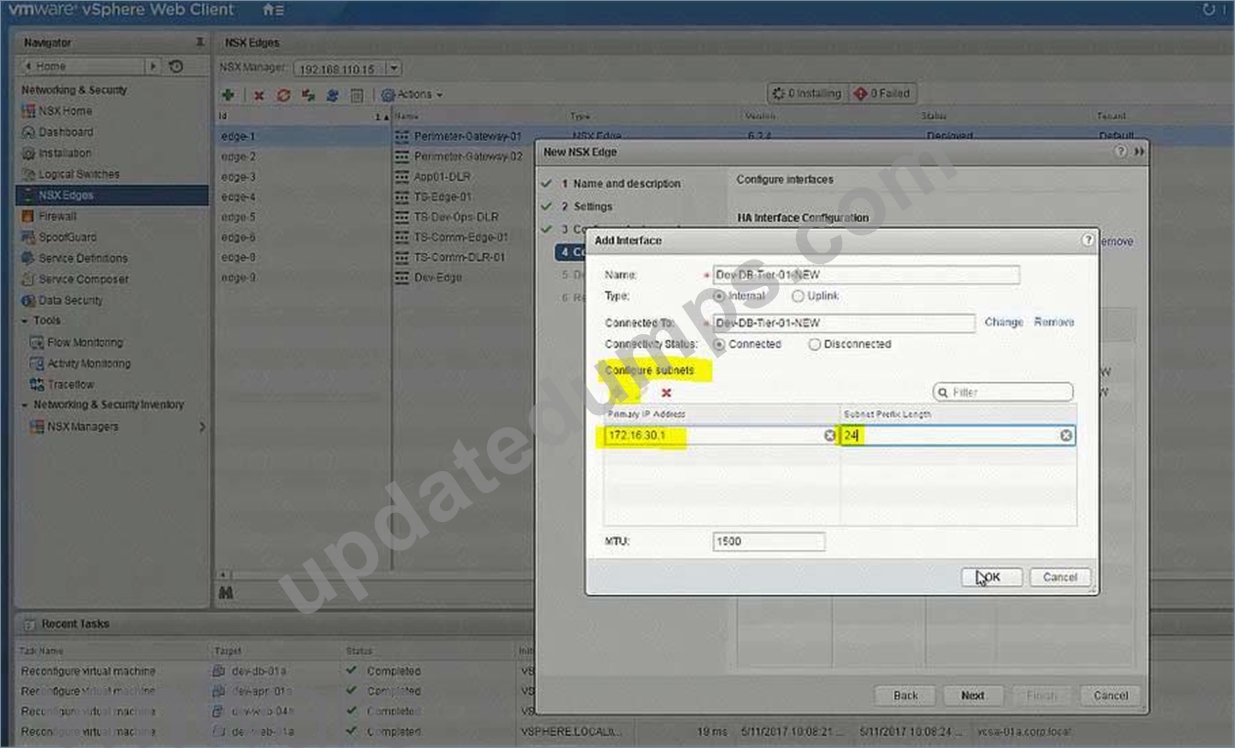
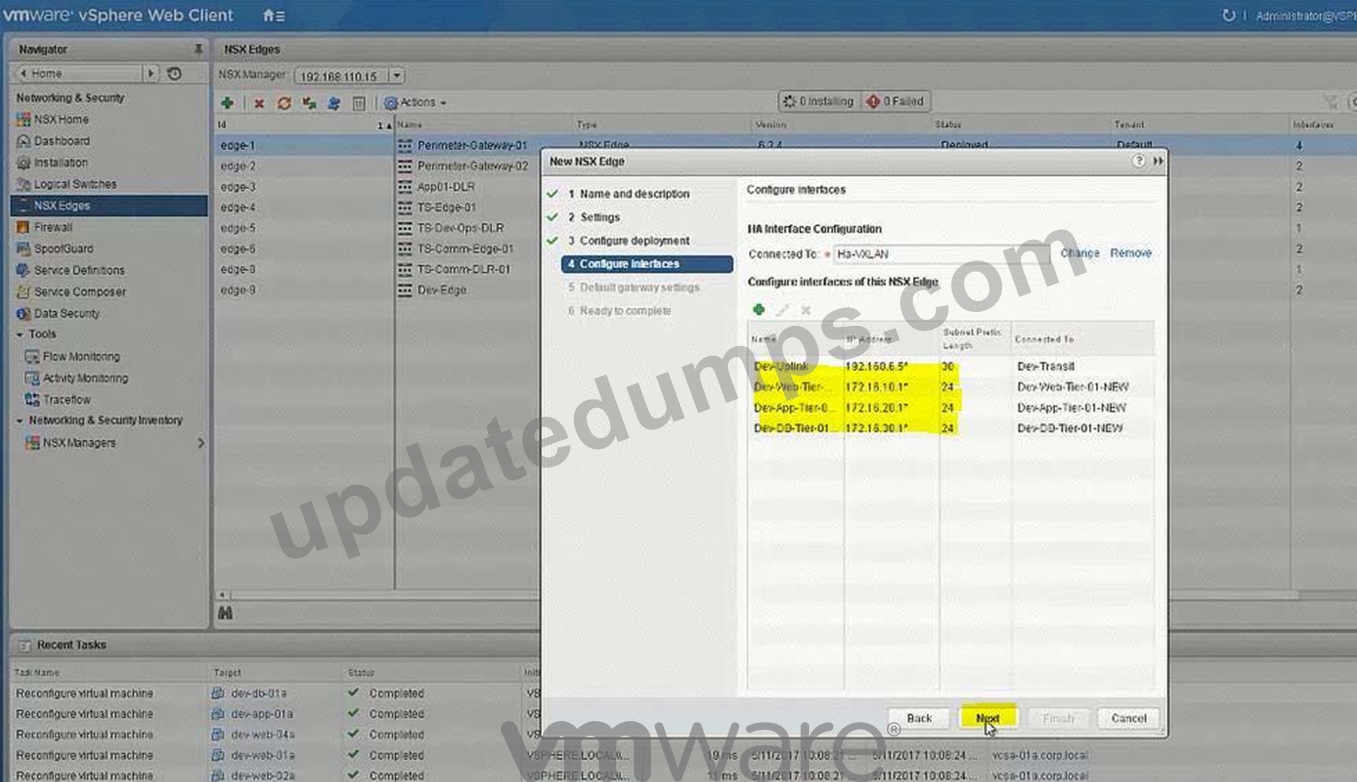
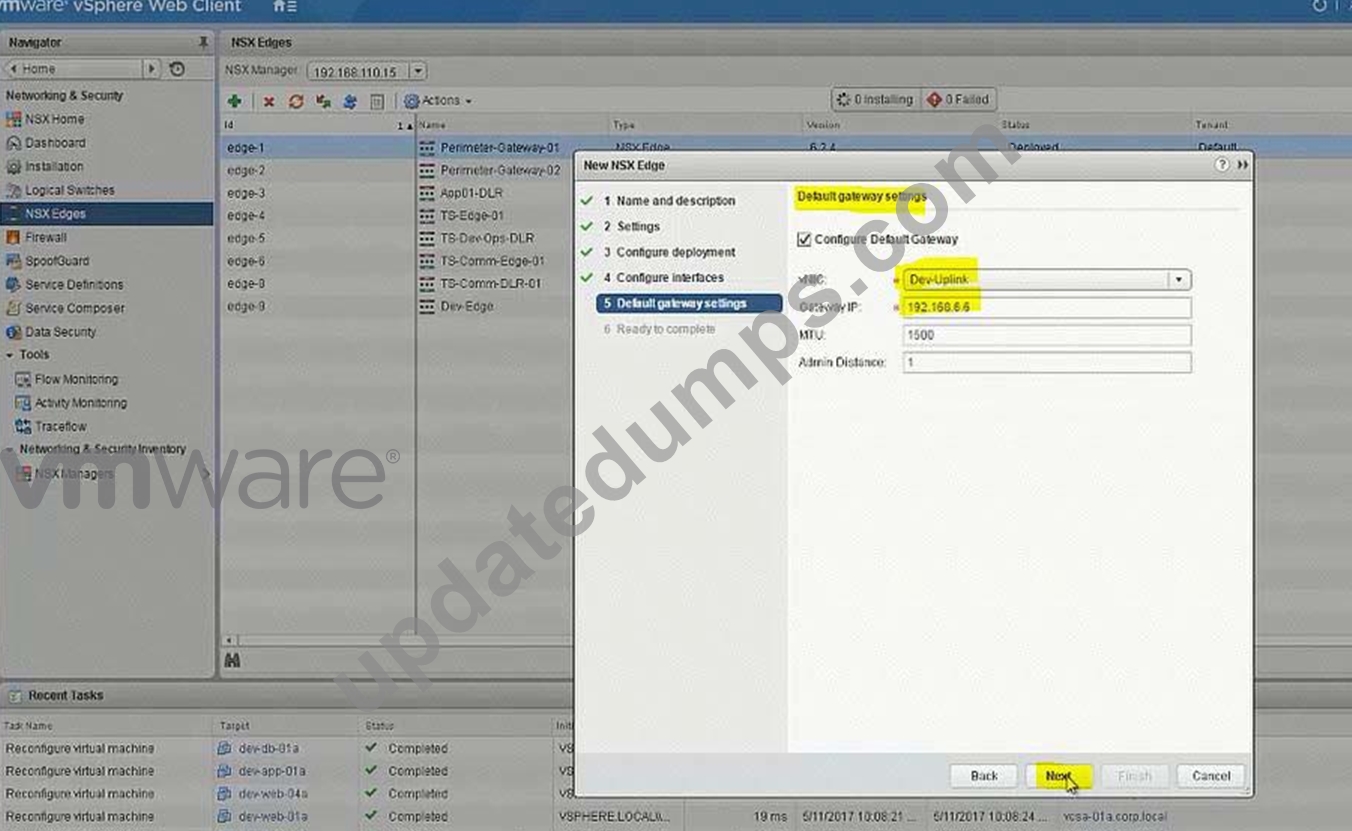
No need for below
To change the control plane failover within 15 seconds use the RESTClient as shown below or the Postman application in Chrome.
Open Firefox
Open RESTClient from Firefox
Authentication
Basic Authenticaion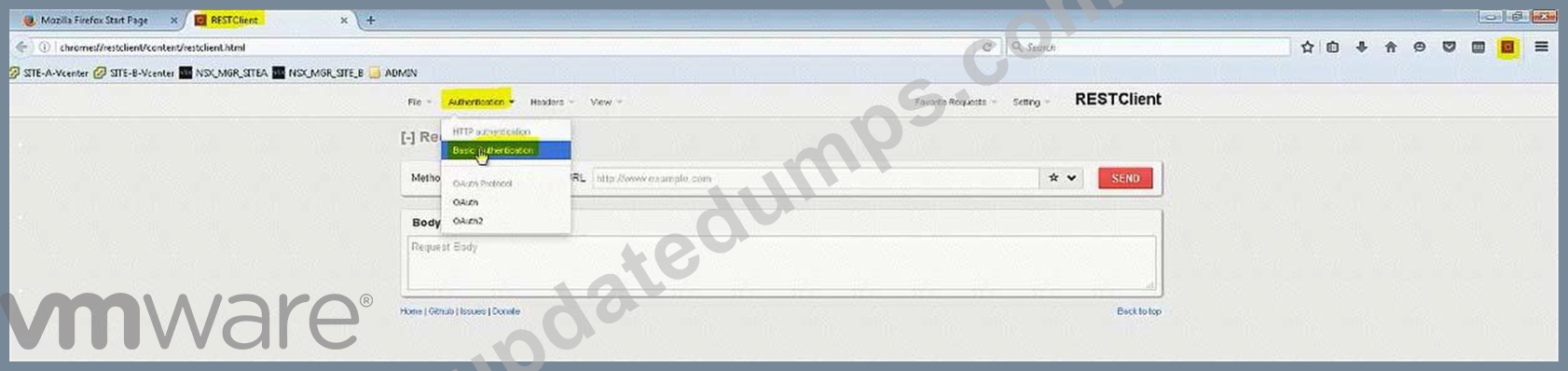
Admin
VMware1!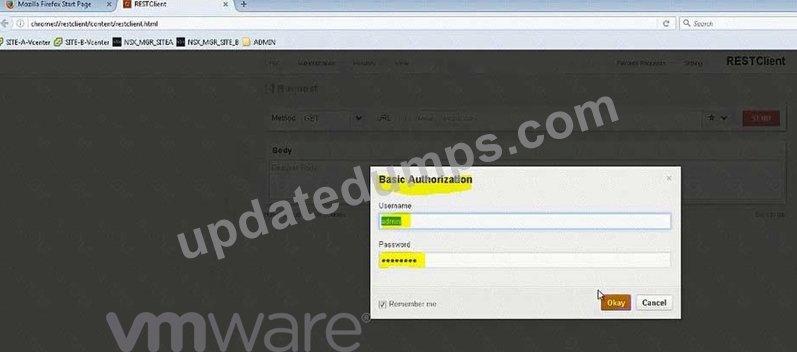
Headers
Custom Headers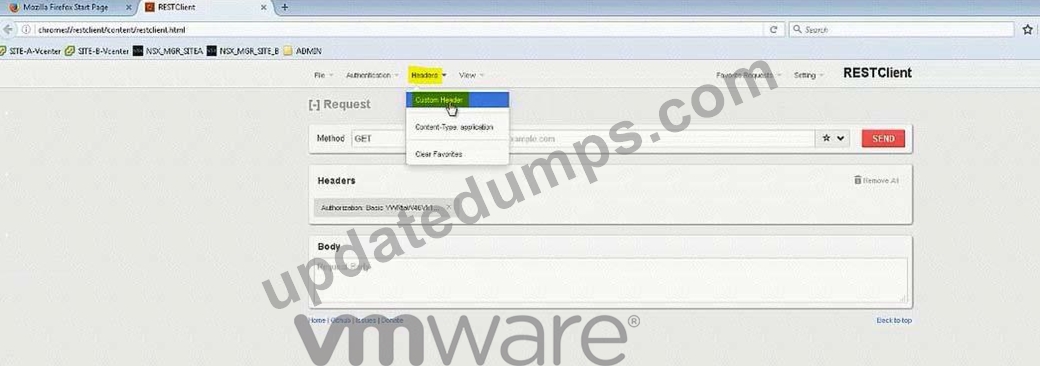
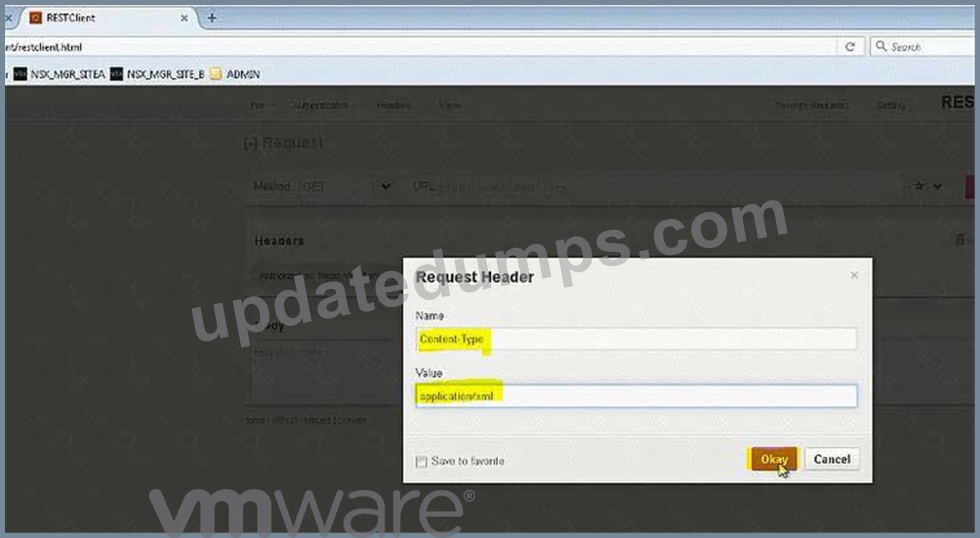
Content-Type
Application/xml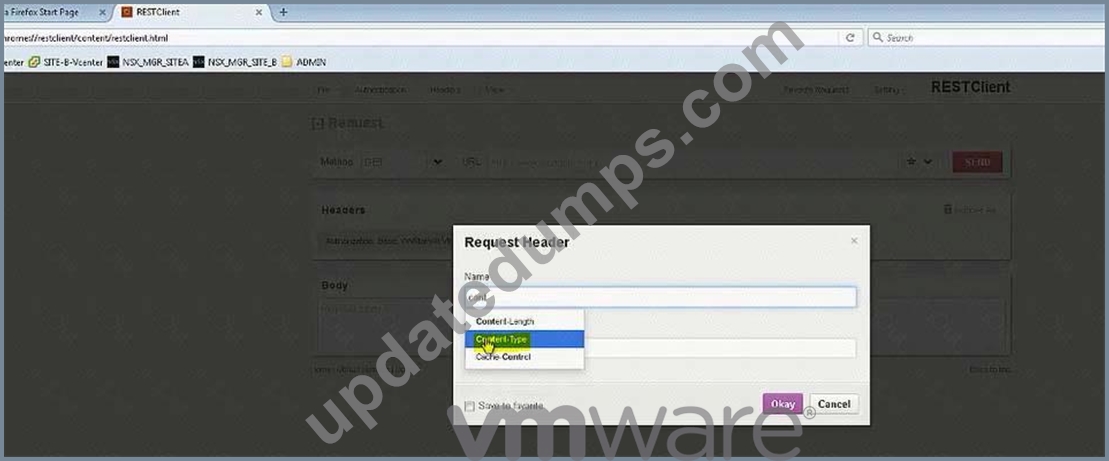
Note down the edge id of newly created DLR (in exam its edge-12)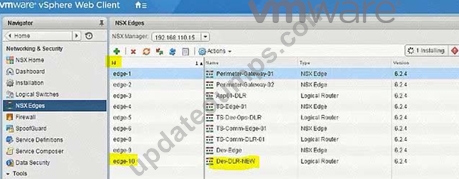
There will be a NSX API guide on desktop and look for "declaredeadtime".
Or memorize below string:
URL: https://192.168.110.15/api/4.0/edges/edge-10/highavailability/config Note: in exam its edge-12 but make sure!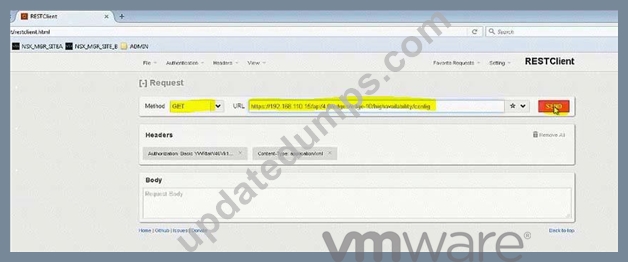
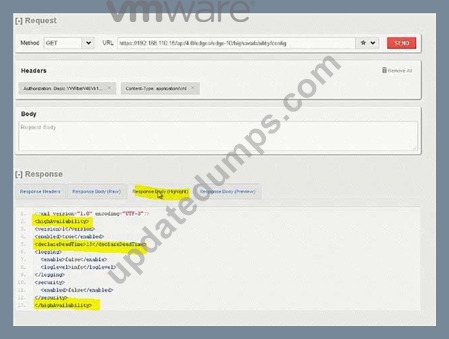
Change the value to 15
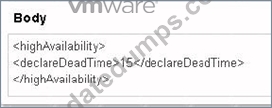
Body:
<highAvailability>
<declareDeadTime>15</declareDeadTime>
</highAvailability>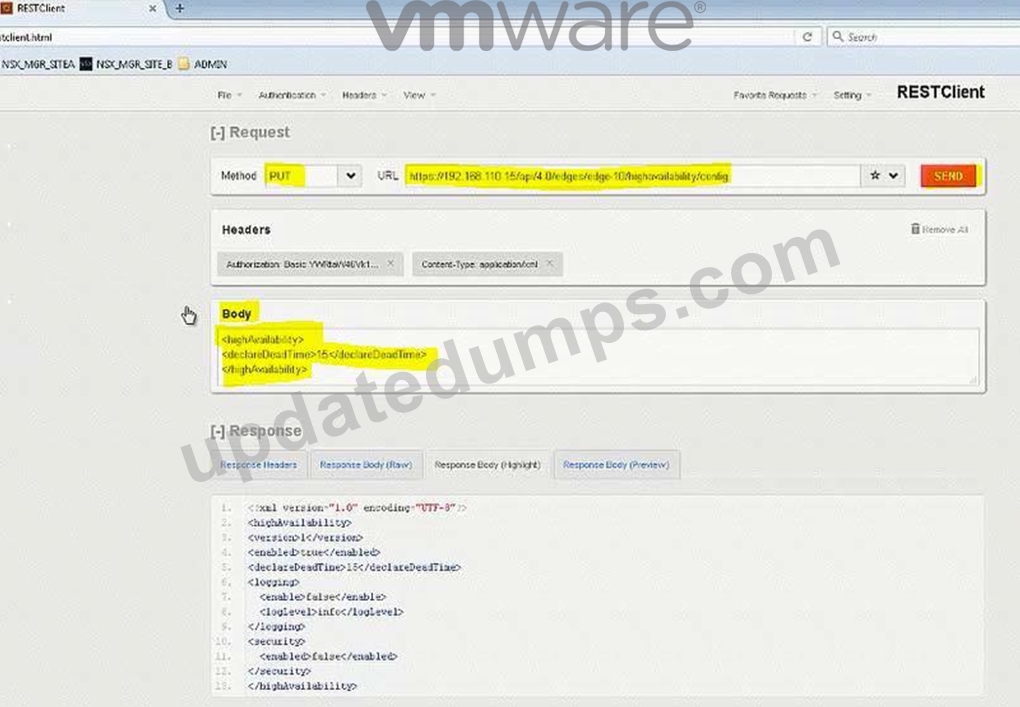
NEW QUESTION 16 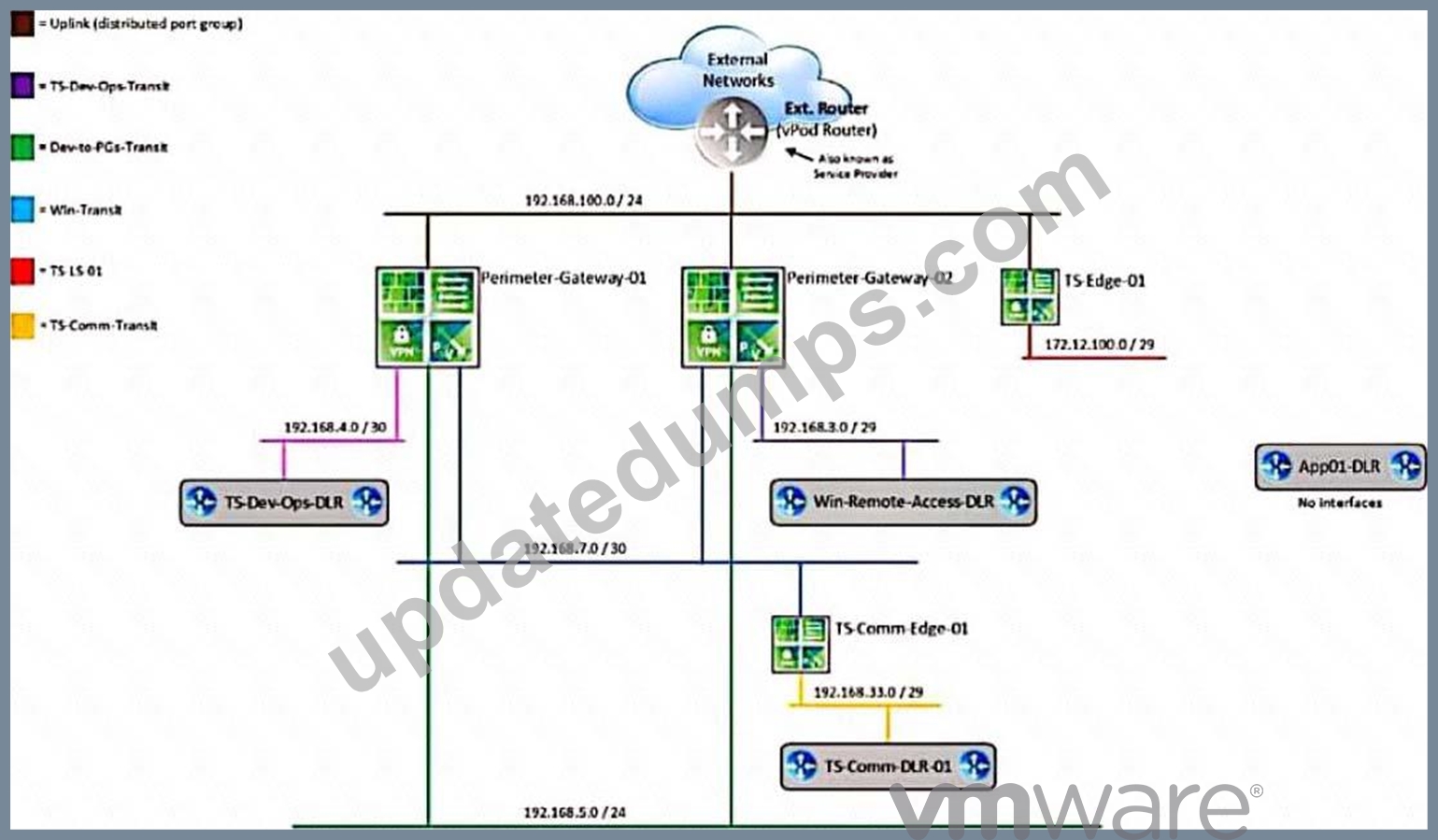
Questions HOL LAB Modules and Pages for practice
1
http://docs.hol.vmware.com/hol-isim/HOL-2019/hol-1903-01-nsxinstall-p1.htm HOL-1903-01 Page 16 or you can directly Open a NSX manager in the lab and edit the existing settings bOpen PSC and NSX manager in HOL-1903-01 and look for NTP Server loand cation cExport existing vDS config and Import back the config for practice in HOL-1903-01 dNo Lab Module available
2
http://docs.hol.vmware.com/hol-isim/HOL-2019/hol-1903-01-nsxinstall-p2.htm and LAB - HOL 1903-01 Page 26-36
3LAB - HOL 1903-01 Module 2 - Page 37-38
4LAB - HOL 1903-01 Module 4 - Practice and understand whole module Bridging and other questions 7,
8, 9 and LAB - HOL-1925-02 Module 1
5LAB - HOL 1903-01 Module 4 - shows how to deploy NSX Edge, you can also deploy Distributed logical router DLR in the same way the lab.
6LAB - HOL 1903-01 Module 3 - Practice and understand the whole module, it will be use full for other question like 20 and 22
7LAB - HOL 1903-01 Module 4 - Practice and understand whole module Bridging and other questions 7,
8, 9
8LAB - HOL 1903-01 Module 4 - Practice and understand whole module Bridging and other questions 7,
8, 9
9LAB - HOL 1903-01 Module 4 - Practice and understand whole module Bridging and other questions 7,
8, 9
10LAB - HOL-1903-02 Module 1 and 2
11LAB - HOL-1903-02 Module 1 and 2
12LAB - HOL-1903-02 directly follow the steps in this document for practice
13LAB - HOL 1903-01 - open an NSX manager in LAB and directly follow the steps in this document.
14LAB - HOL 1903-01 - open postman in the lab and directly follow the steps in this document.
15LAB - HOL 1903-01 - directly follow the steps in this document for practice.
16LAB - HOL 1903-01 - directly follow the steps in this document for practice.
17LAB - HOL-1925-02 Module 1
18LAB - HOL-1925-02 Module 1
19 LAB - HOL-1925-02 - directly follow the steps in this document for practice.
20LAB - HOL 1903-01 Module 3 - Practice and understand the whole module.
21No Lab Module available
22LAB - HOL 1903-01 Module 3 - Practice and understand the whole module.
23LAB - HOL 1903-01 - open postman in the lab and directly follow the steps in this document.
(Exam Topic 1)
Two administrators (John and Chris) share admin responsibilities for an NSX deployment that is leveraging Centralized CLI as part of their management. Security requirements prohibit use of shared admin accounts in Site A.
Requirements:
NSX Manager: nsxmgr-01a.crop.local
New administrator accounts: "John" and "Chris"
Default password: VMware1!
Create accounts for John and Chris.
Use one of the newly created accounts to display all clusters enabled for the distributed firewall.
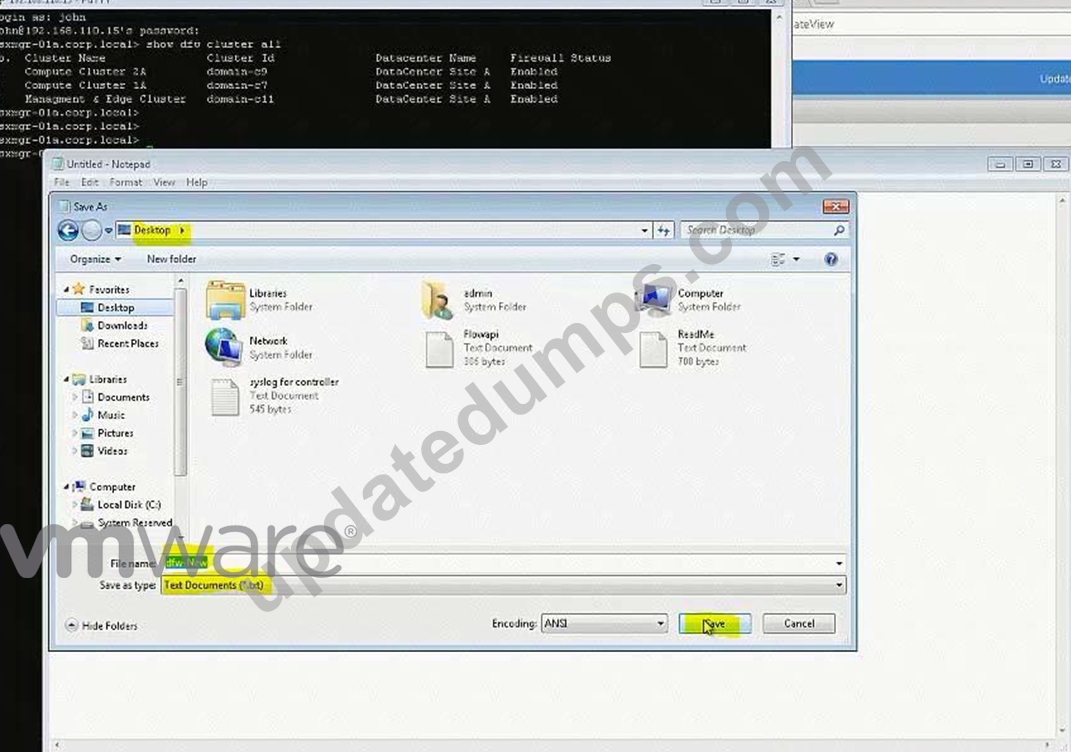
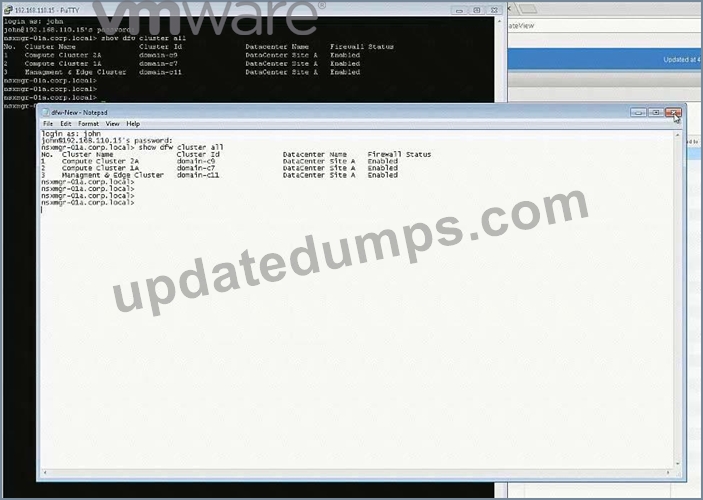
Use Putty's "Copy All to Clipboard" feature to paste the command and output to a text file dfw-NEW.txt on the ControlCenter desktop.
NOTE:
Screenshot is shown on how to use Putty's Copy all to Clipboard feature.
HOL LAB for Practice:
See the explanation part for complete solution.
Answer:
Explanation:
SOLUTION:
13:(1) select vccenter - a. select datacenter A and click right mouse button select administrator. select user and groups click on + sign. select user tab enter user name john password VMware1!. click ok . do same for chris.
(2) select datacenter A.
select manage tab. select permission. click + Sign. select Read Only from Assign Role. select All Privileges click on Add. select John and chris.checked Propagate to childern and click on OK.
(3) go NsX Manager. select Nsx Manage-a. select manage select user from tab. click + sign. select identity user. check specify vcenter user. enter user name [email protected] click next. select role Nsx Administrator. click finish. do same for chris. but use [email protected] and assign role of NsX administrator click finish.
6 of 336
Enable
VMware1!
Conf t
User john password plaintext VMware1!
User chris password plaintext VMWare1!
Exit
Write memory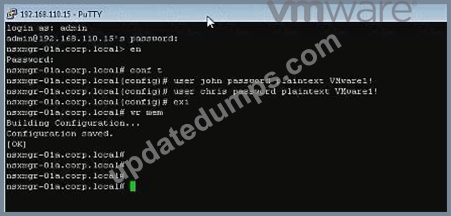
Open new Putty session or Duplicate Session: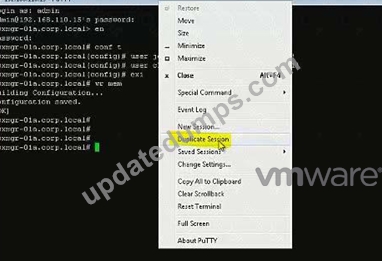
john
VMware1!
Show dfw cluster all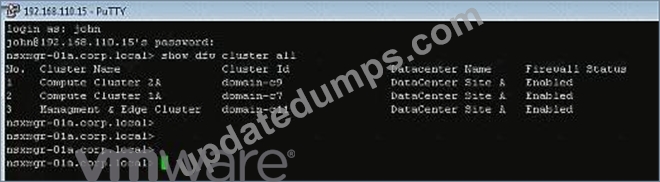
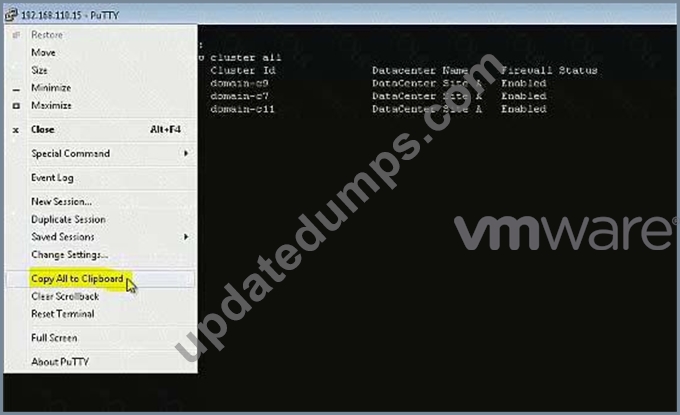
Ctrl+V don't work in exam.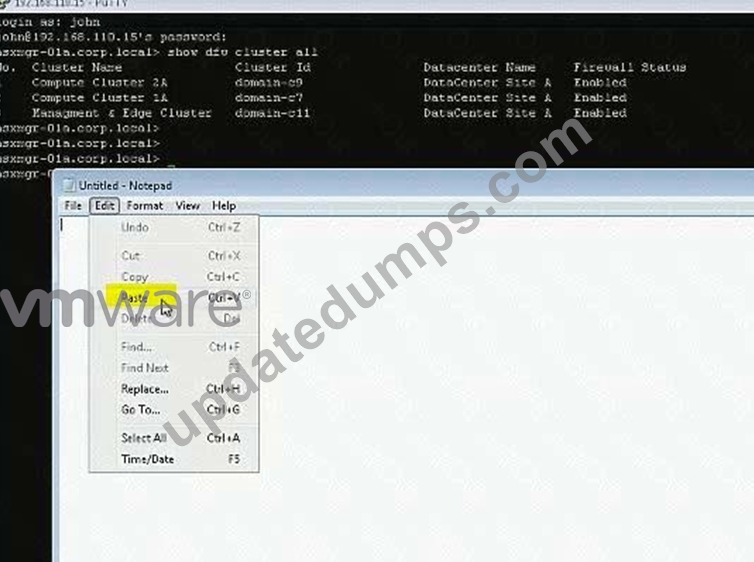
NEW QUESTION 17
An NSX administrator has been troubleshooting a communication issue between Edge device TS-Comm-Edge-01 and the TS-Comm-DLR-01 logical router with no success and has reached out to you for further assistance. The following troubleshooting has already been performed.
Temporarily disabled the firewall between both devices.
Unsuccessful ping from TS-Comm-Edge-01 to TS-Comm-DLR-01
Unsuccessful ping from TS-Comm-DLR-01 to TS-Comm-Edge-01
Determine and resolve the communication issue between the two devices.
Requirements:
vCenter: vcsa01a.crop.local
Credentials: [email protected] / VMware1!
Troubleshooting Information:
Edge: TS-Comm-Edge-01 (192.168.33.1)
DLR: TS-Comm-DLR-01 (192.168.33.8)
Transit Network: TS-Comm-Transit
IP Subnet: 192.168.33.0/29
Ensure communication between both devices is successful.
NOTE:
IP addresses must remain unchanged.
HOL LAB for Practice:
See the explanation part for complete solution.
Answer:
Explanation:
SOLUTION:
Troubleshooting:
TS-Comm-Edge-01
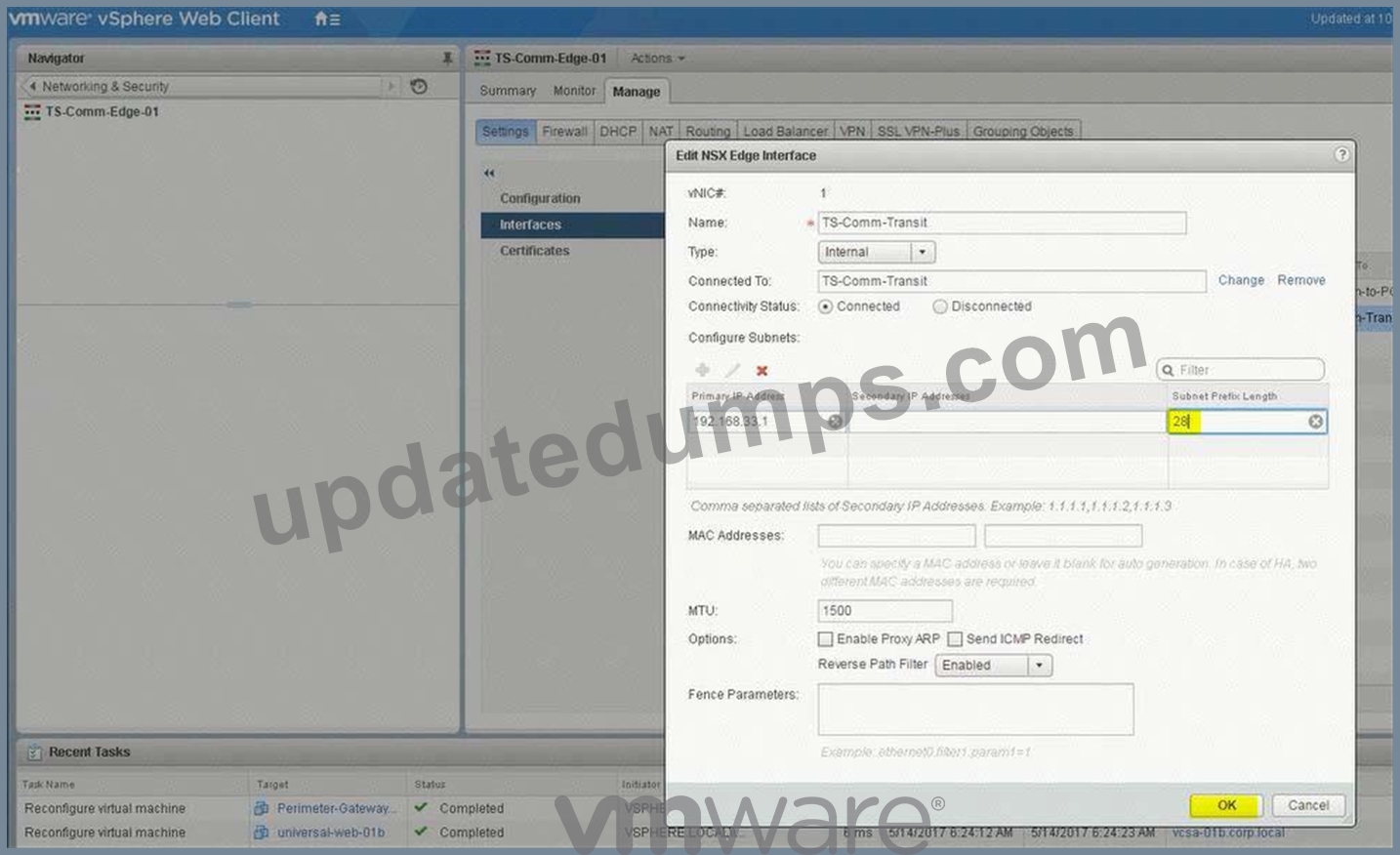
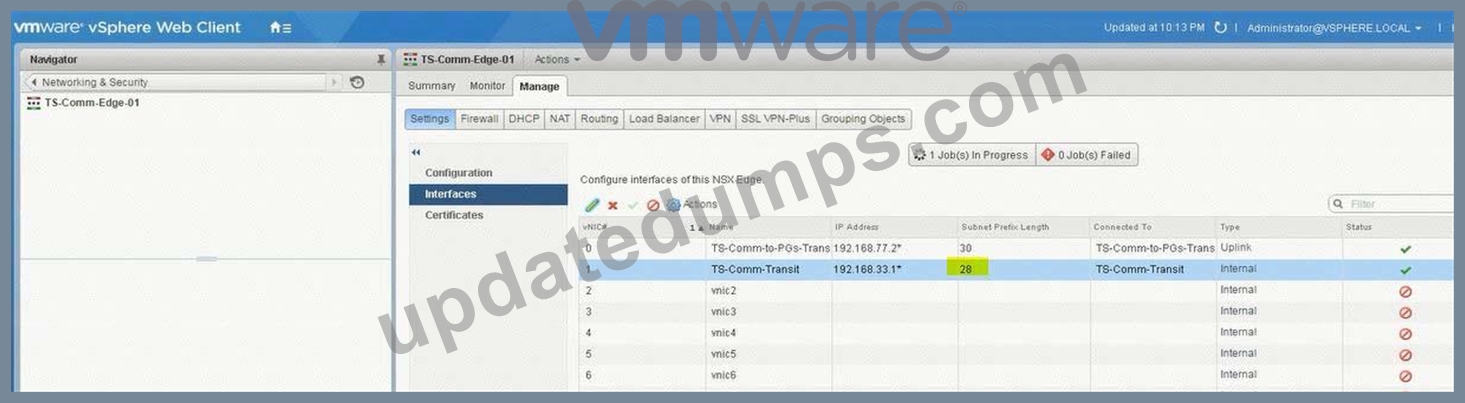
Interfaces -> TS-Comm-Transit (change the subnet mask to 28)
Verification:
SSH to TS-Comm-Edge-01 (192.168.7.2) and ping 192.168.33.8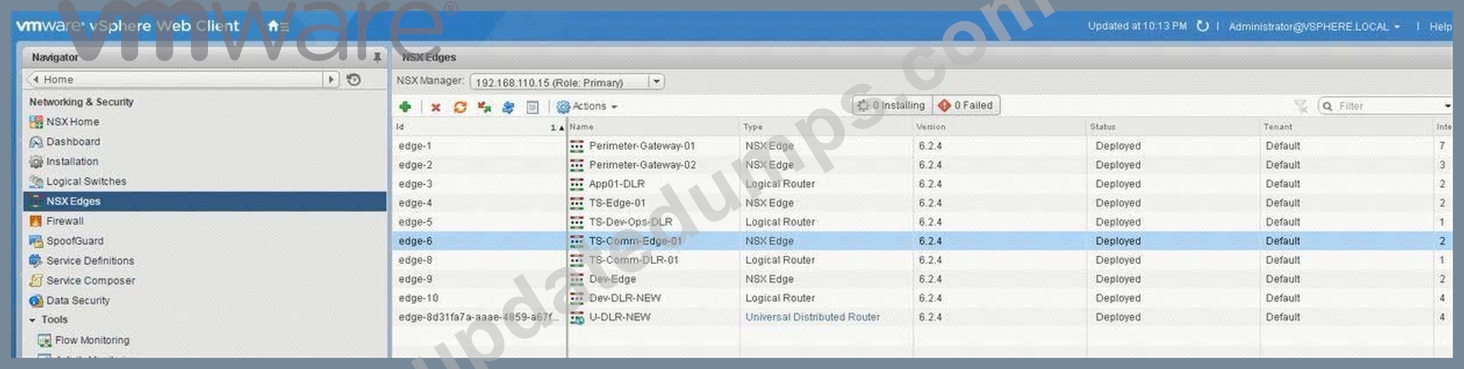
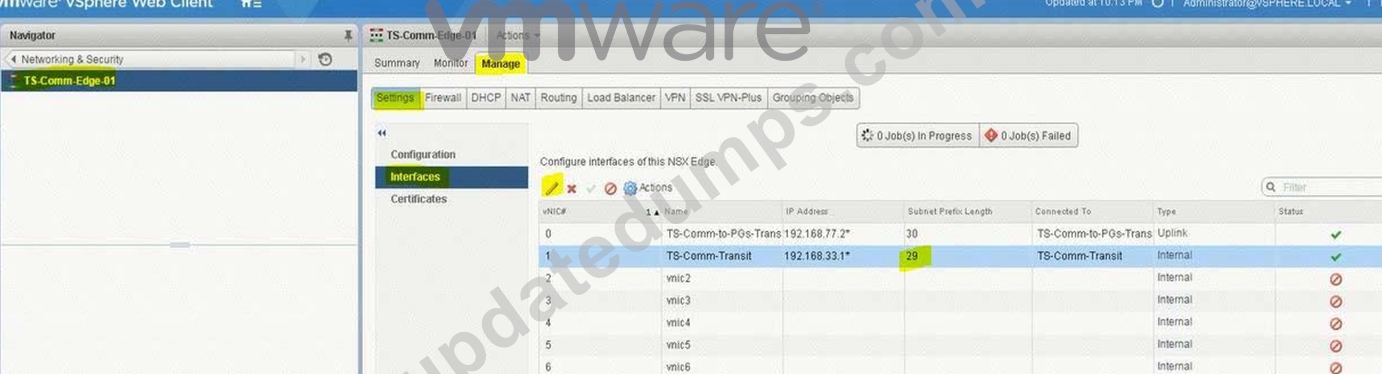
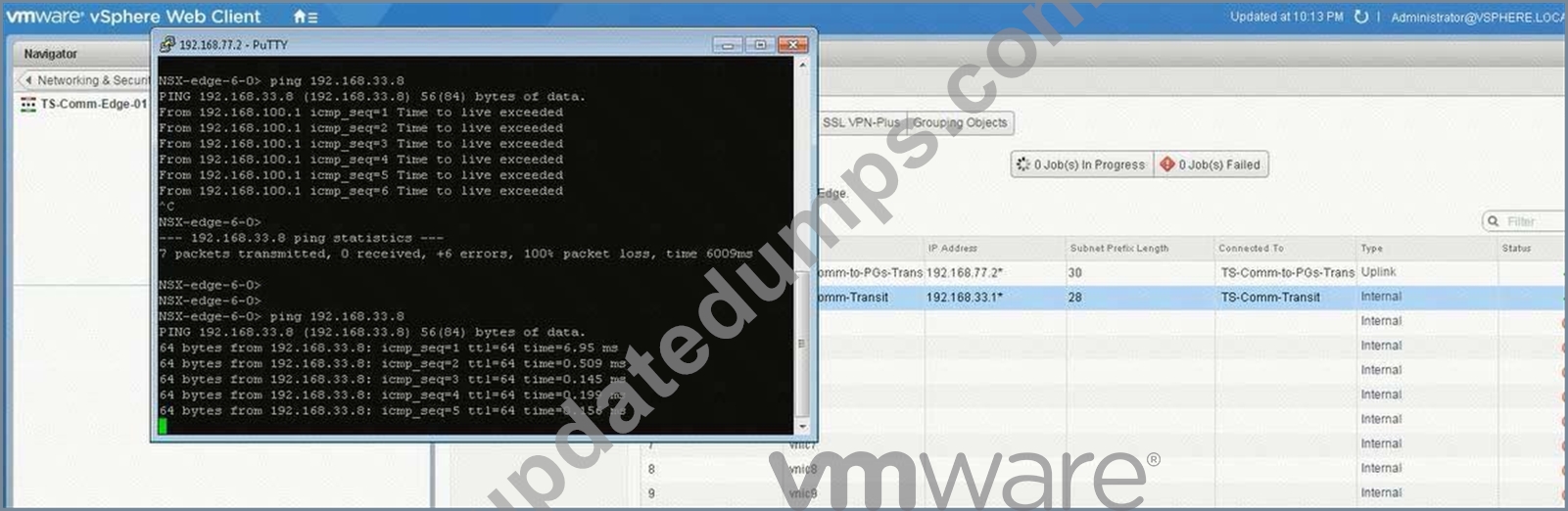
(2) select Ts-Comm-DLR-01 from Nsx Edge. select Manage tab. select Settings.
select interface. check the ip address and mask. and change the mask to /28.
click ok.
(3) select Manage Tab. select Routing. select global configuration. click edit.
select OSPF enter router ID 192.168.33.8 click ok. click on enable
click on publish changes.
(4) select OSPF. click edit. enable OSPF. Enter Protocol Address 192.168.33.7 enter forwarding address 192.168.33.8 (ip address of the vnic). click enable graceful restart. click ok.
(5) under area. click + Sign and add area 0. select type normal. select authentication none. click ok.
(6) under area to interface mapping. click on + sign. select interface uplink enter area 0. enter hello interval 10. dear interval 40. enter priority 128 enter cost 1. click ok. click publish changes.
(7) select TS-Comm-Edge-01. select manage select routing. select global configuration.
click edit under dynamic routing configuration.enter router id ts-comm 192.168.33.
click ok. click publish changes.
(8) select OSPF. click edit. enable OSPF. enable graceful restart. click ok.
select vnic transit. enter area 0. click on blue icon. change the subnet mastk to /28. click ok.
(9) select Firewall under manage Tab. click disable. click publish changes.
do the same steps for Ts-comm-DLR-01. and disable the firewall.
NEW QUESTION 18
The security team has submitted two requests to change or limit access in NSX for Site A's vCenter groups.
Requirements:
NSX Manager: nsxmgr-01a.corp.local
vCenter: vcsa-01a.corp.local
Credentials: [email protected] / VMware1!
Grant all members of vCenter group AuditTeam the minimal access necessary to view NSX Data Security policy configurations for all objects in Site A.
Grant all members of vCenter group ScanTeam the minimal access necessary to enable them to start and stop data security scans in Site A.
Ensure that the principles of least privilege are adhered to.
NOTE:
The Active Directory groups associated with the vCenter groups has already been preconfigured.
HOL LAB for Practice:
See the explanation part for complete solution.
Answer:
Explanation:
SOLUTION:
select Home. select administrator. select domain vsphere.local. select groups.
click + sign. enter group name AuditTeam click ok. do same for ScanTeam.
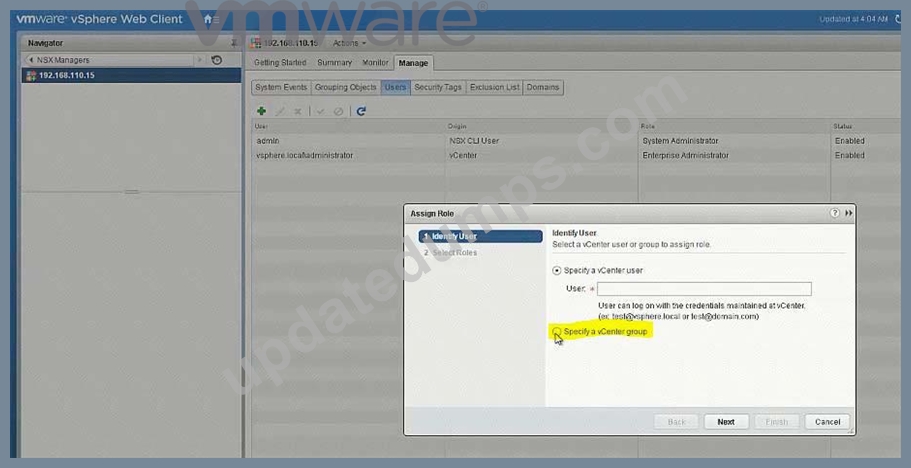
[email protected]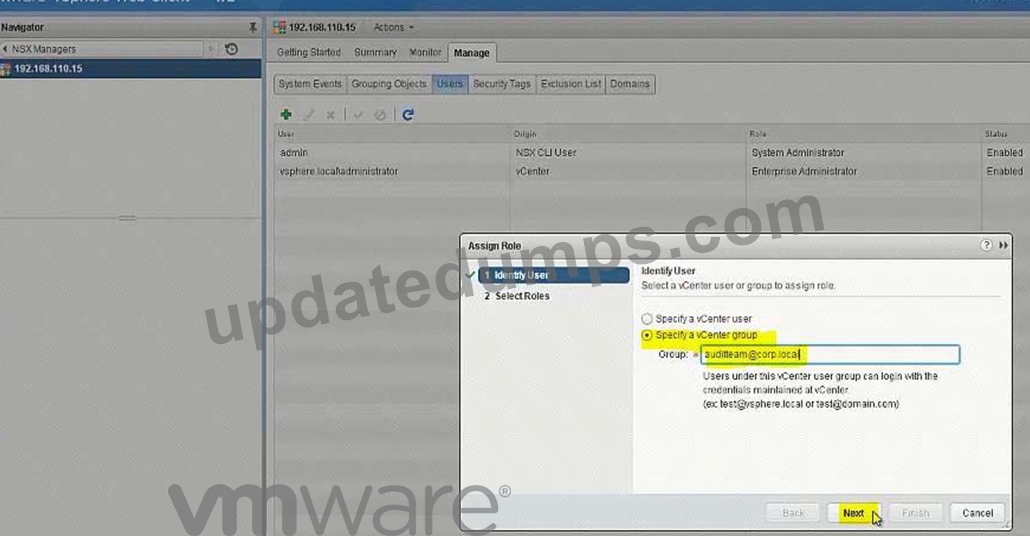
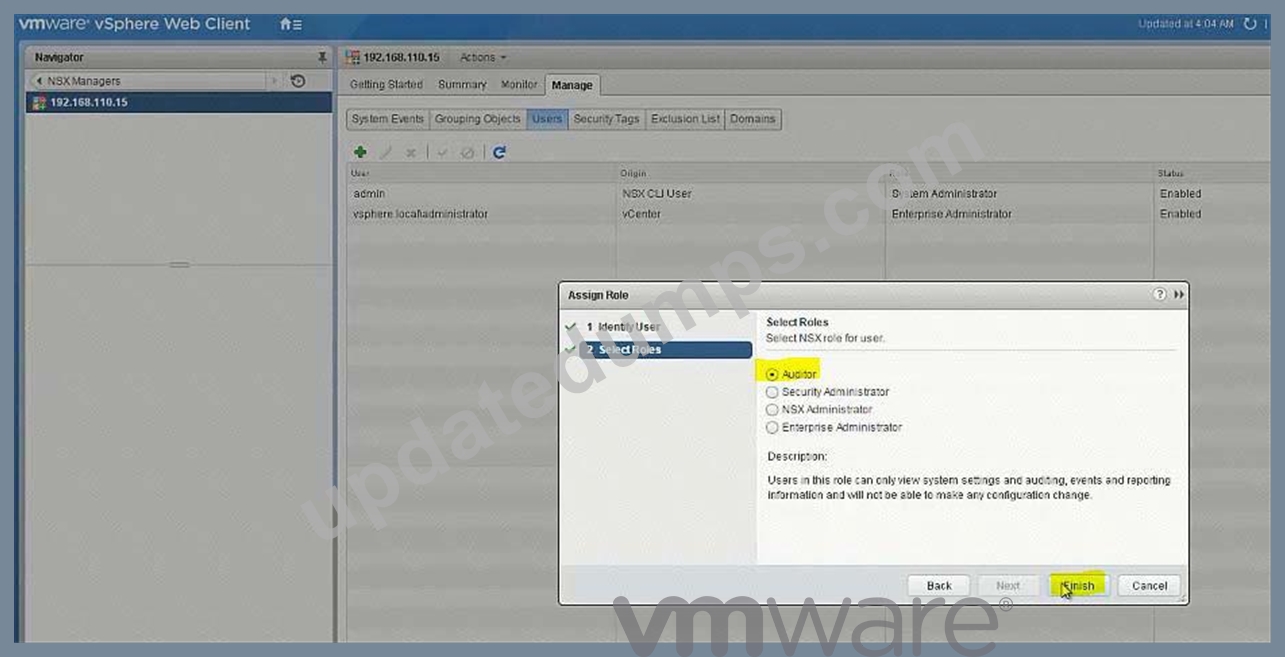
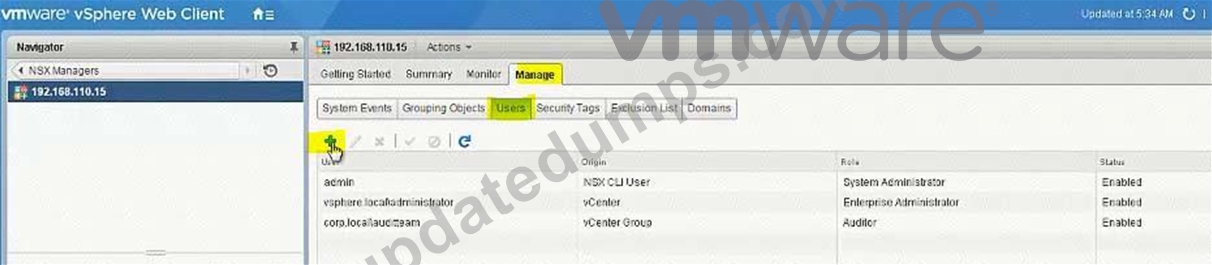
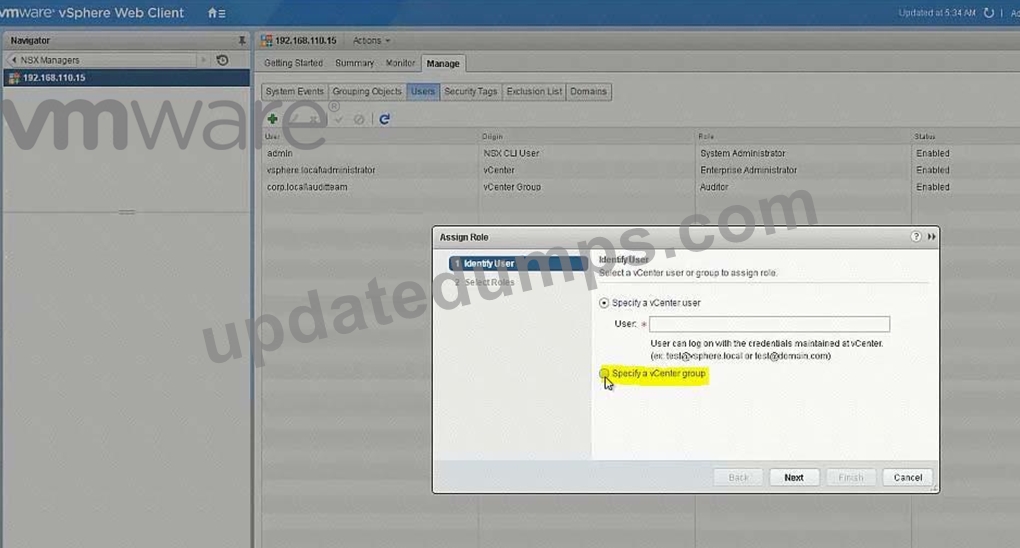
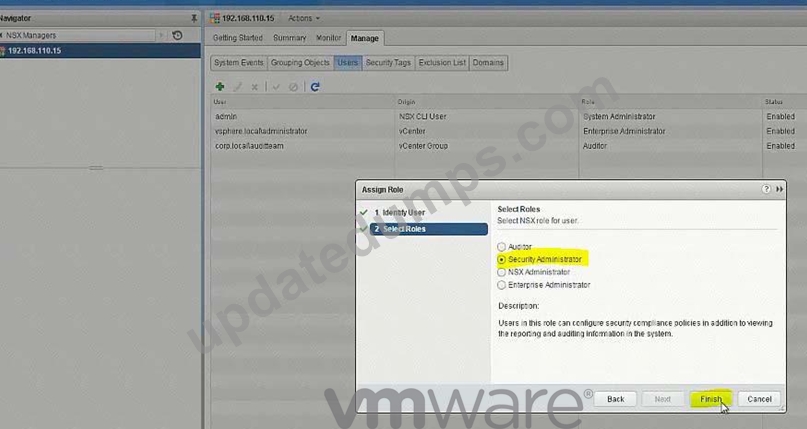
[email protected]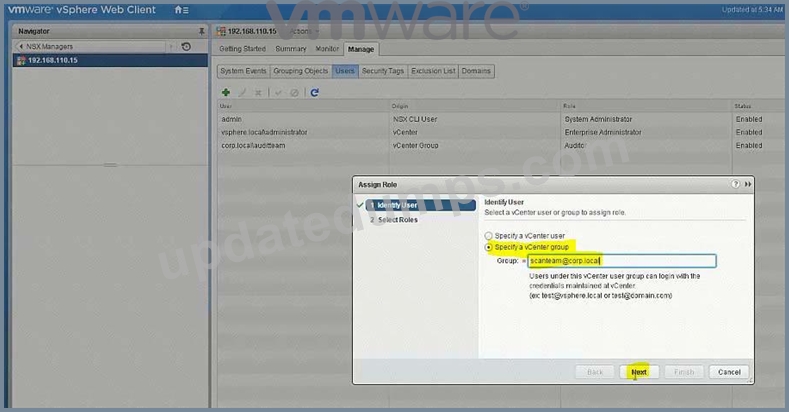
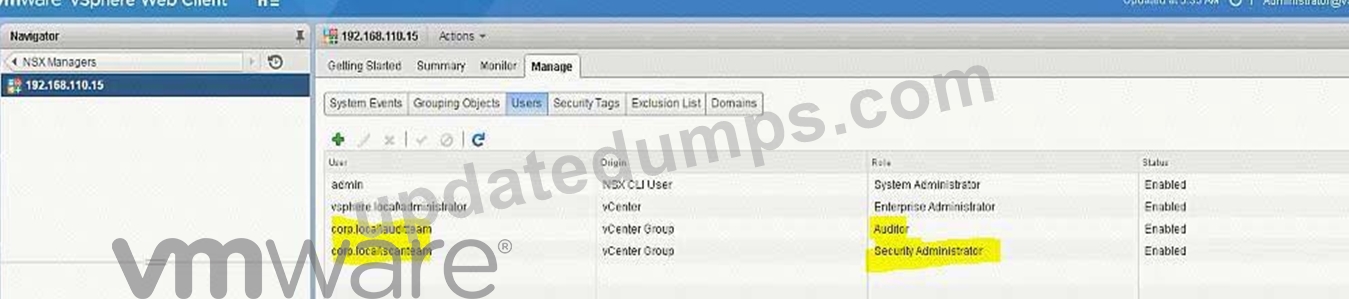
select datacenter A.
select manage select permission click on + Sign.
select Assign role read only. select all privileges click on Add
select AuditTeam and select ScanTeam. check propagate to childern. and click ok
NEW QUESTION 19
Build a multi-tier network capable of supporting application virtual machines deployed across multiple vCenter instances.
Requirements:
vCenter: vcsa-01a.corp.local
Credentials: [email protected] / VMware1!
Resource Pools: Management and Edge Cluster 1A
The underlying physical network does not support multicast.
All new items created must have a prefix of "U" followed by their function name and a suffix of "New".
i.e. U-App-Tier-NEW.
Create a LS for HA management interface calle U-HA-VXLAN=NEW but do not enable HA on any of the edge devices deployed.
Deploy logical switches using separate subnets for the three tier application shared by both NSX Manager instances.
Deploy the required east-west routing component used across multiple vCenter instances for the multi-tier network.
Utilize a default gateway up to the Perimeter-Gateway02 (tenant router) from the east/west router.
Utilize a static route from the tenant router to reach the three tiers of the application.
Subnets for the tiers:
172.7.10.0/24 for the Web Tier.
172.17.20.1/24 for the App Tier.
172.17.30.0/24 for the Database Teir.
Use the first available IP address for the router on each of the tiers.
Subnet for the Transit VXLAN uplink from the application tier routing to the tenant router.
192.168.190.0/29
Uplink IP address of the application tier should be the first available IP address.
Downlink from the tenant router will use the second available IP addresses.
The password for new edge device(s) must be VMware1!VMware1!
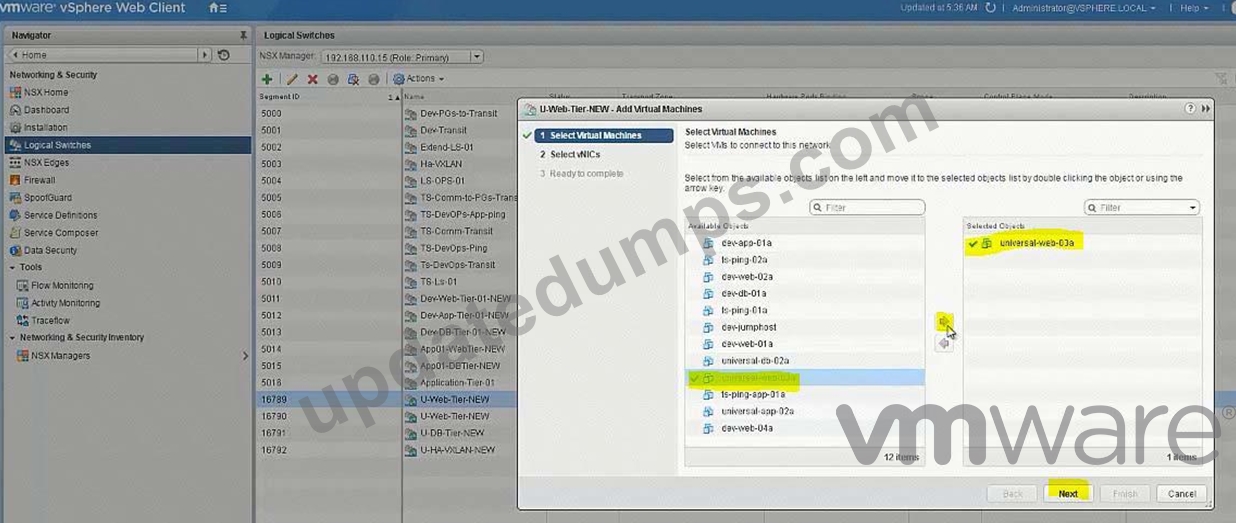
Add all virtual machines with a prefix "universal-" to their respective segments.
Ensure all LIFs are reachable from ControlCenter.
HOL LAB for Practice:
See the explanation part for complete solution.
Answer:
Explanation:
SOLUTION:
universal transport zone
logical switches
U-HA-VXLAN-NEW
U-Transit-NEW
U-Web-Tier-NEW
U-App-Tier-New
U-DB-Tier-New
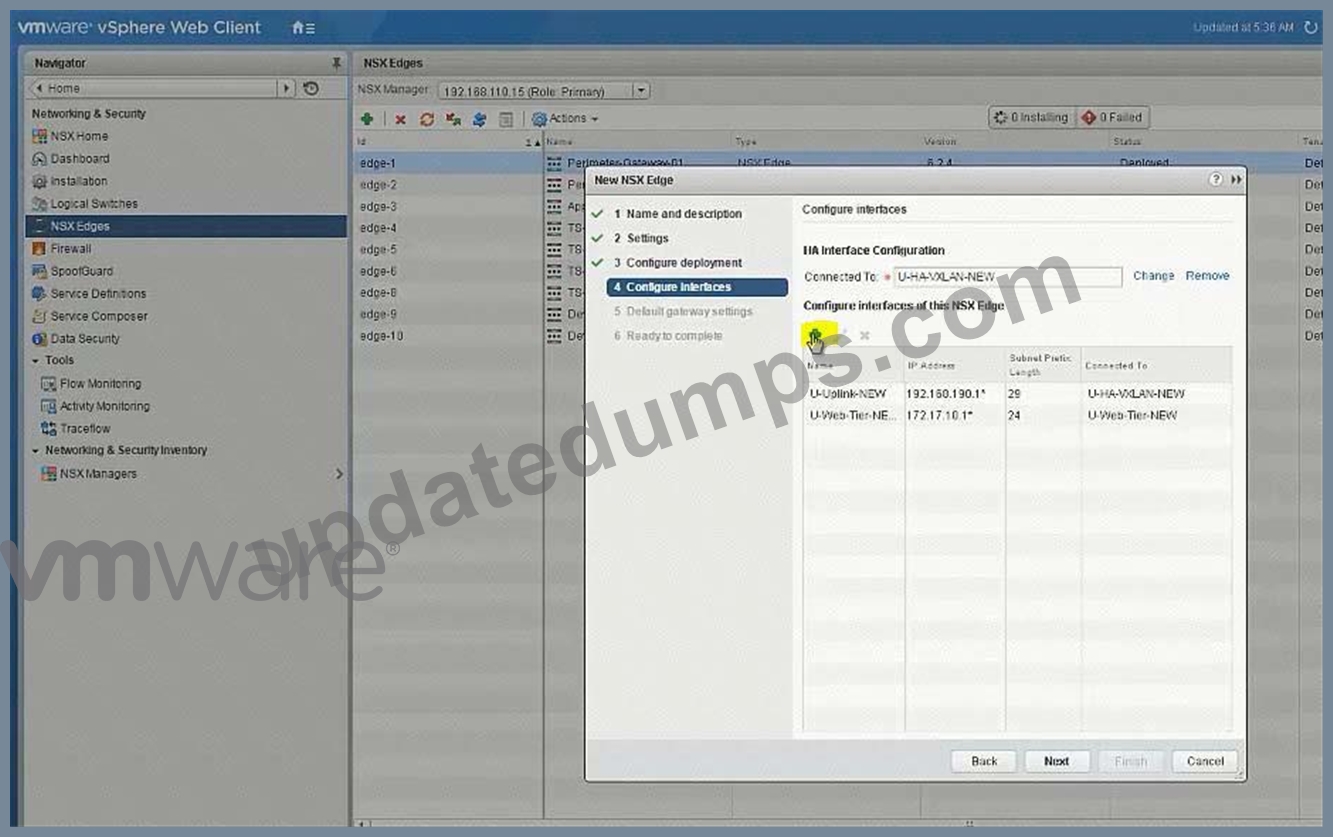
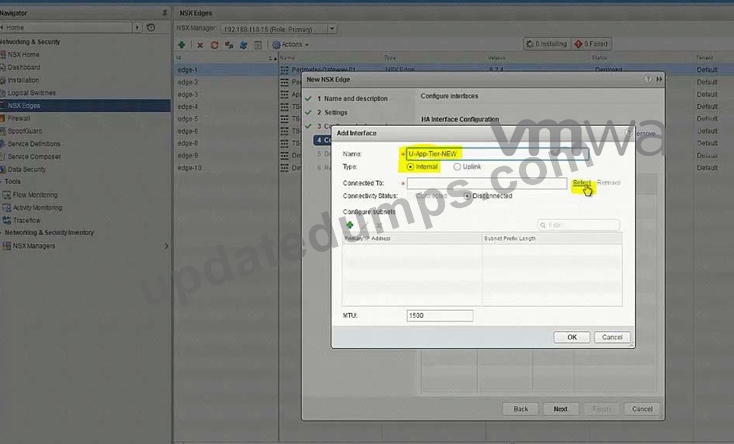
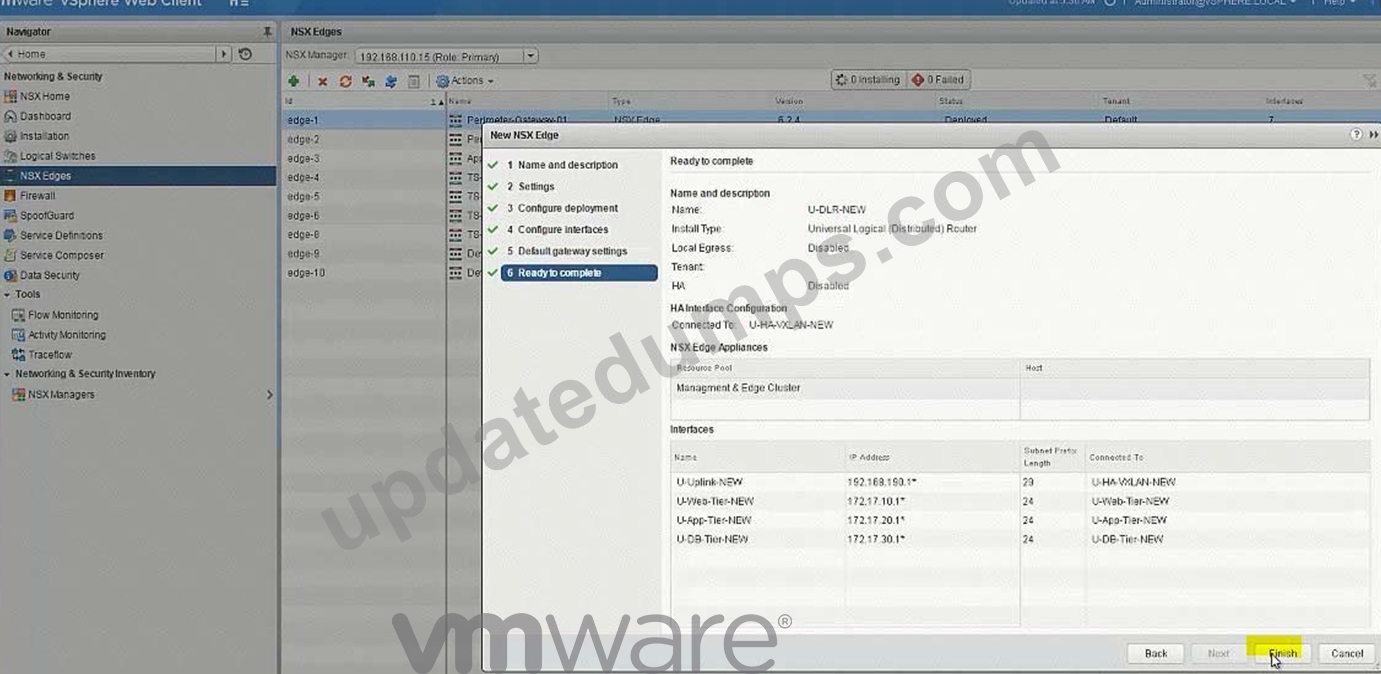
New DLR U-DLR-NEW
HA Interface - U-HA-VXLAN-NEW
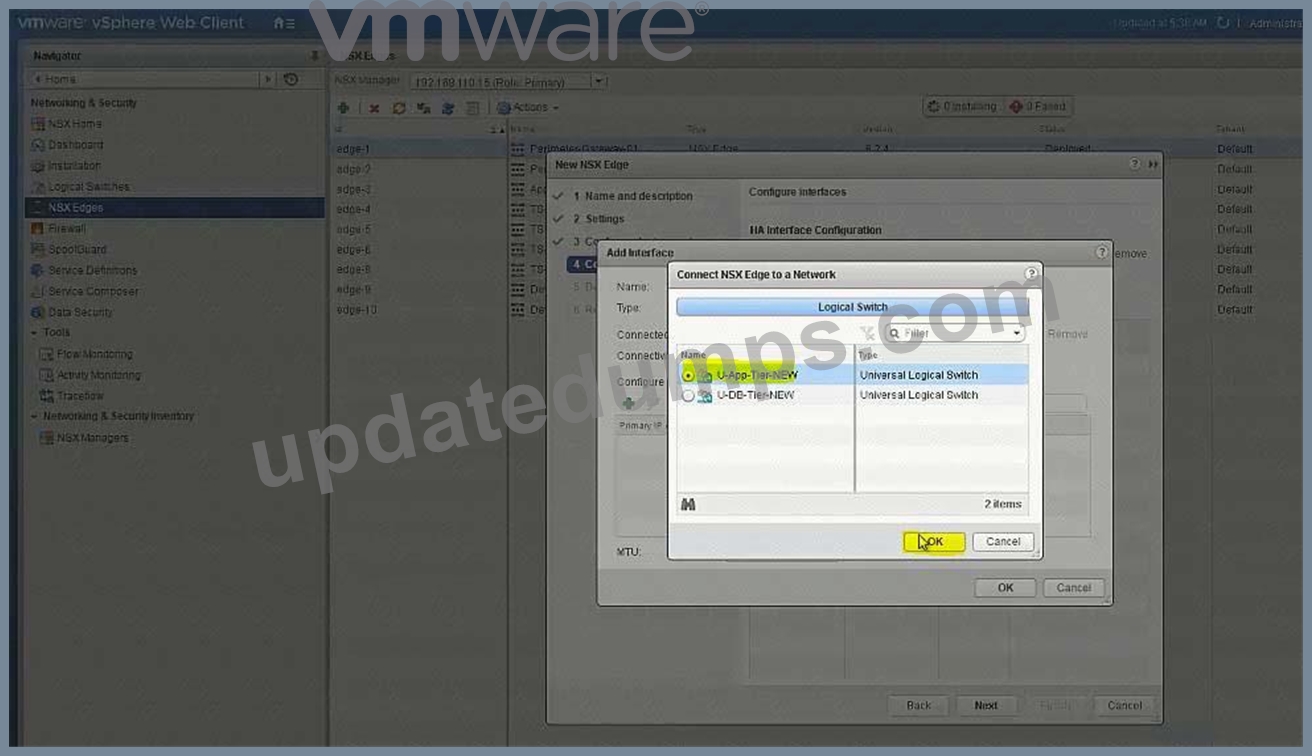
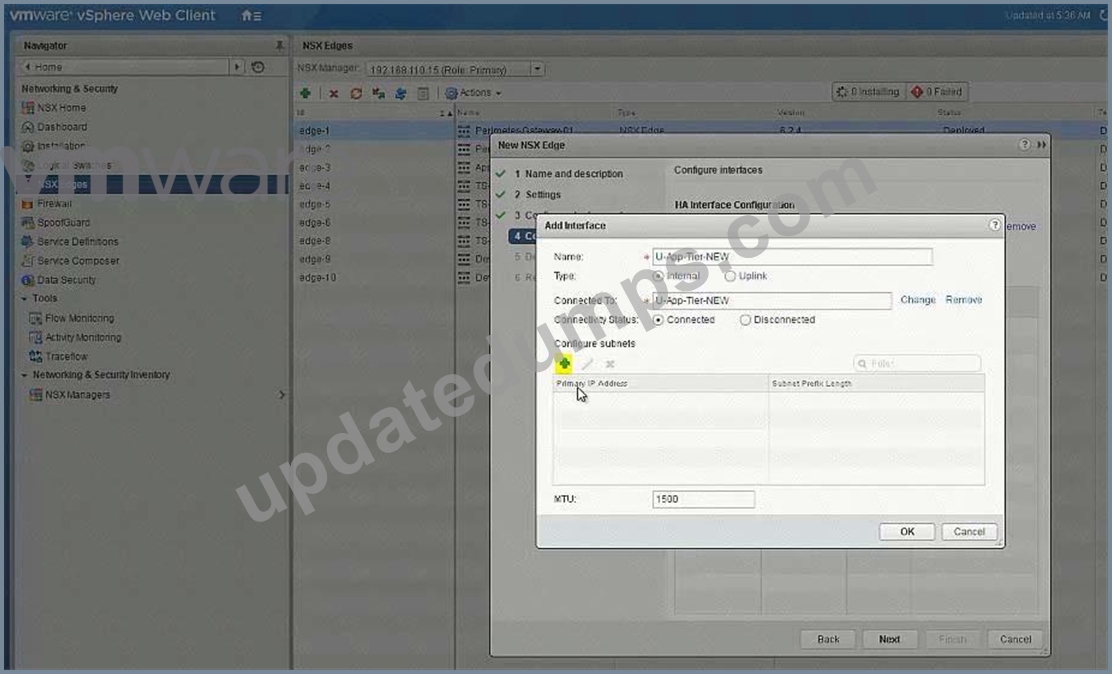
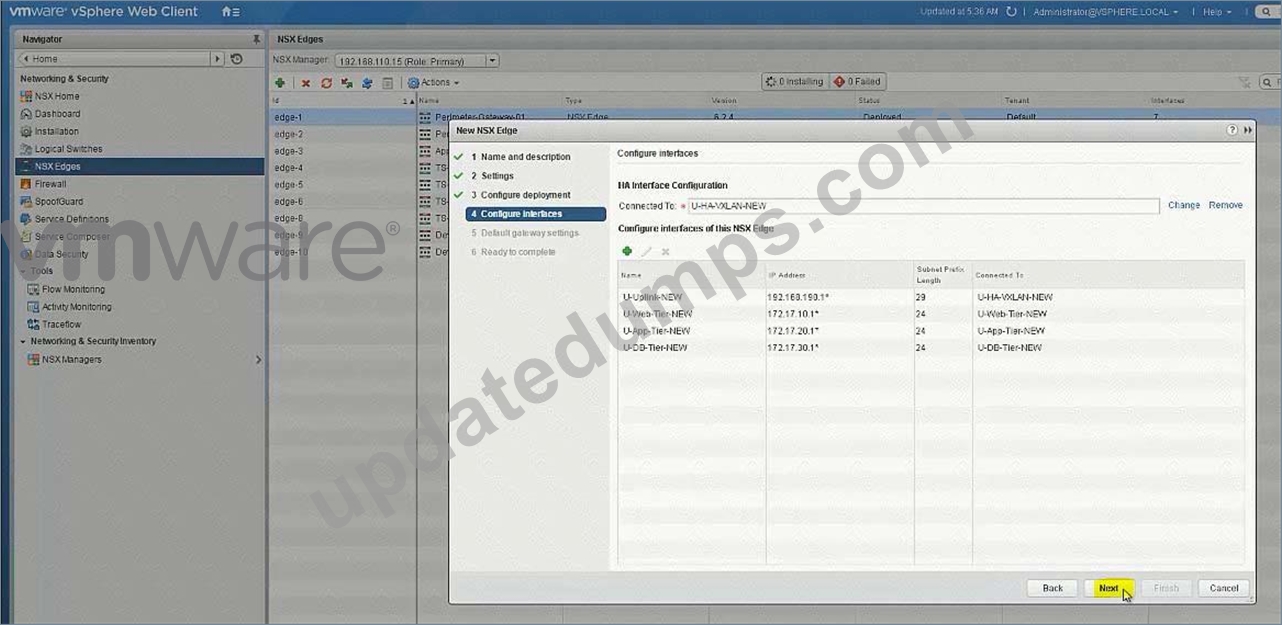
Interface below
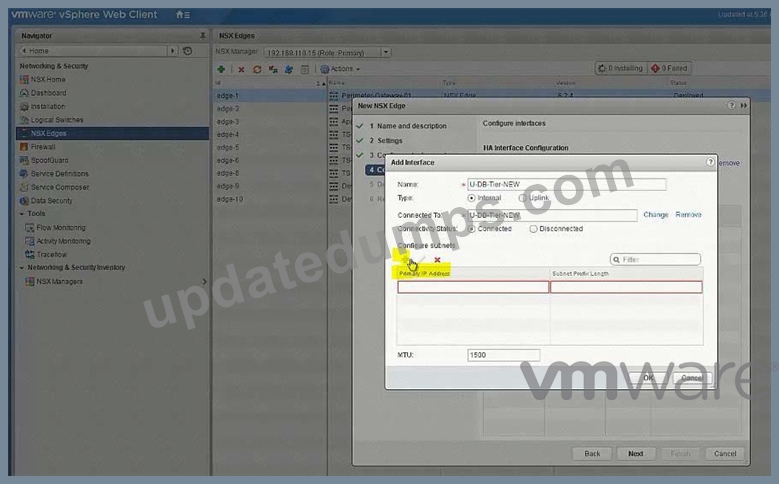
- U-Transit-NEW uplink 192.168.190.1
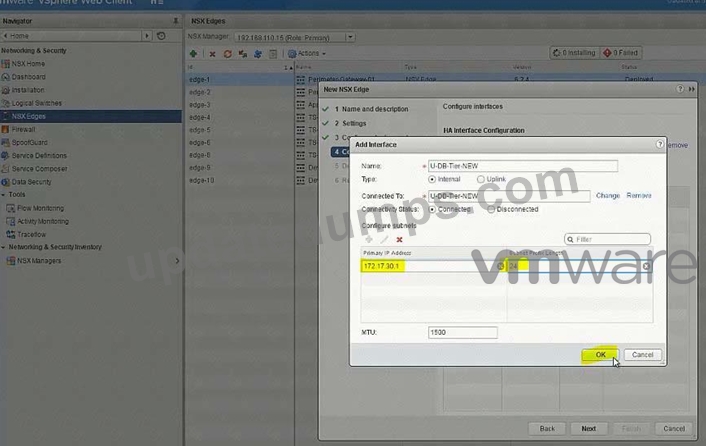
- U-Web-Tier-NEW internal 172.17.10.1
- U-App-Tier-NEW internal 172.17.20.1
- U-Db-Tier-NEW internal 172.17.30.1
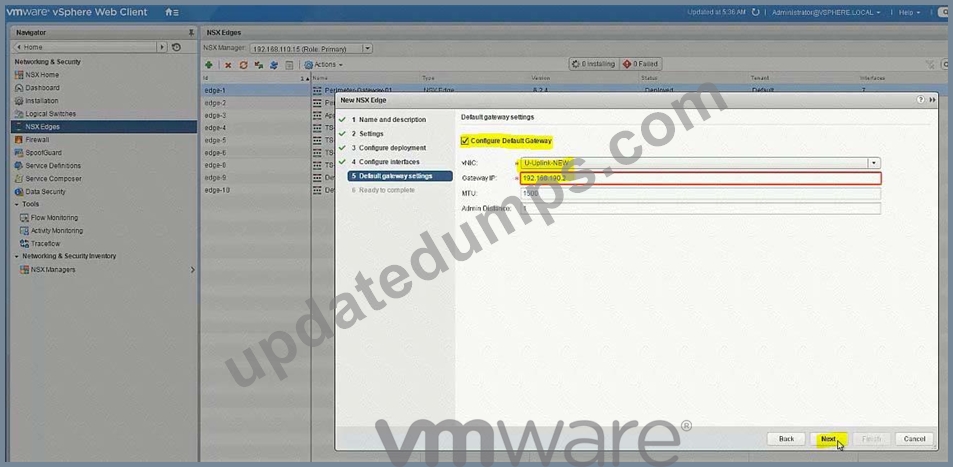
Gateway
-U-Transit-NEW
Ip 192.168.190.2
PGW02 vnic4 U-Transit-NEW 192.168.190.2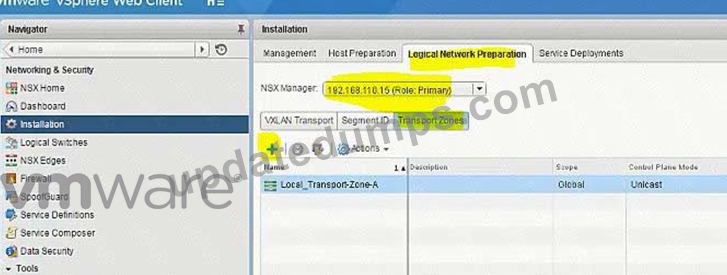
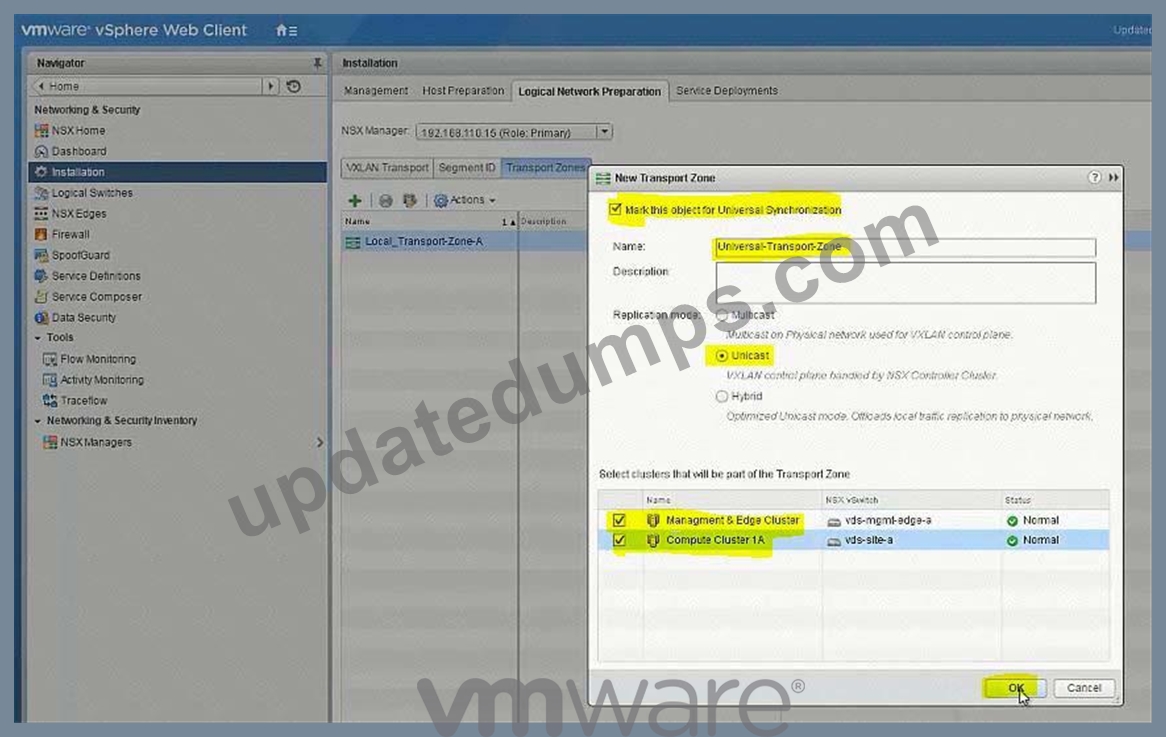
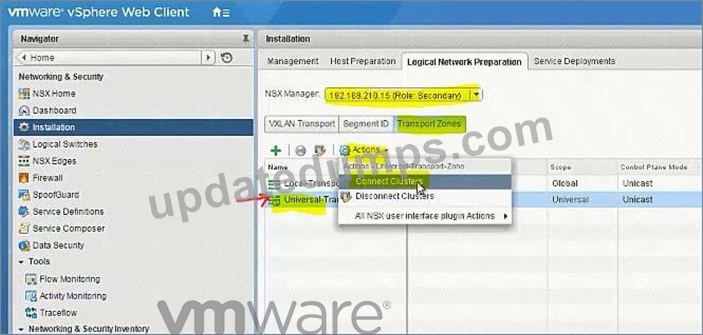
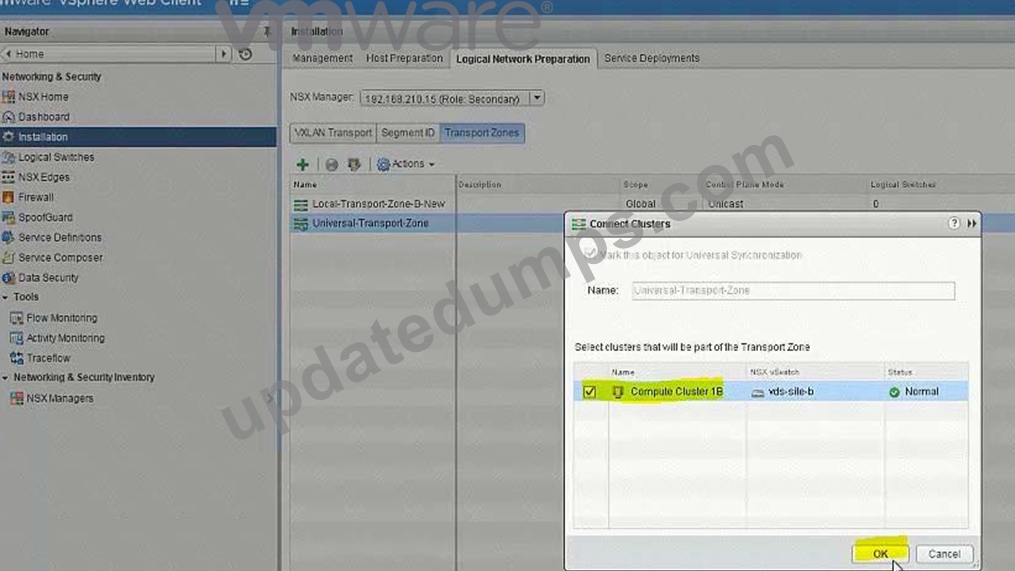
Create 5 logical switches
U-Transit-NEW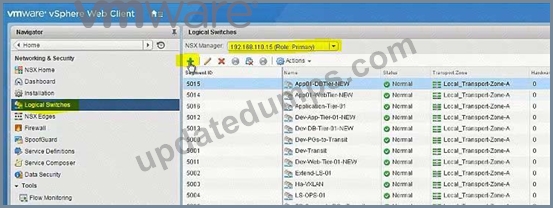
U-Web-Tier-NEW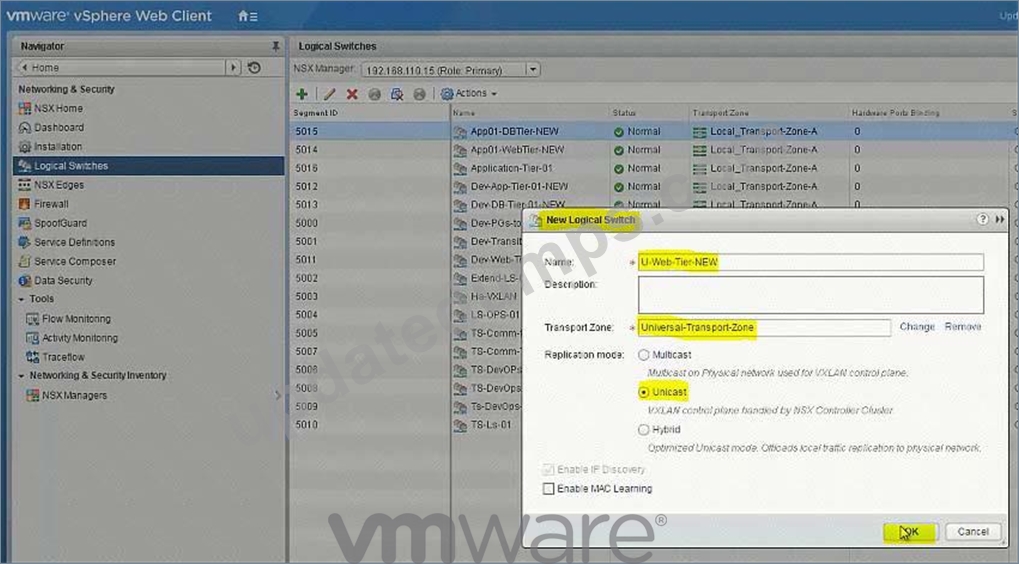
U-App-Tier-NEW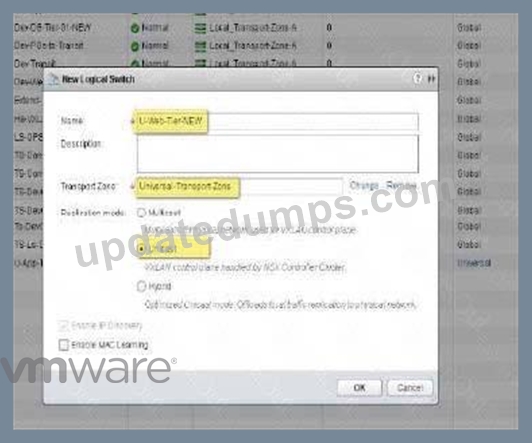
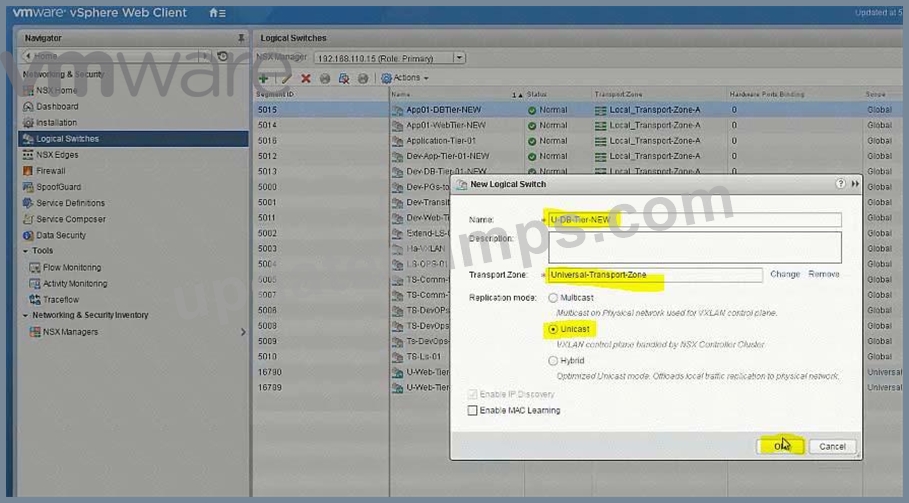
U-DB-Tier-NEW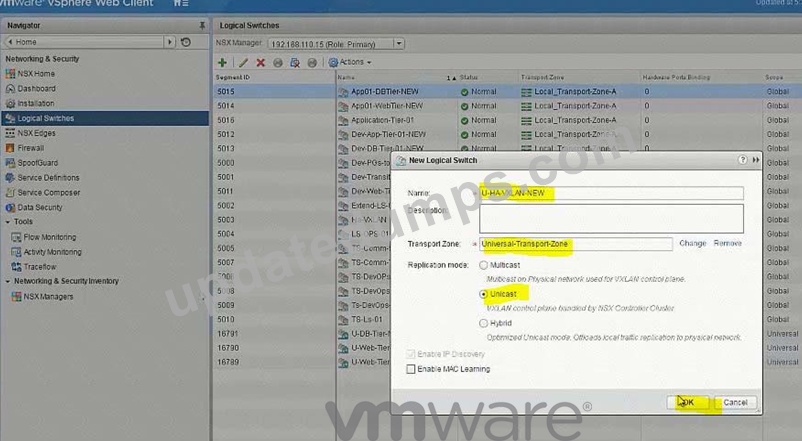
Add VMs to relevant newly created Logical Switches.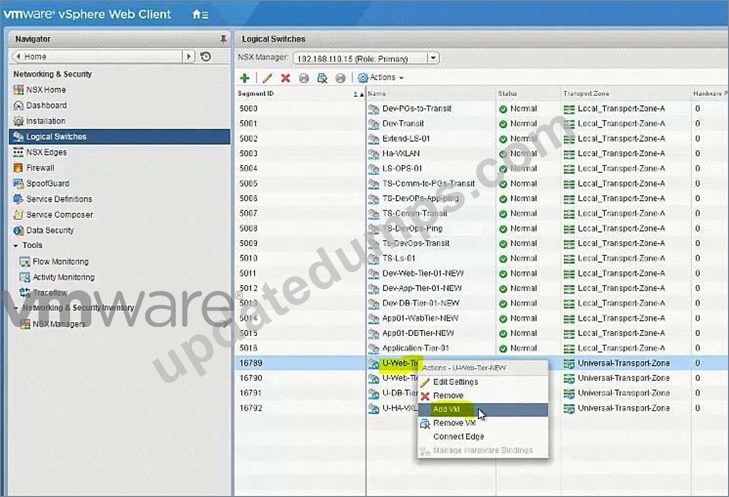
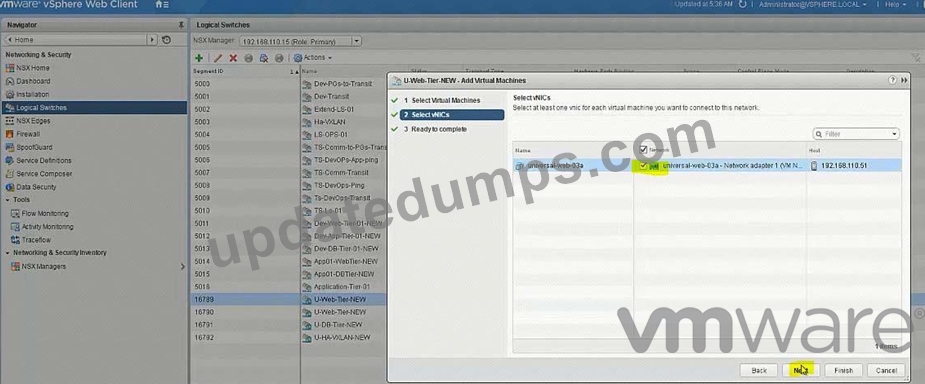
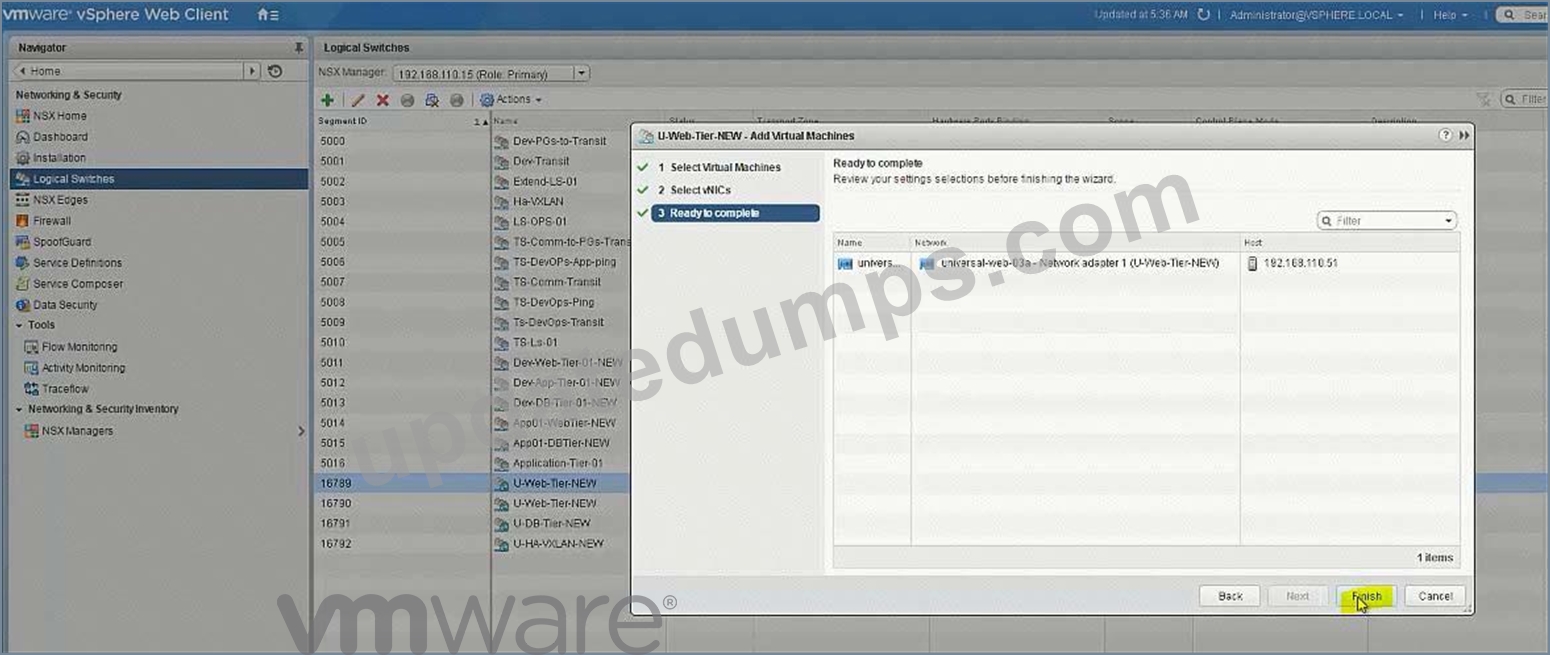
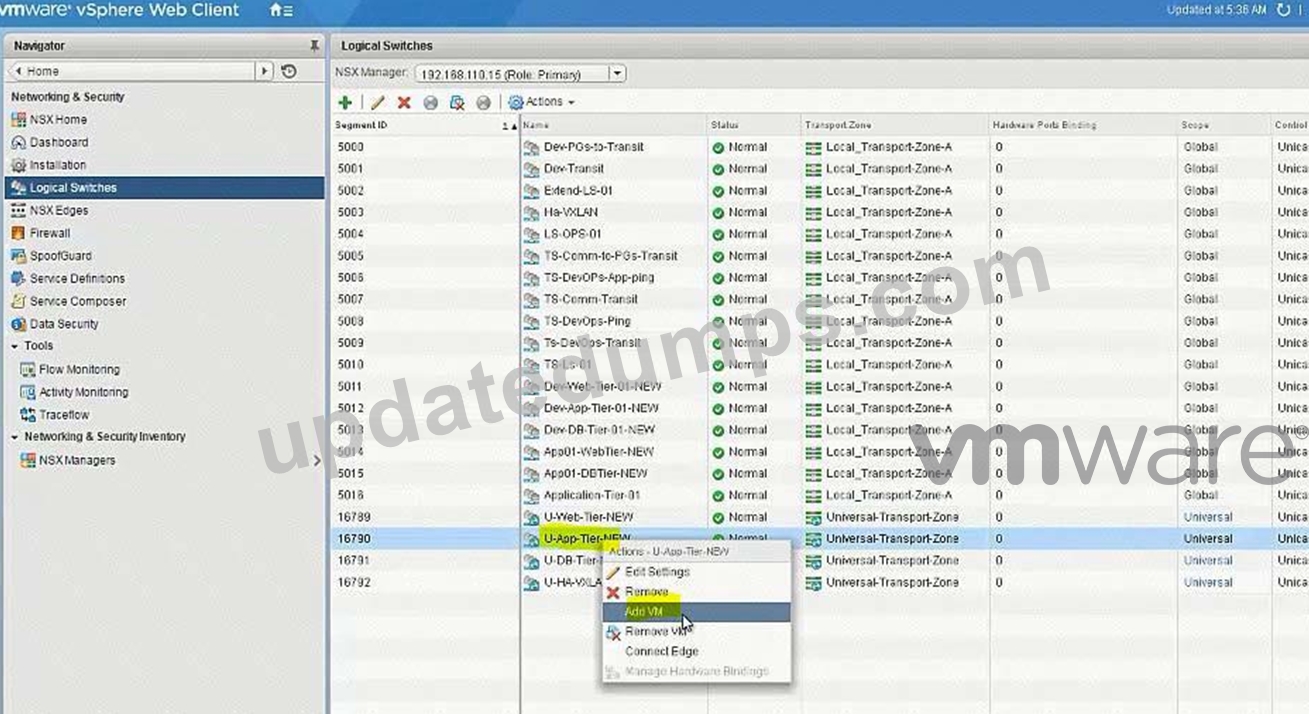
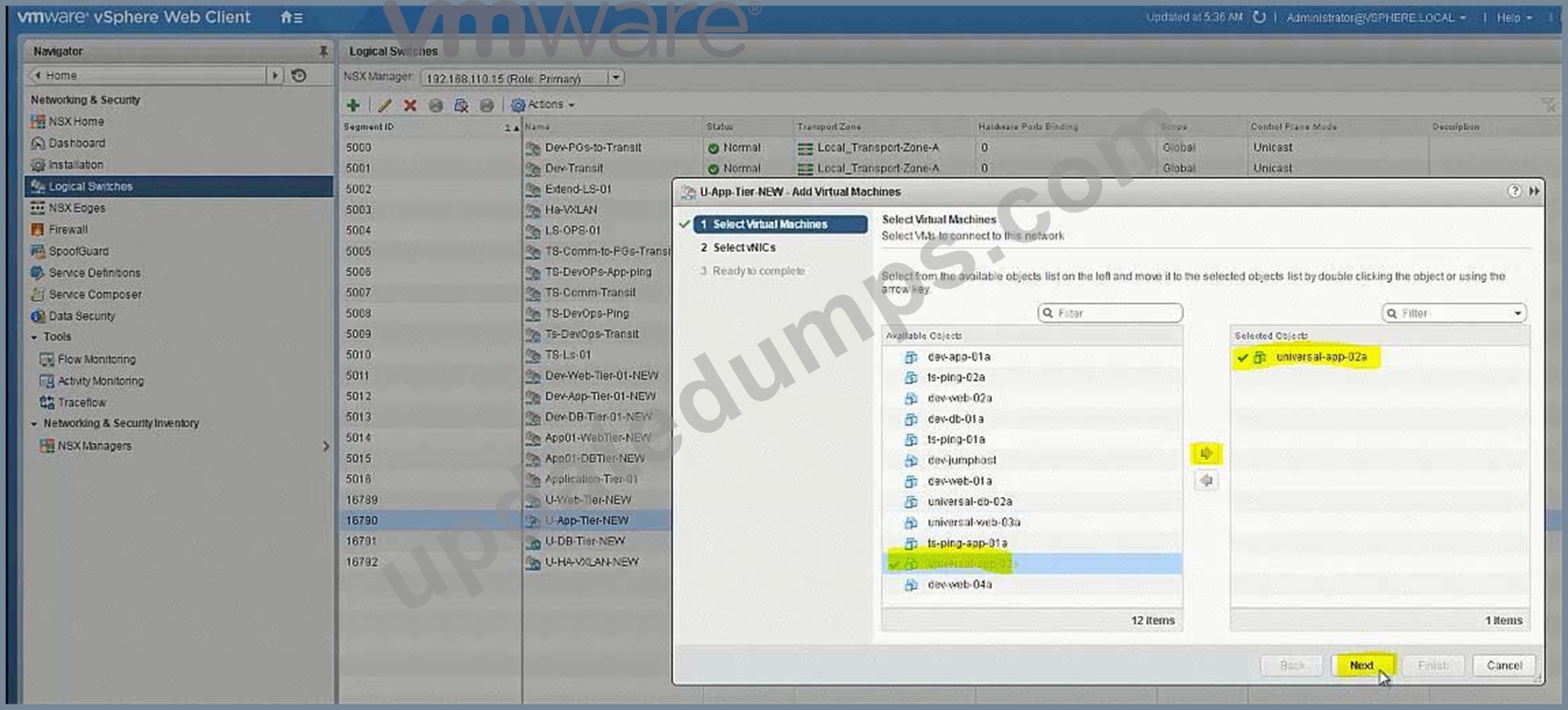
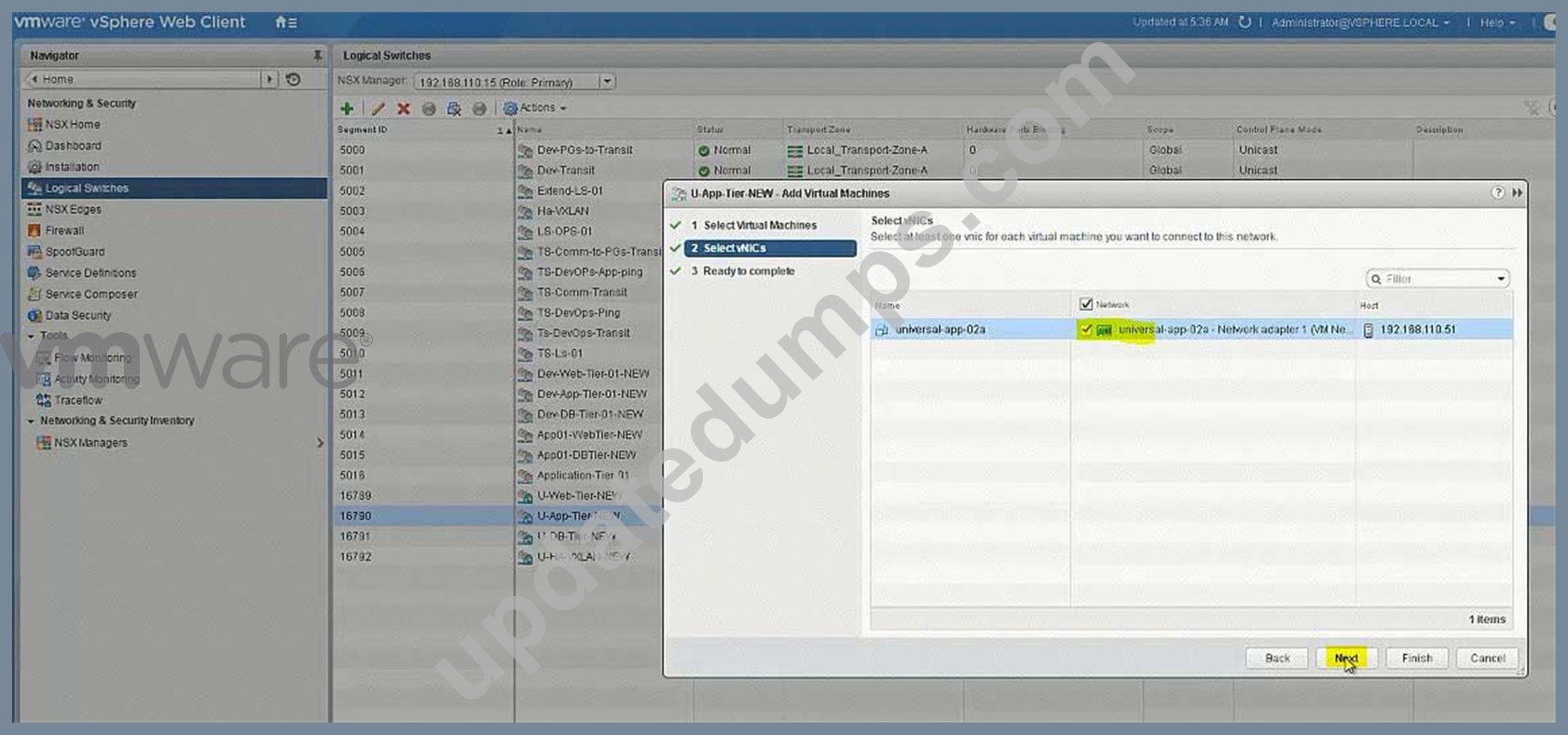
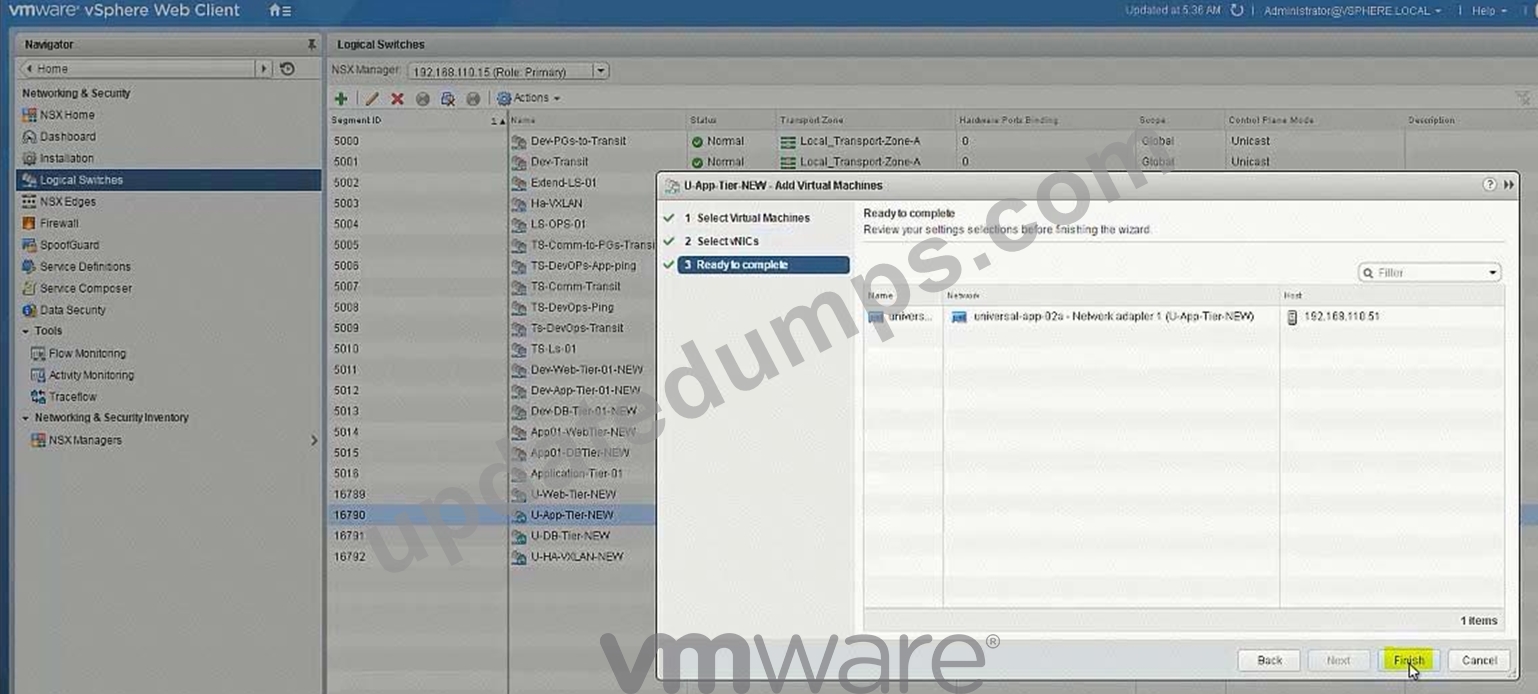
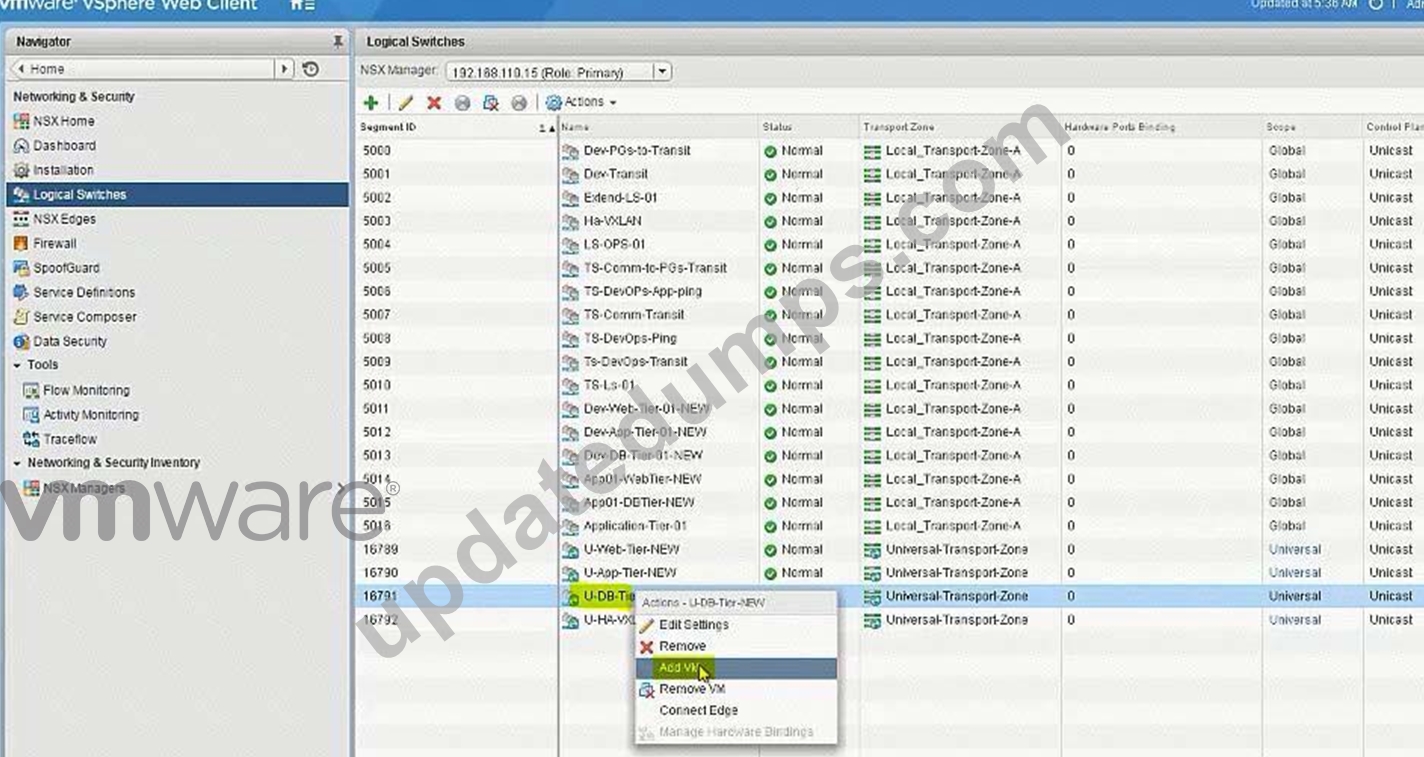
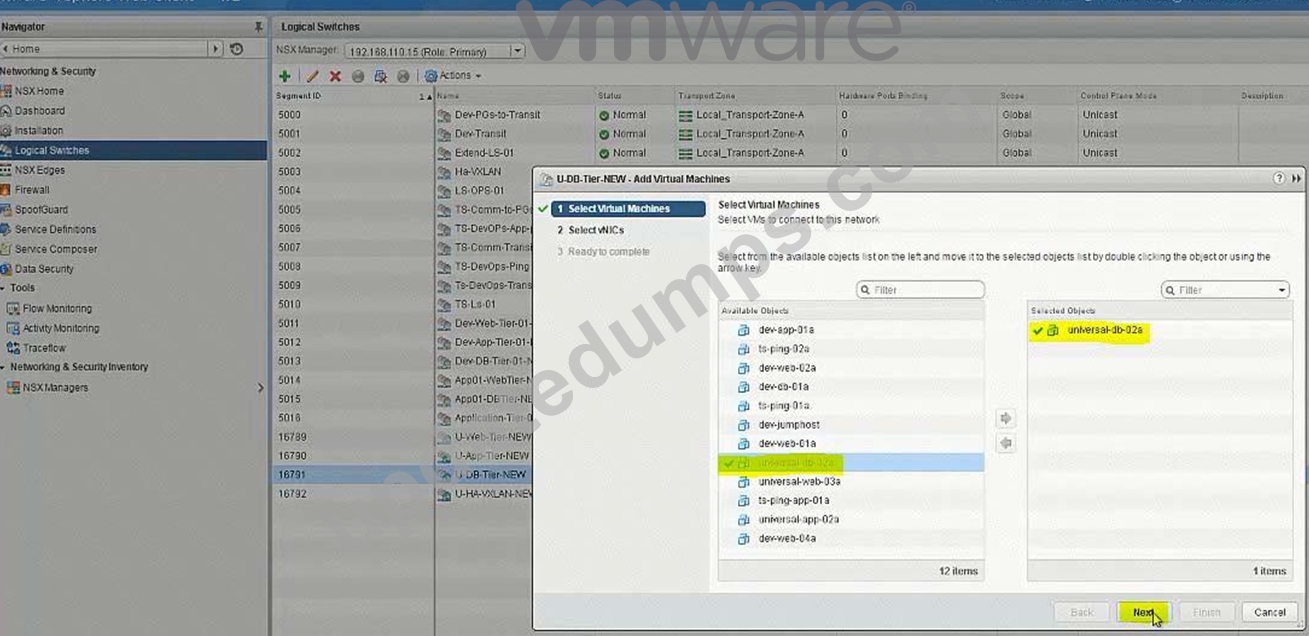
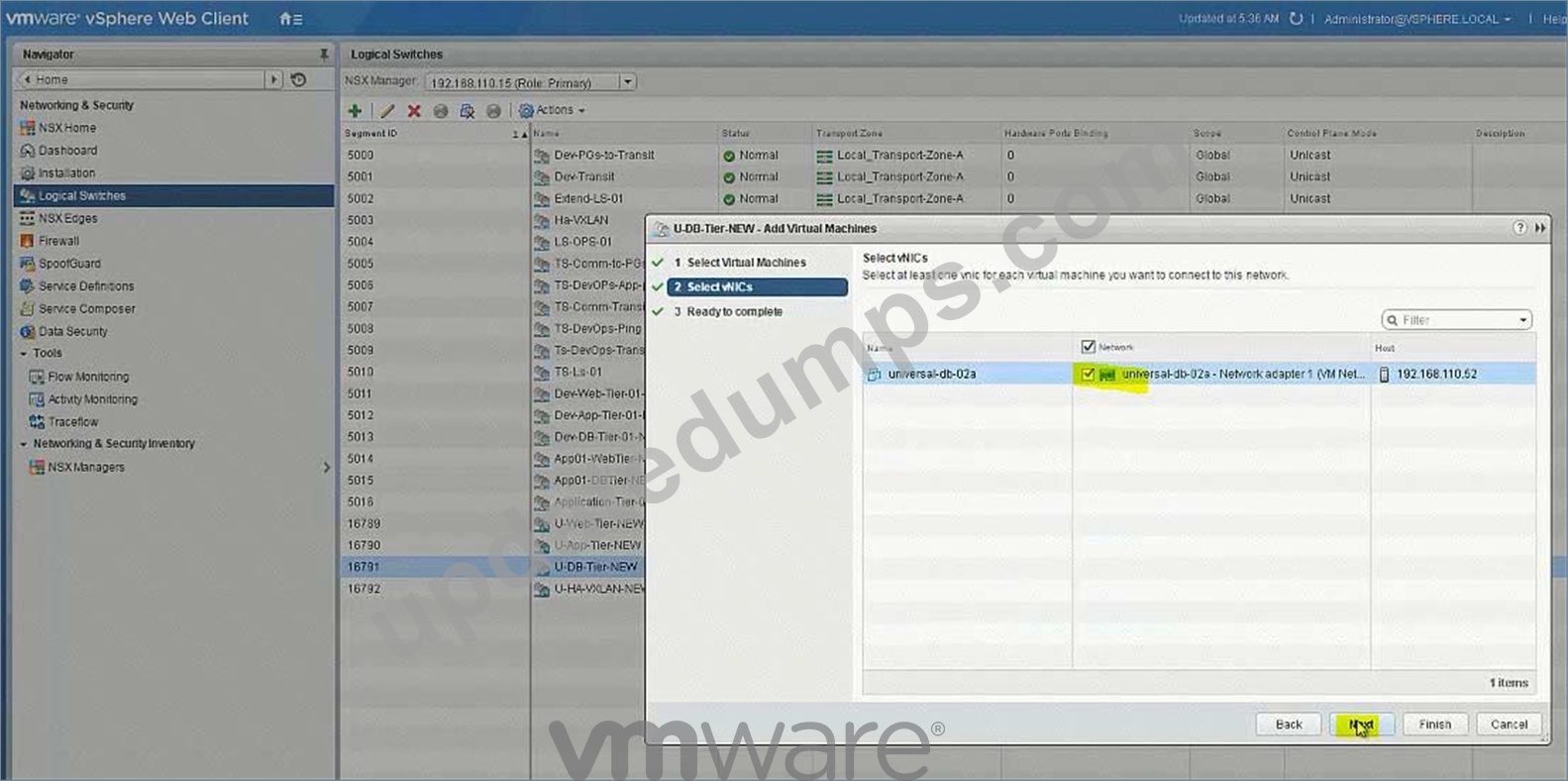
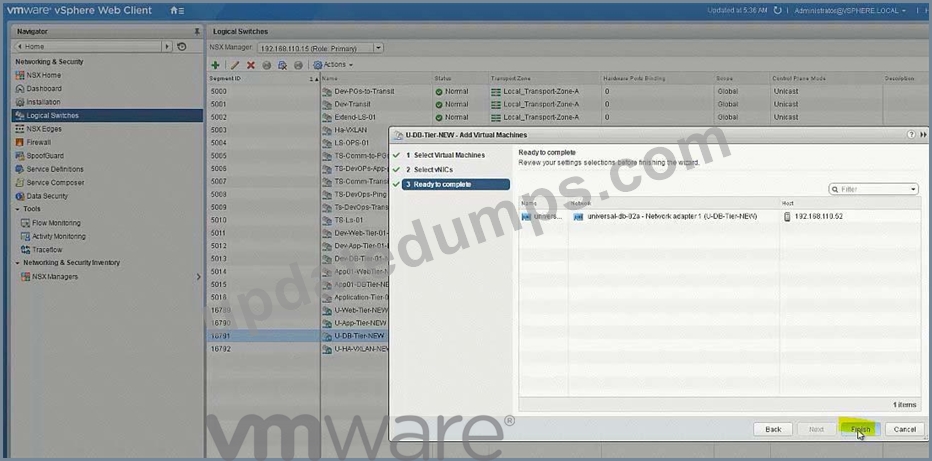
No need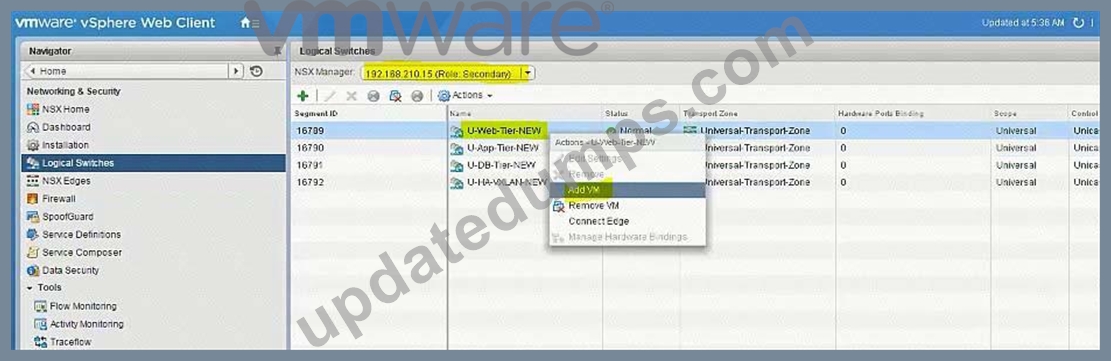
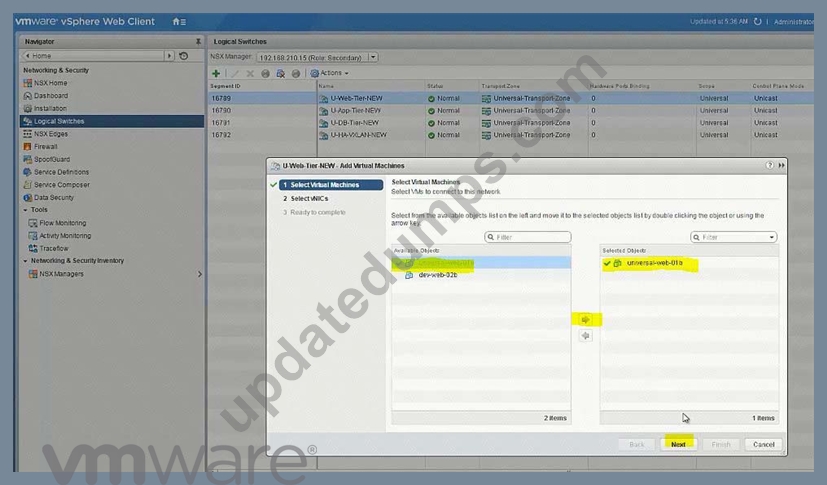
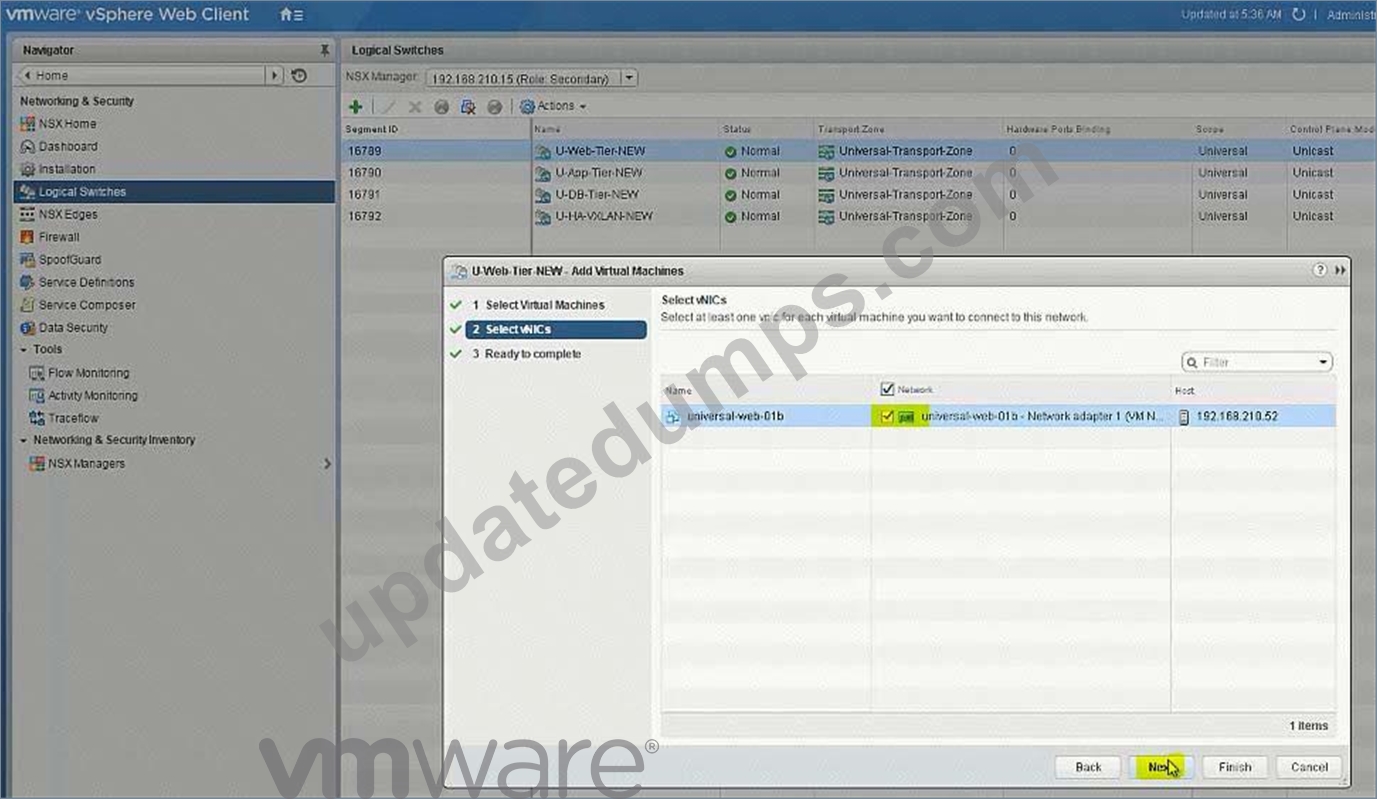
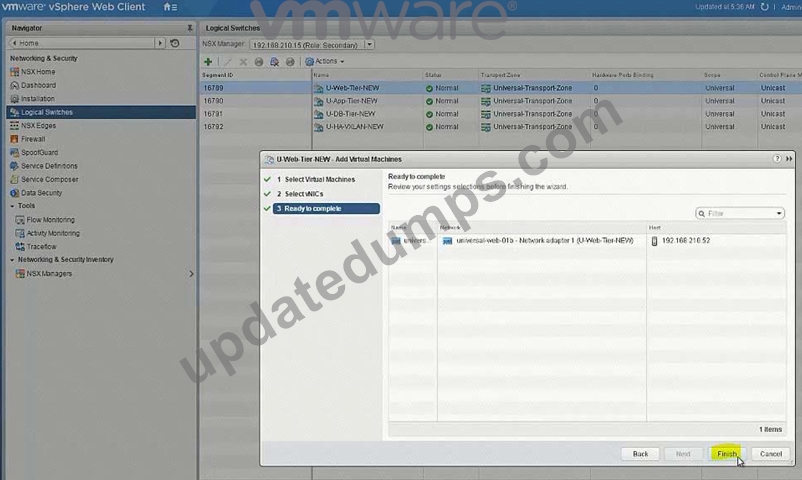
Create new Universal Logical (Distributed) Router: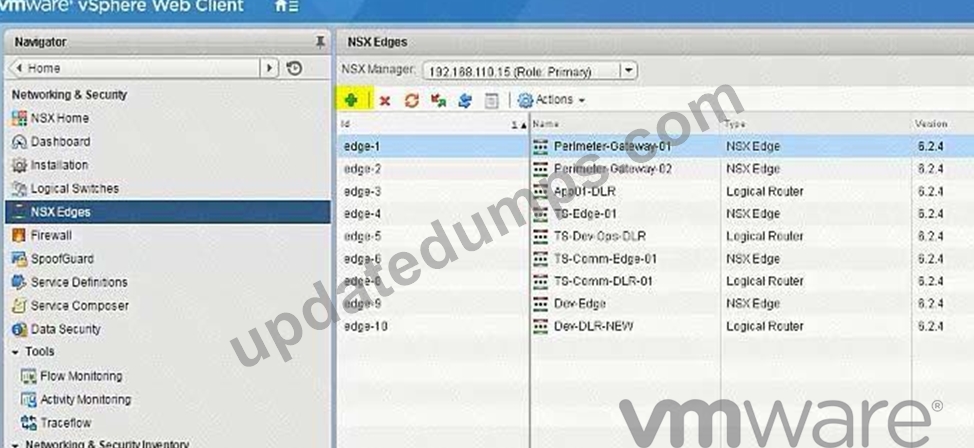
U-DLR-NEW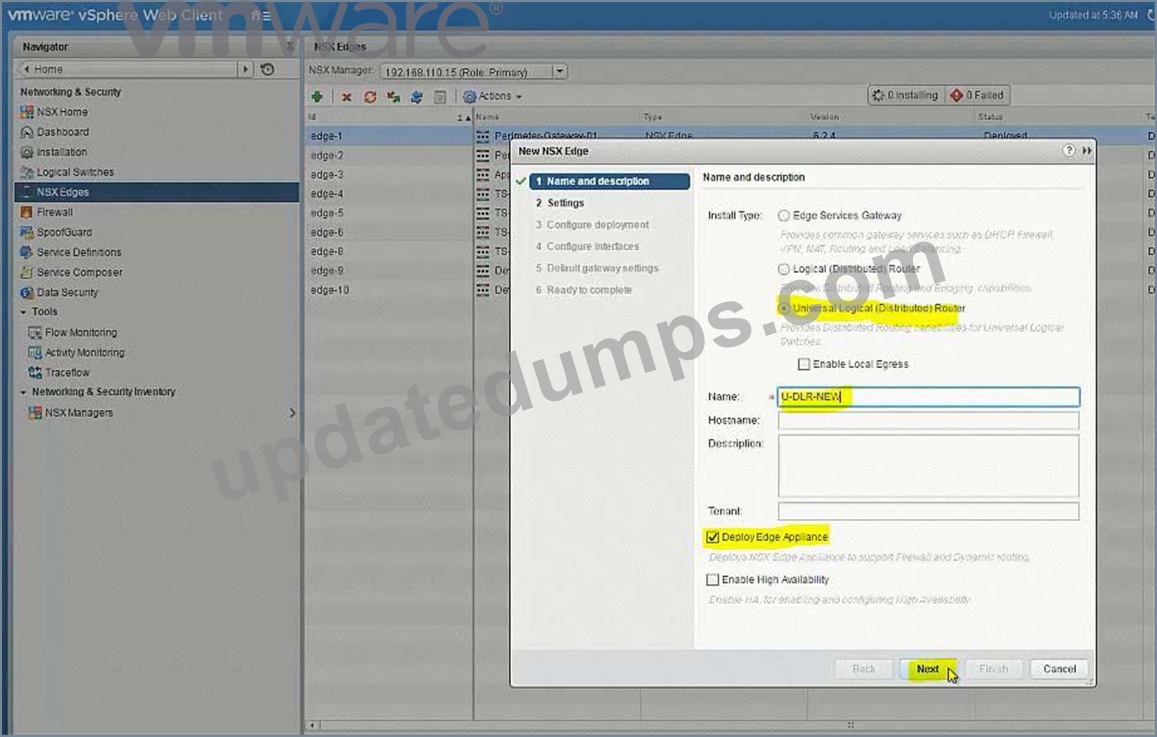
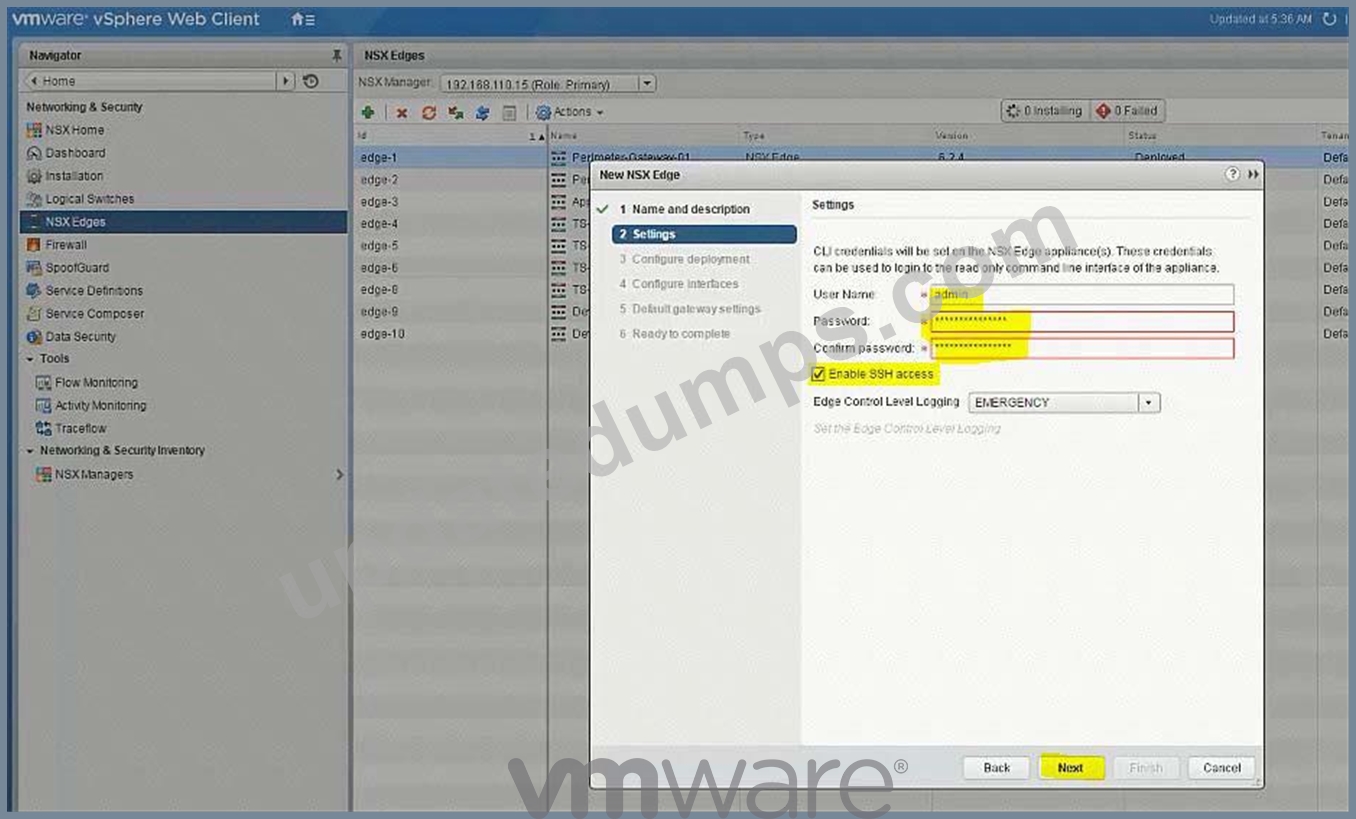
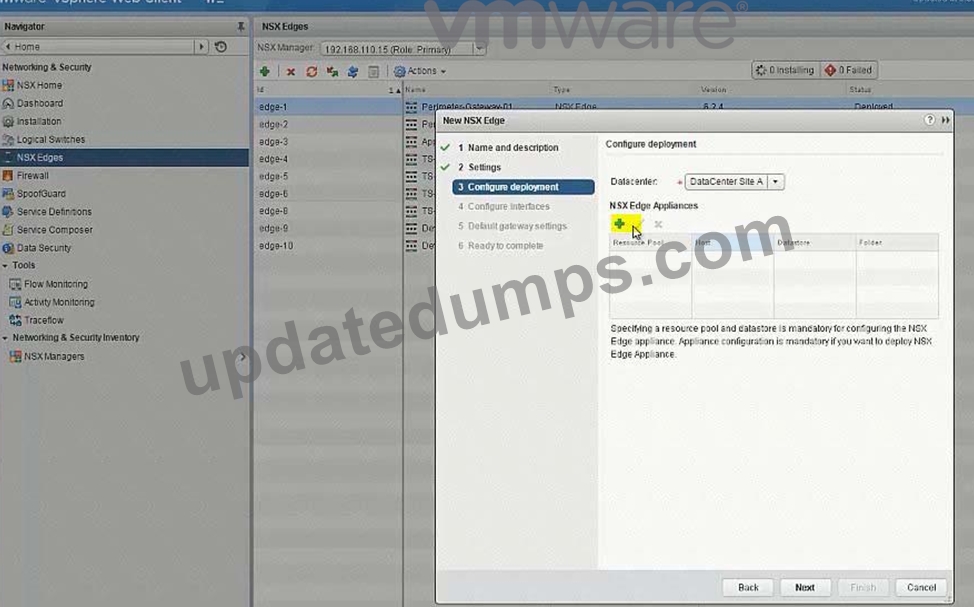
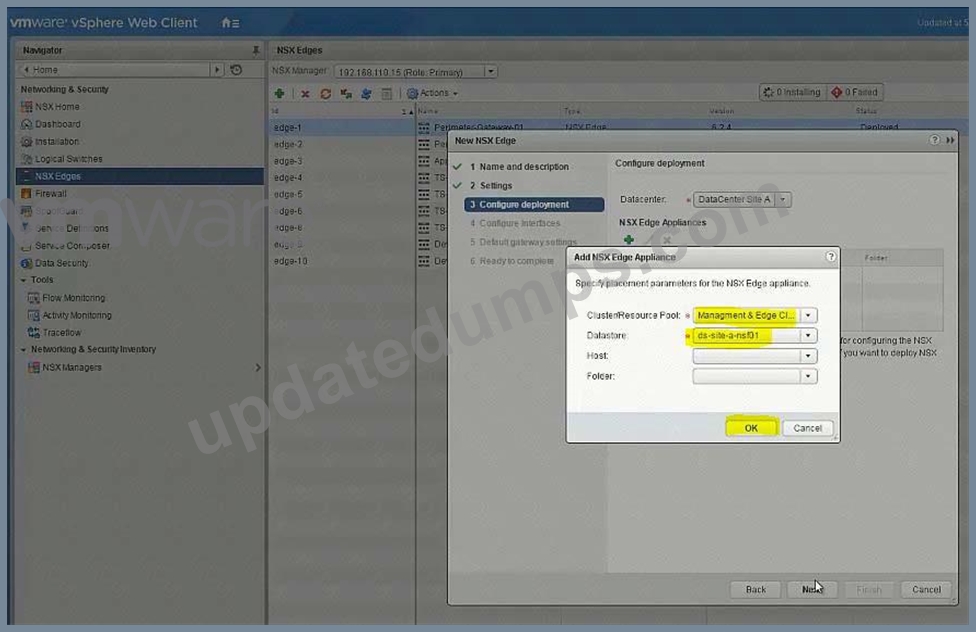
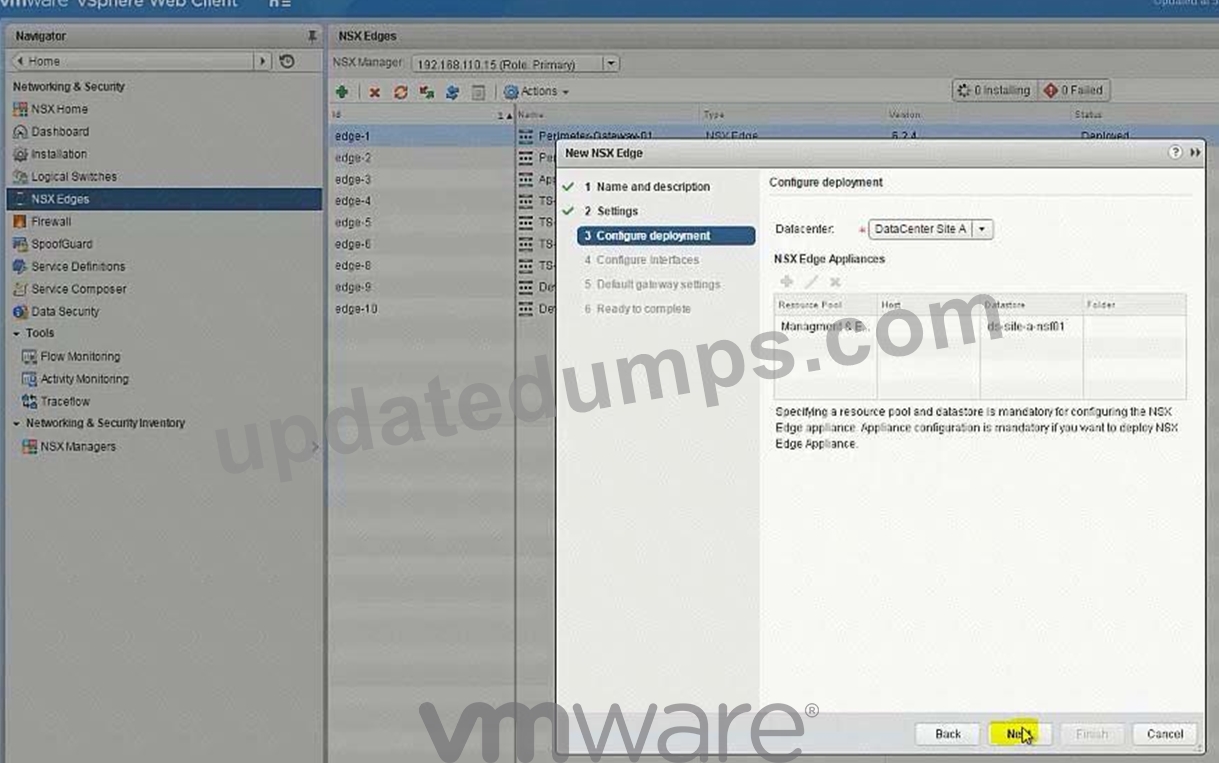
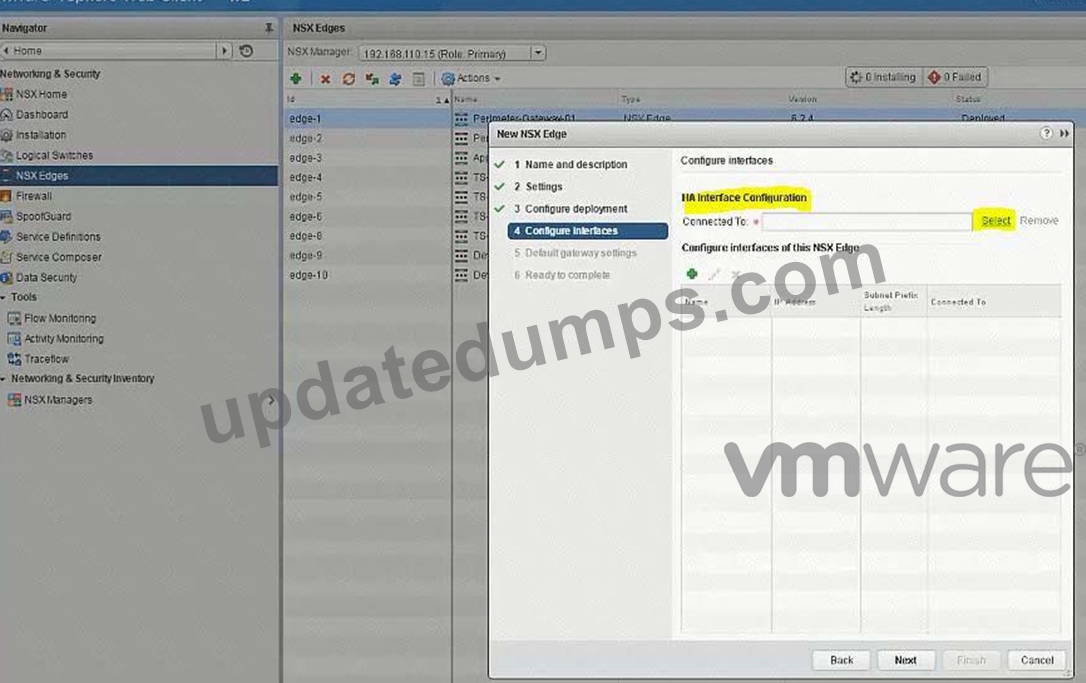
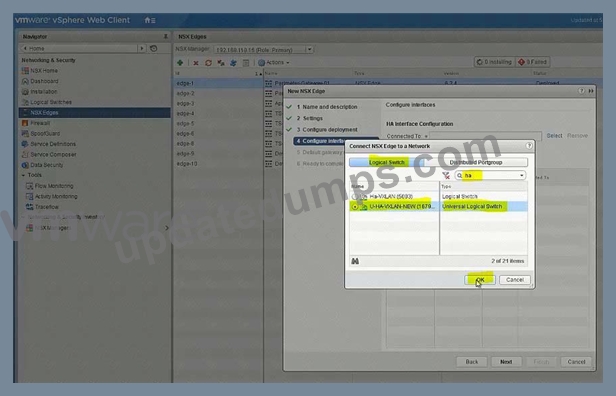
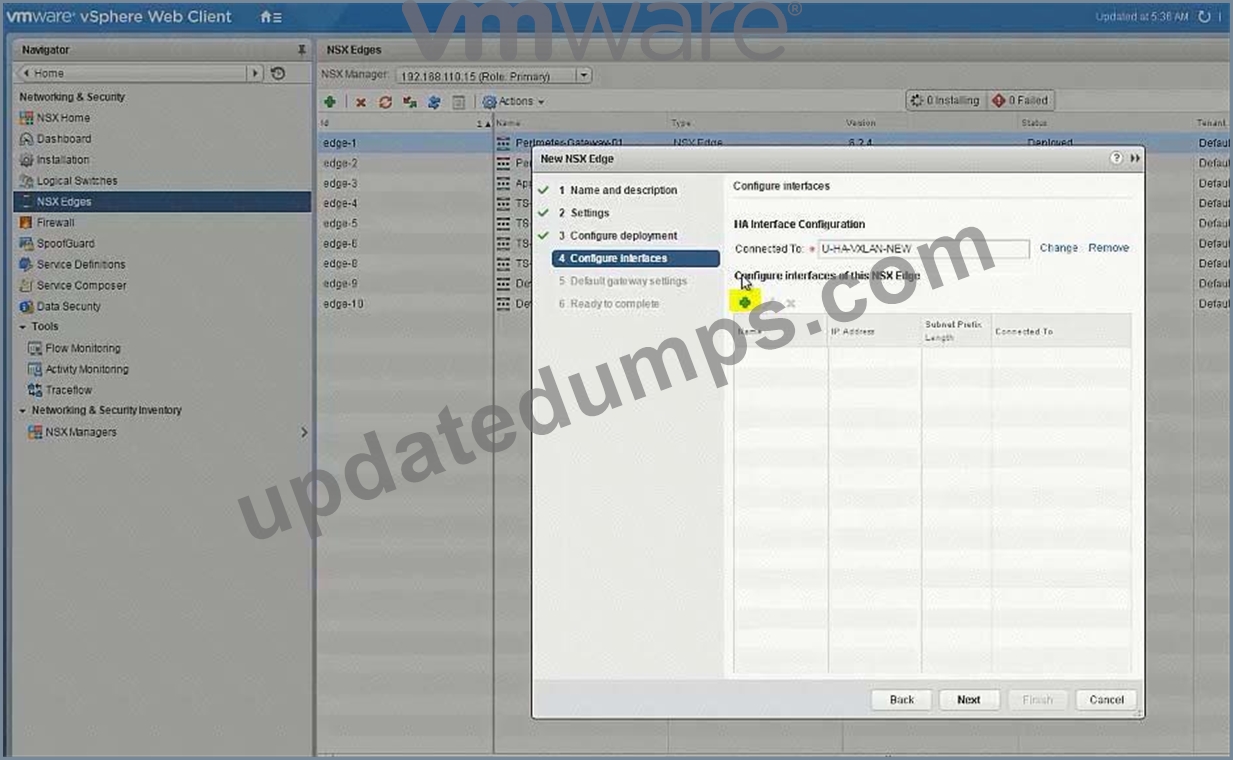
U-Uplink-NEW(U-Transit-NEW)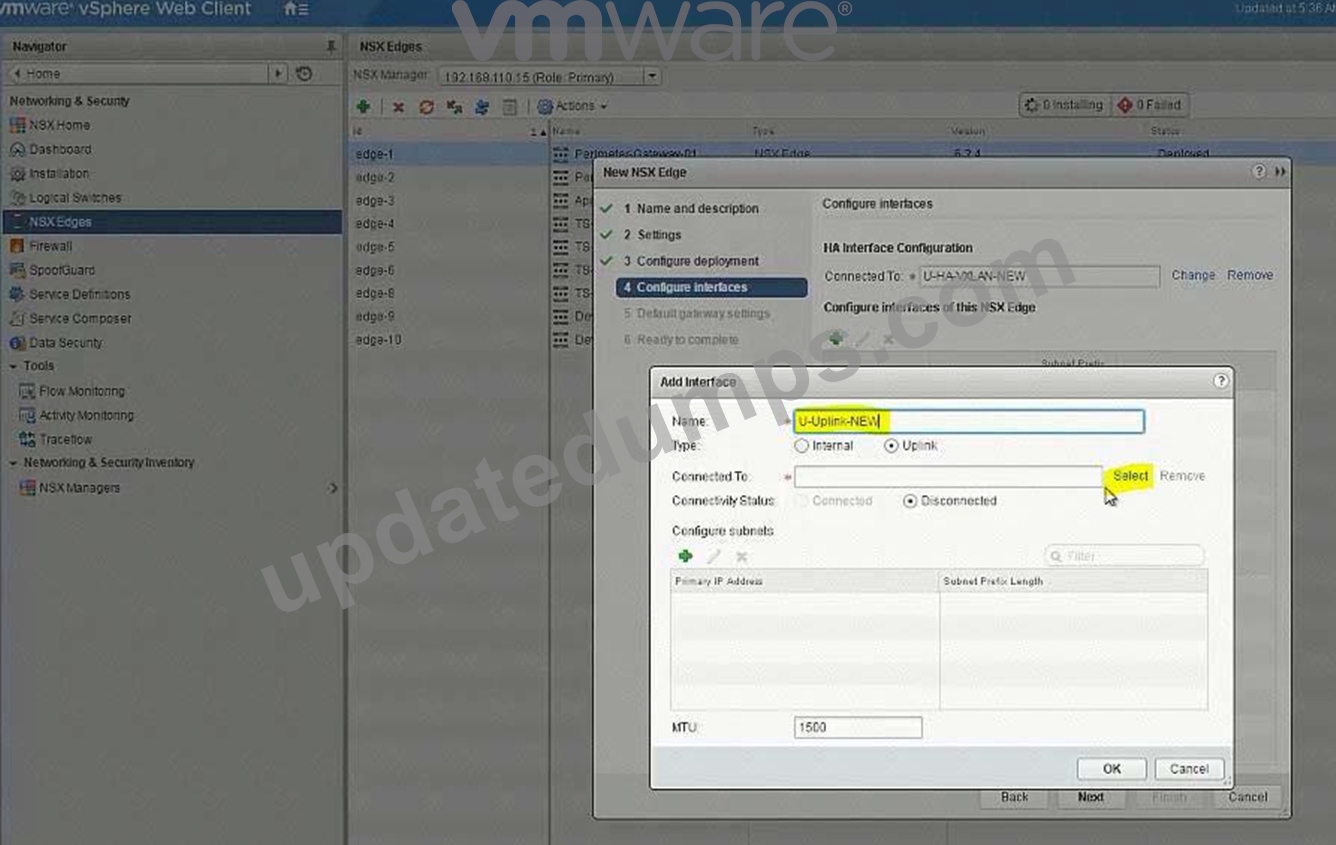
Select U-Transit-NEW logical swicth here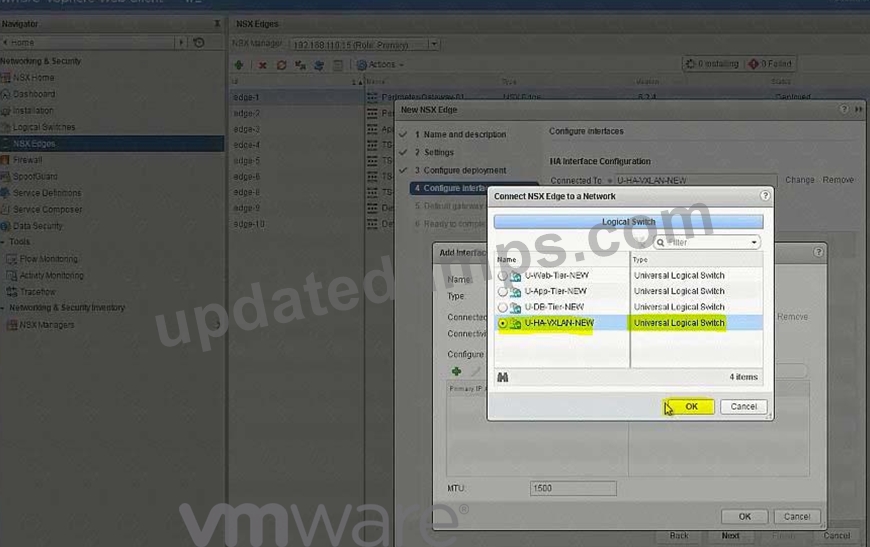
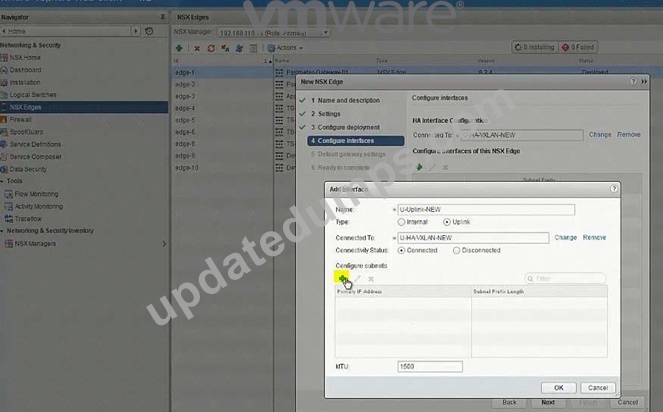
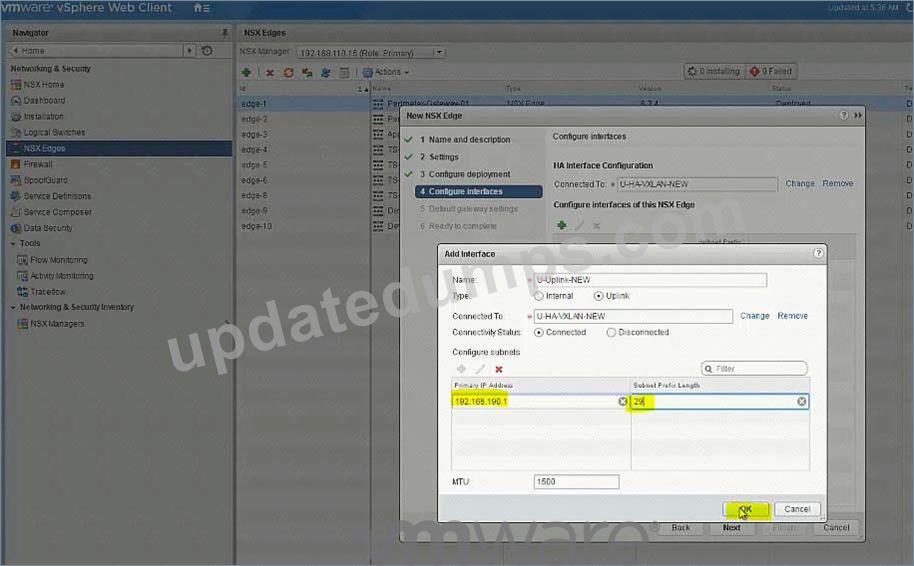
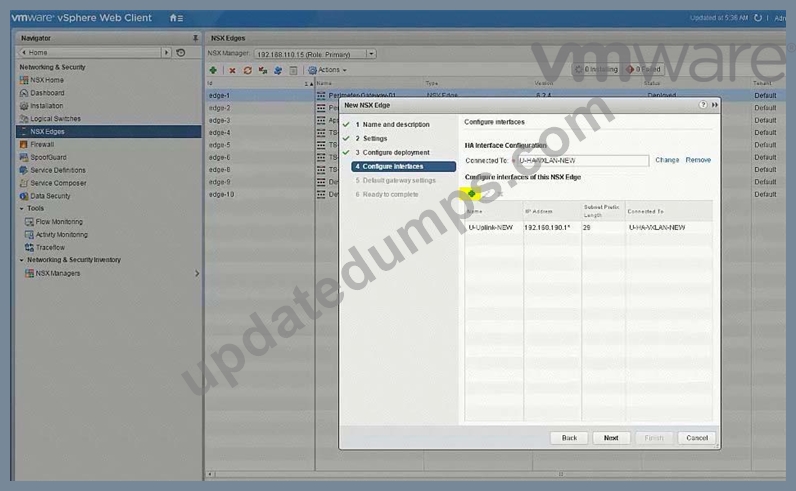
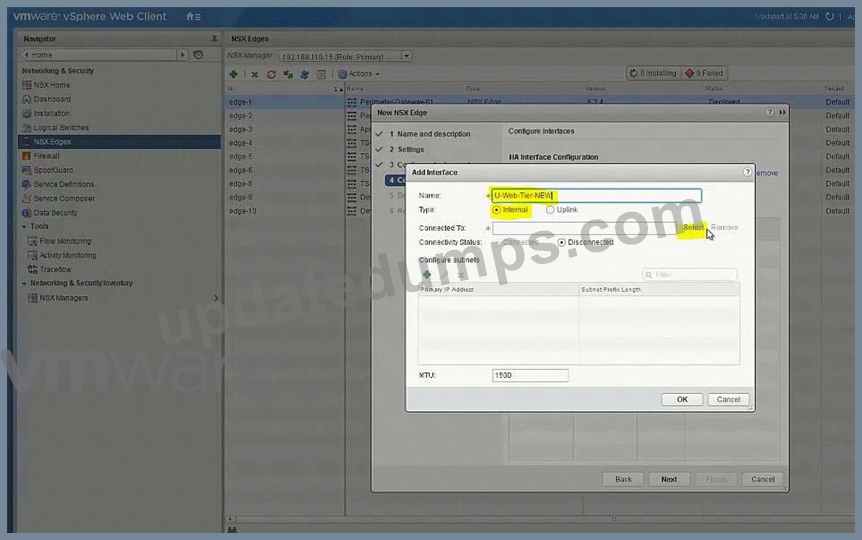
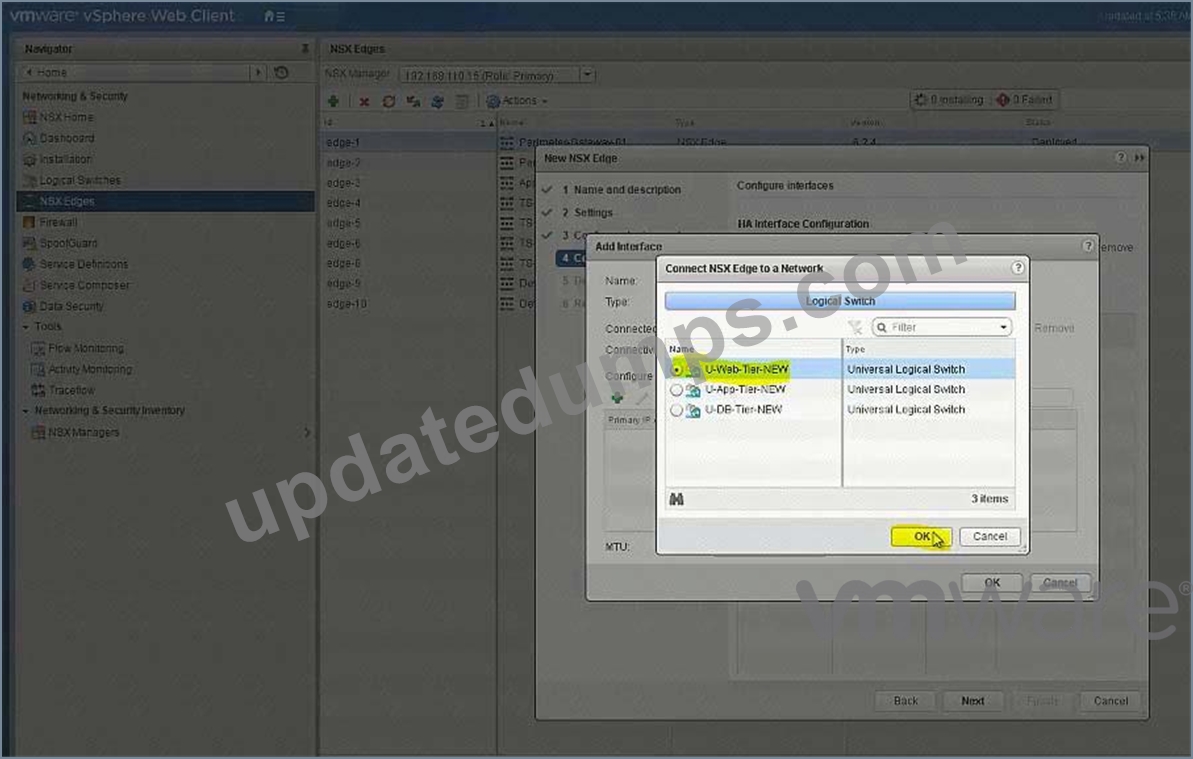
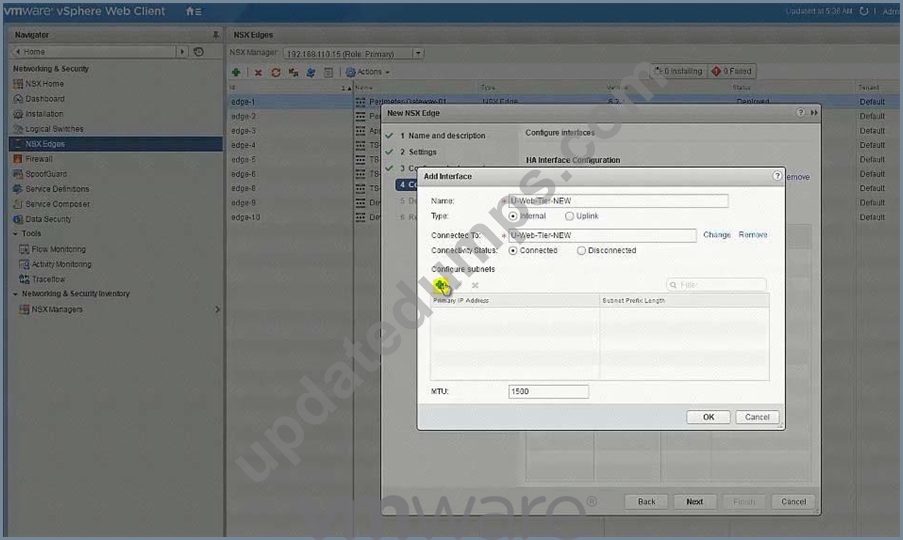
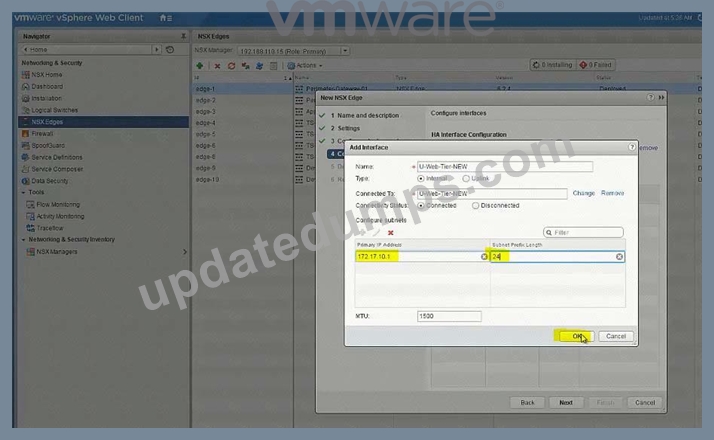
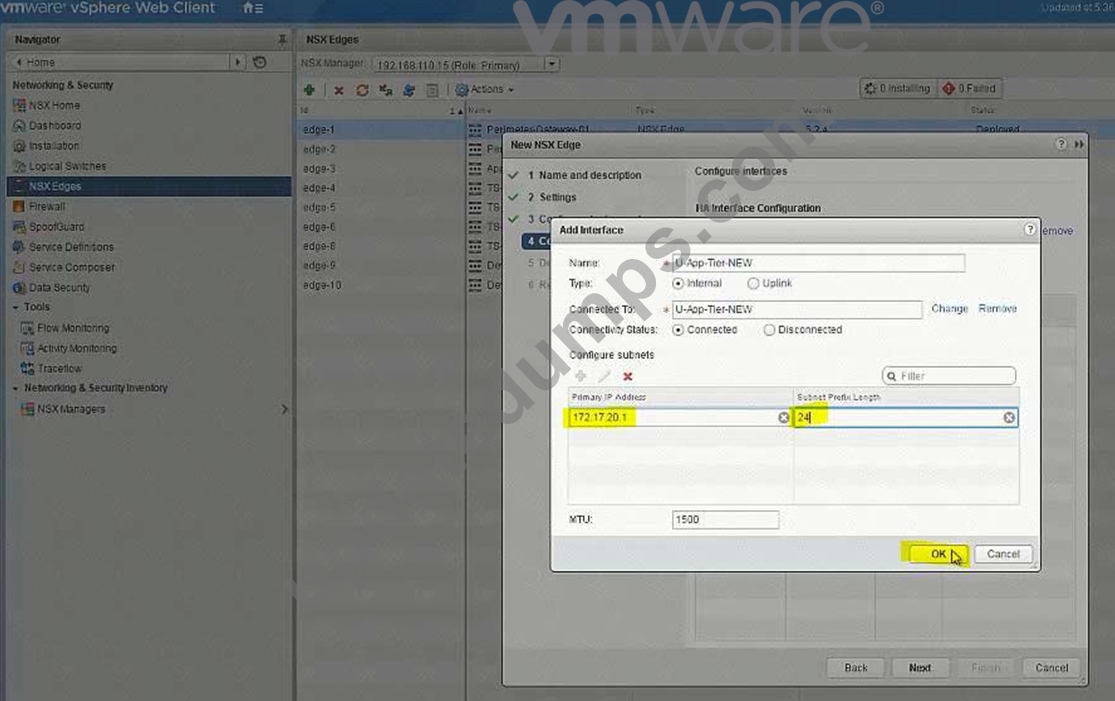
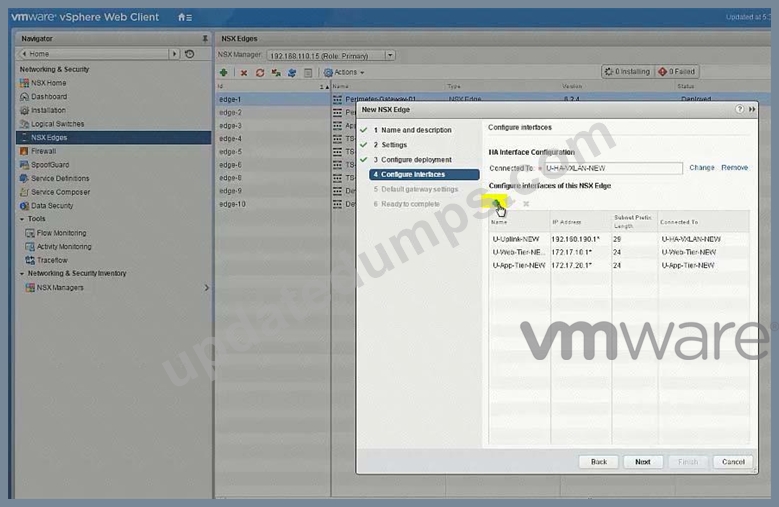
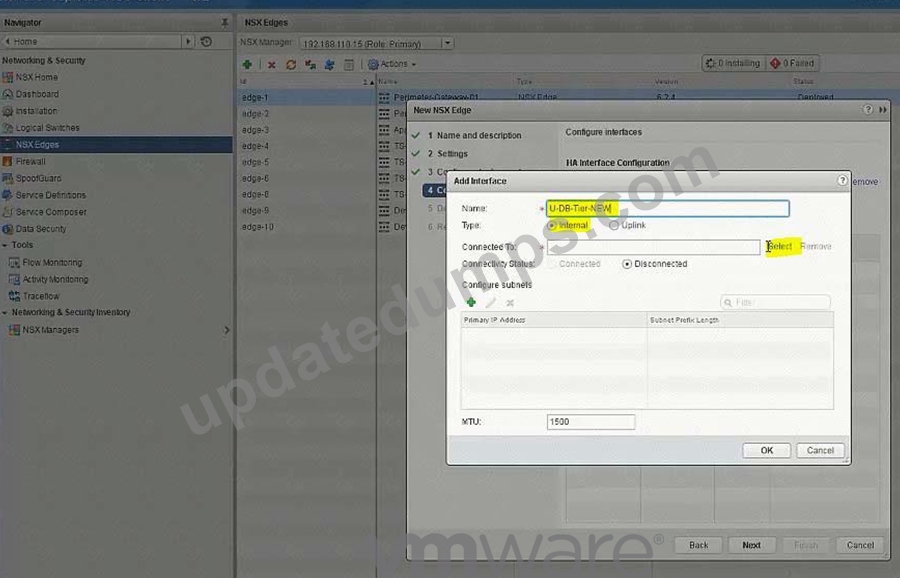
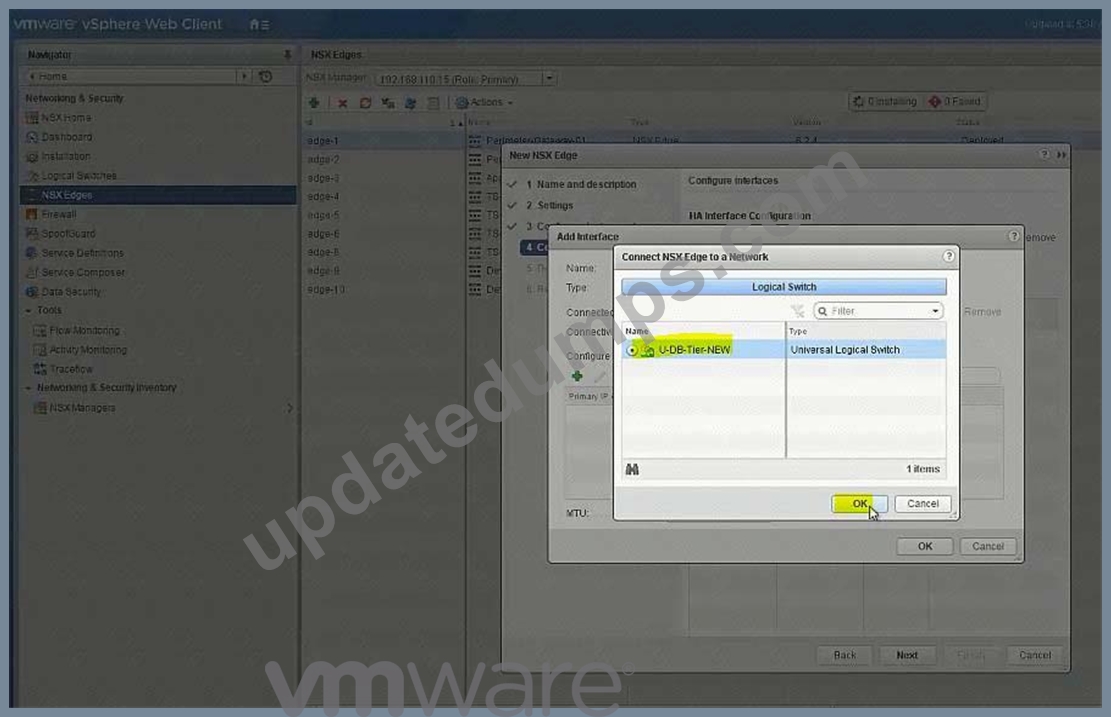
Perimeter-Gateway-02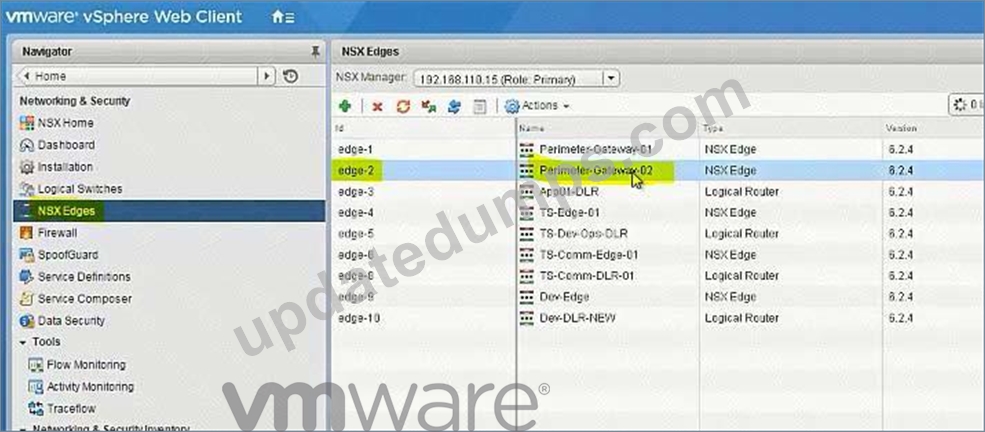
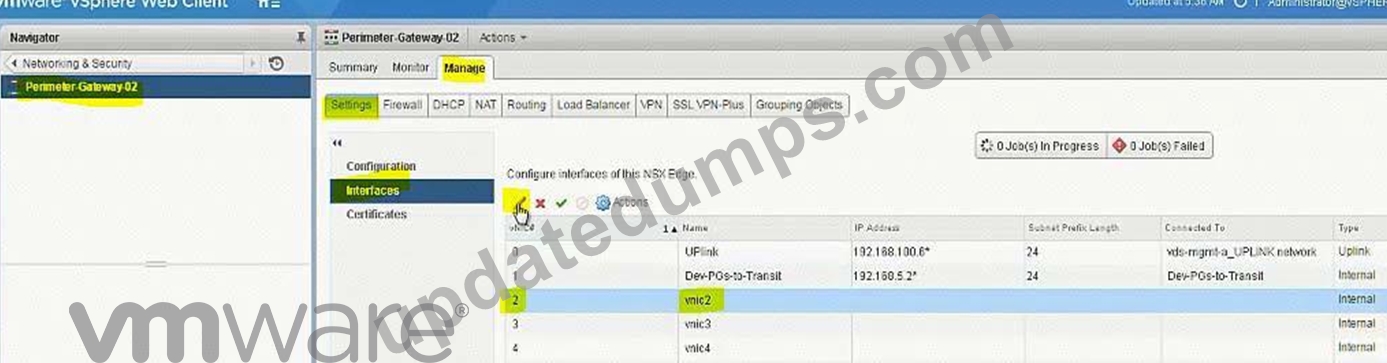
To-Universal-DLR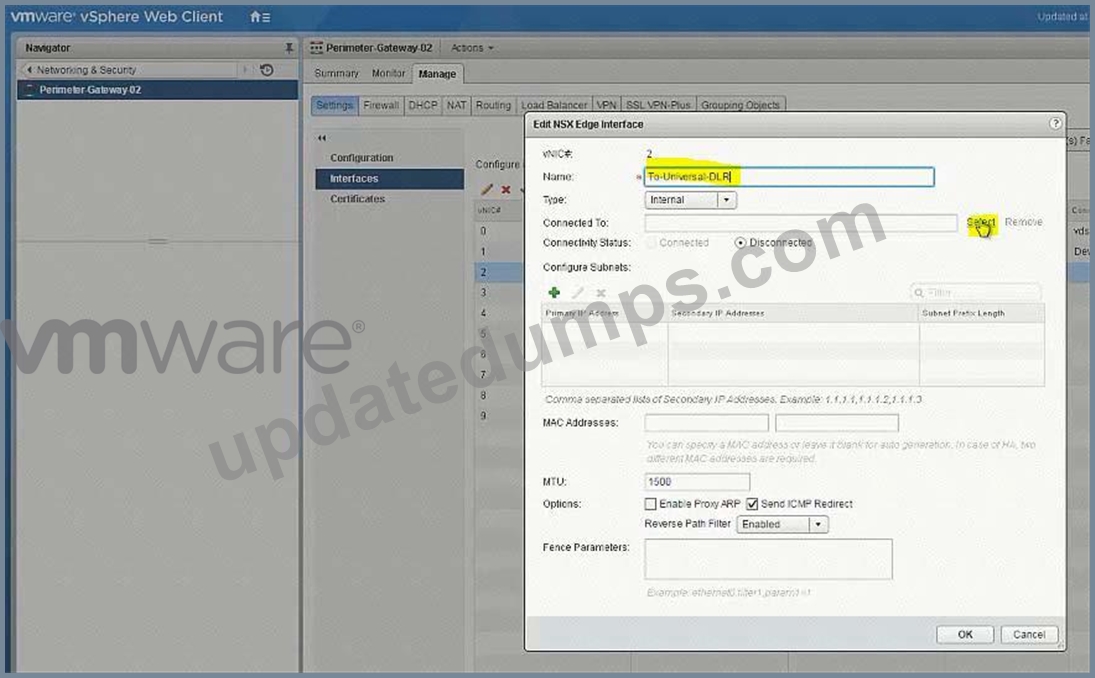
Select U-Transit-NEW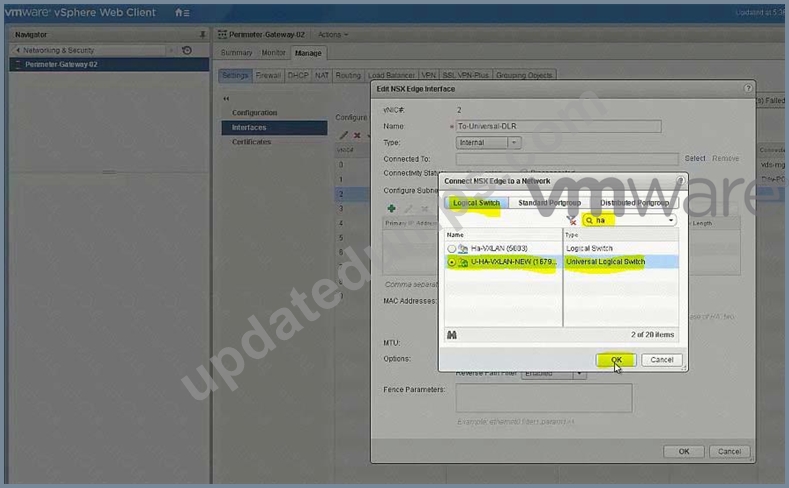
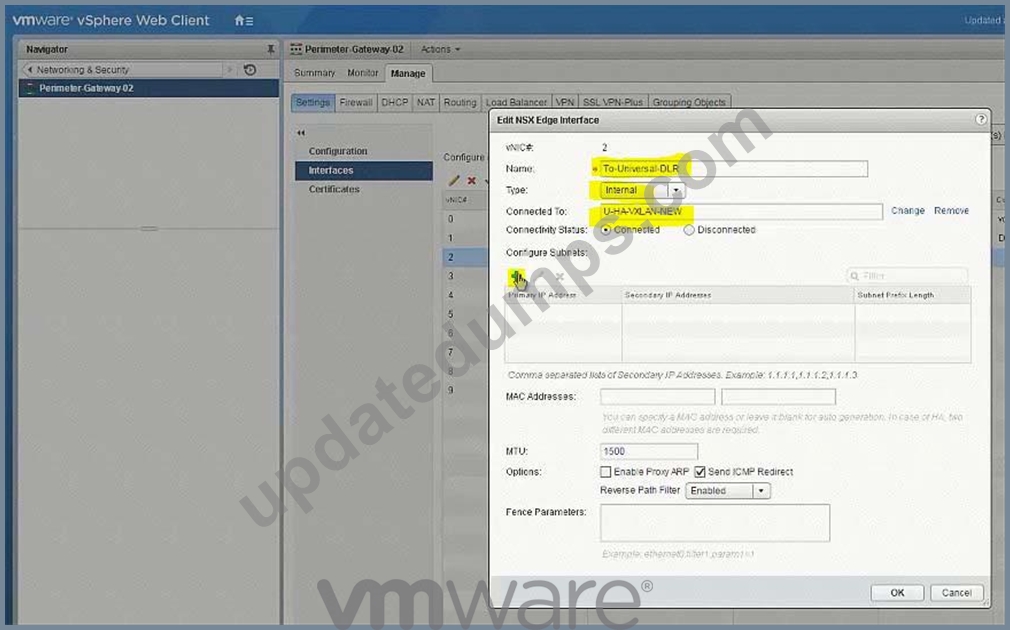
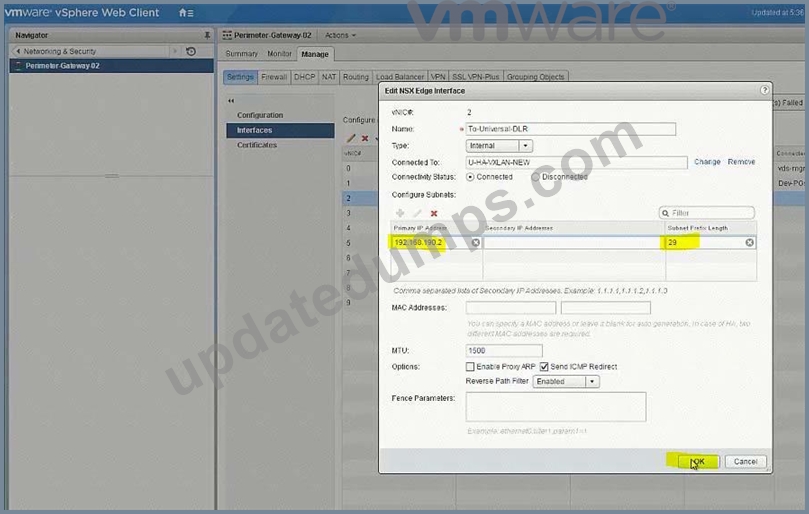
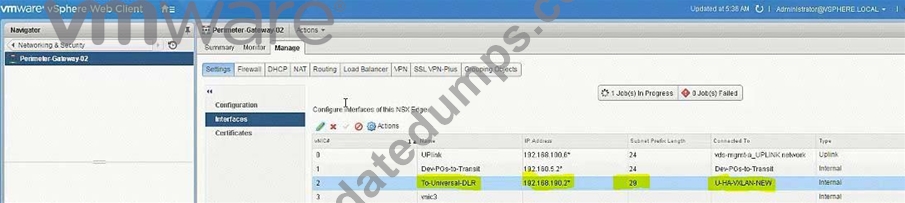
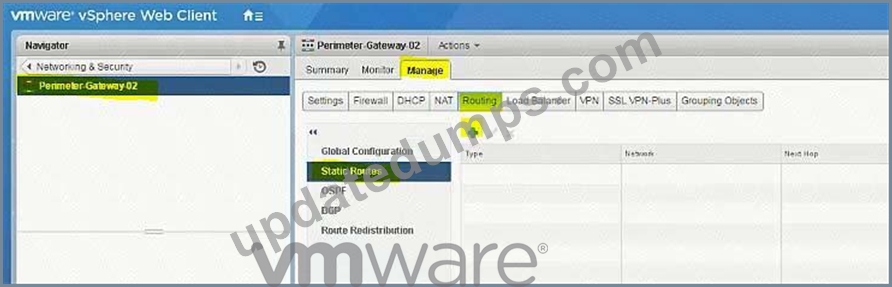
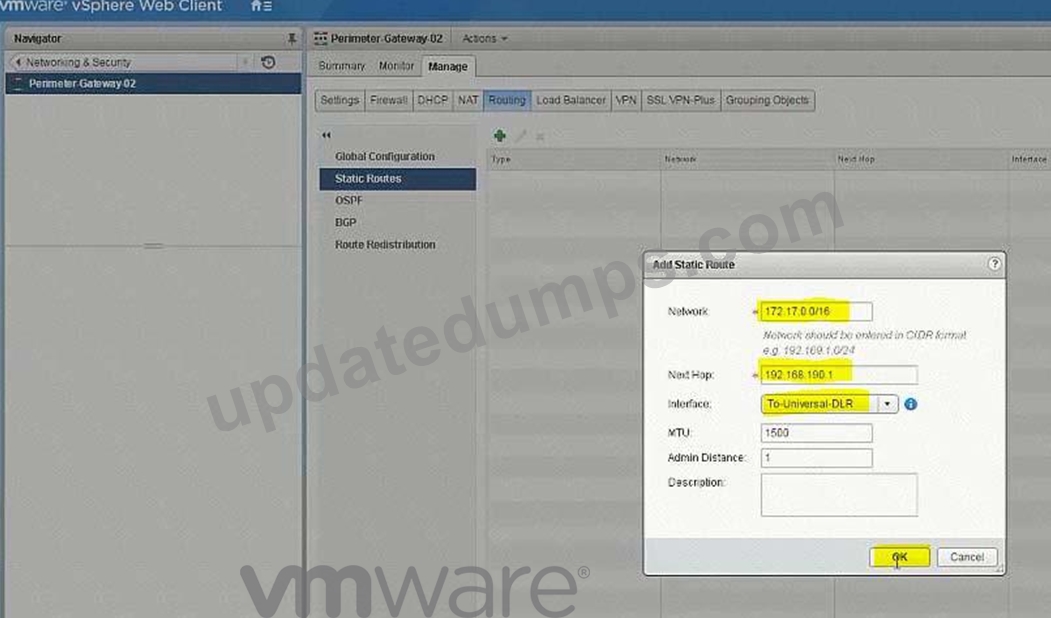

172.17.0.0/16
192.168.190.1
To-Universal-DLR
NEW QUESTION 20
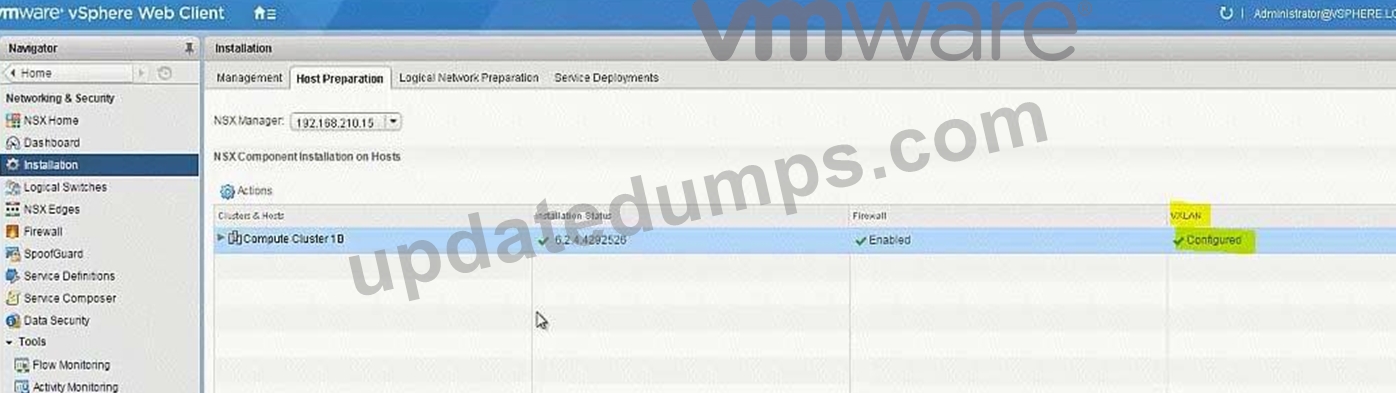
In the previous scenario, vCenter vcsa-b.corp.local was configured for NSX. Now the hosts must be prepared for NSX and the initial VXLAN configuration should be completed.
Requirements:
vCenter: vcsa-01b.corp.local
Credentials: [email protected] / VMware1!
Cluster: Compute Cluster 1B
ESXi Hosts: esx-01b.corp.local, esx-02b.corp.local
VTEP Information:
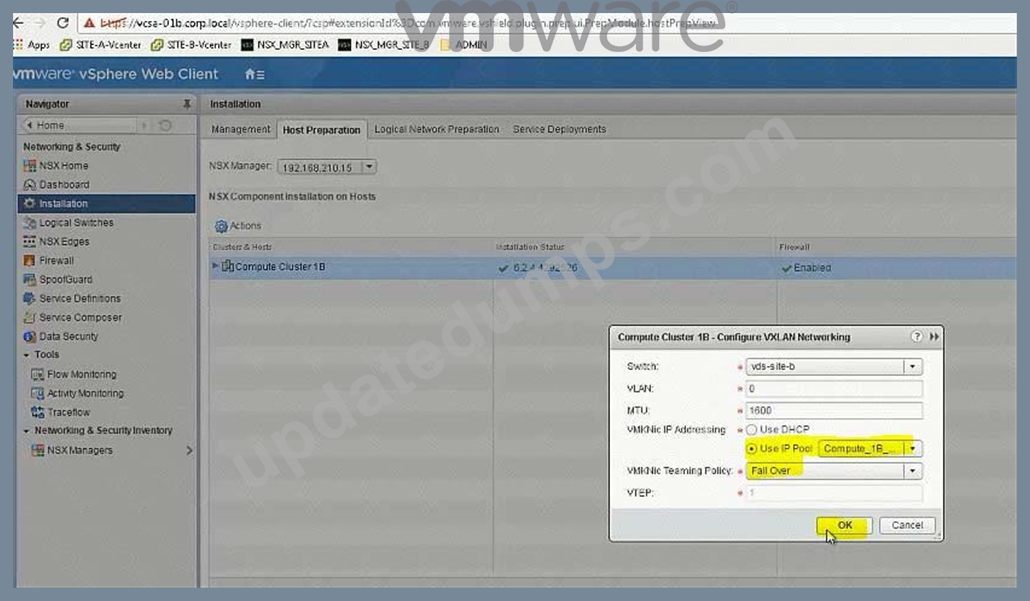
VMKNic Teaming Policy: Fail Over
VLAN: 0
MTU: 1600
IP Pools for VTEP:
* Name: Compute_1B_VTEP_Pool-New
* Gateway: 192.168.230.1
* Prefix Length: 24
* Static IP Pool: 192.168.230.51 - 192.168.230.60
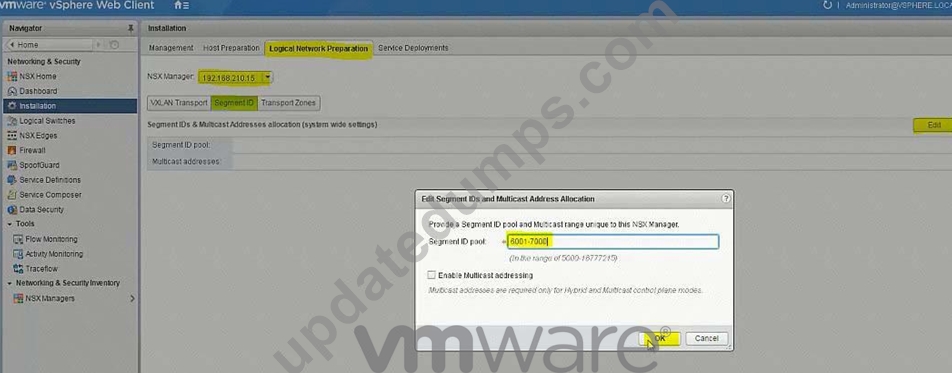
* Segment ID Pool: 6001-7000 - HOL 1903-01 Page 26-36
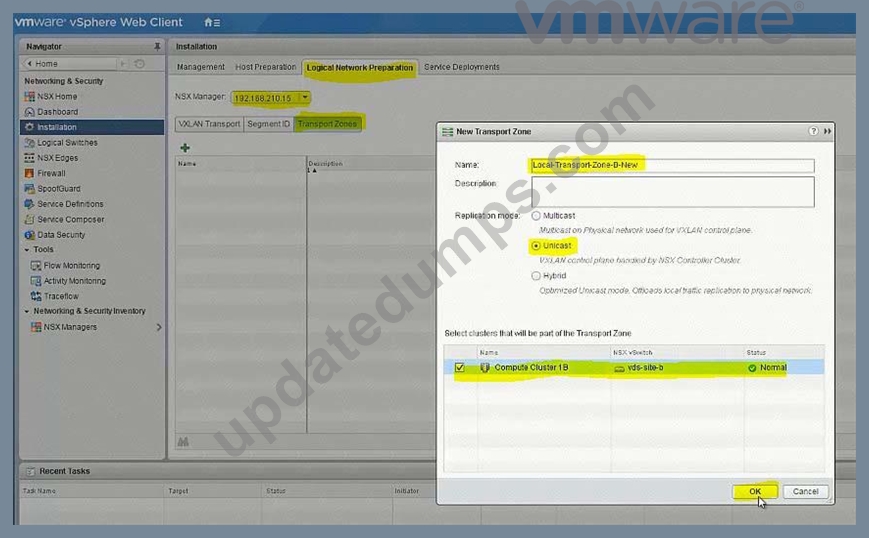
* VXLAN Span: Compute Cluster 1B - HOL 1903-01 Page 26-36
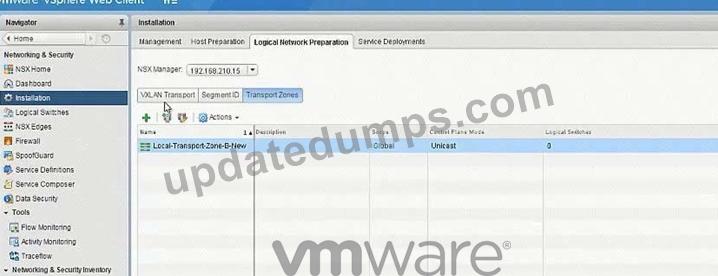
* Transport Zone: Local-Transport-Zone-B-New - HOL 1903-01 Page 26-36
* Host must be prepared for NSX
* Use provided information to complete the initial VXLAN configuration.
* The underlying physical network does not support multicast.
* Ensure that requirements are met:
* Create the IP Pool as given:
* Do the Host preparation.
* Create a Local Transport Zone as given. - HOL 1903-01 Page 26-36
* Create the segment ID as given. - HOL 1903-01 Page 26-36
HOL LAB for Practice:
http://docs.hol.vmware.com/hol-isim/HOL-2019/hol-1903-01-nsxinstall-p2.htm and LAB - HOL 1903-01 Page 26-36 See the explanation part for complete solution.
Answer:
Explanation:
SOLUTION:
HOL 1903-01 Page 26-36
Login to vCenter b Web Client and from Networking and Security -> Installation -> select to SiteB NSX Manager -> Host Preparation and prepare the hosts as below: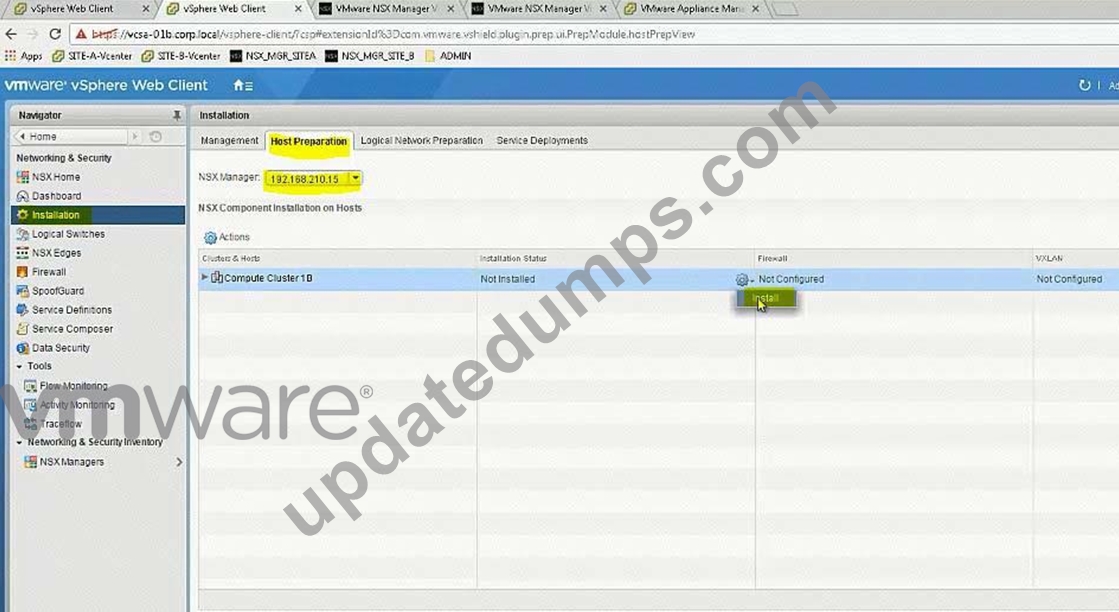
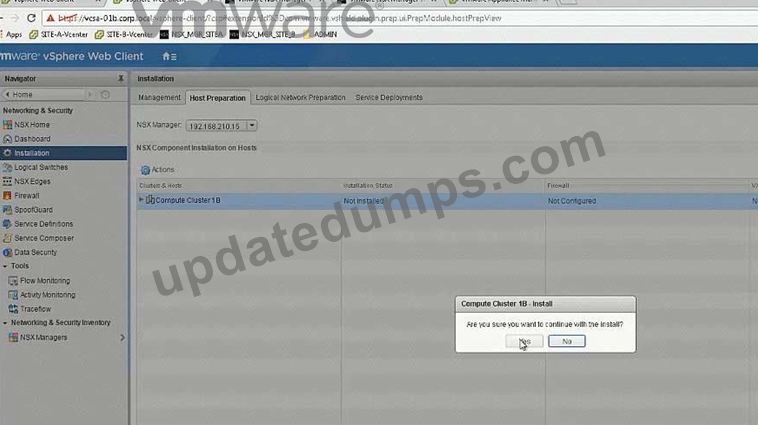
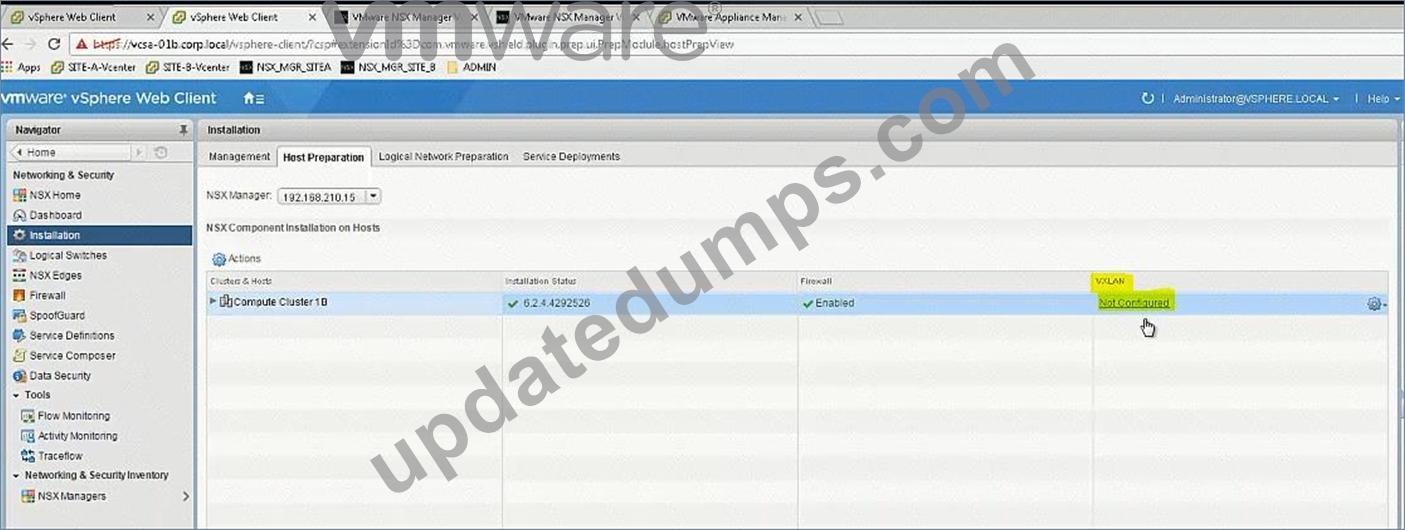
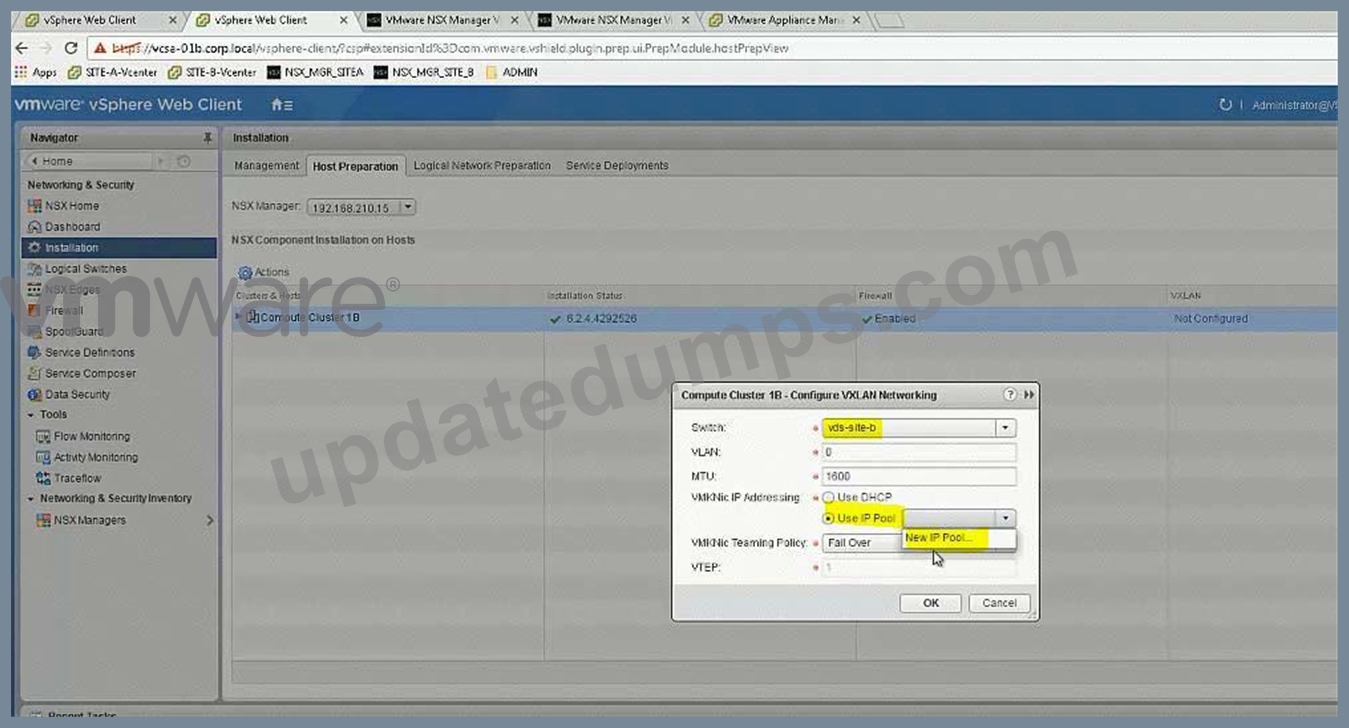
Add Static Pool as per give details in the QUESTION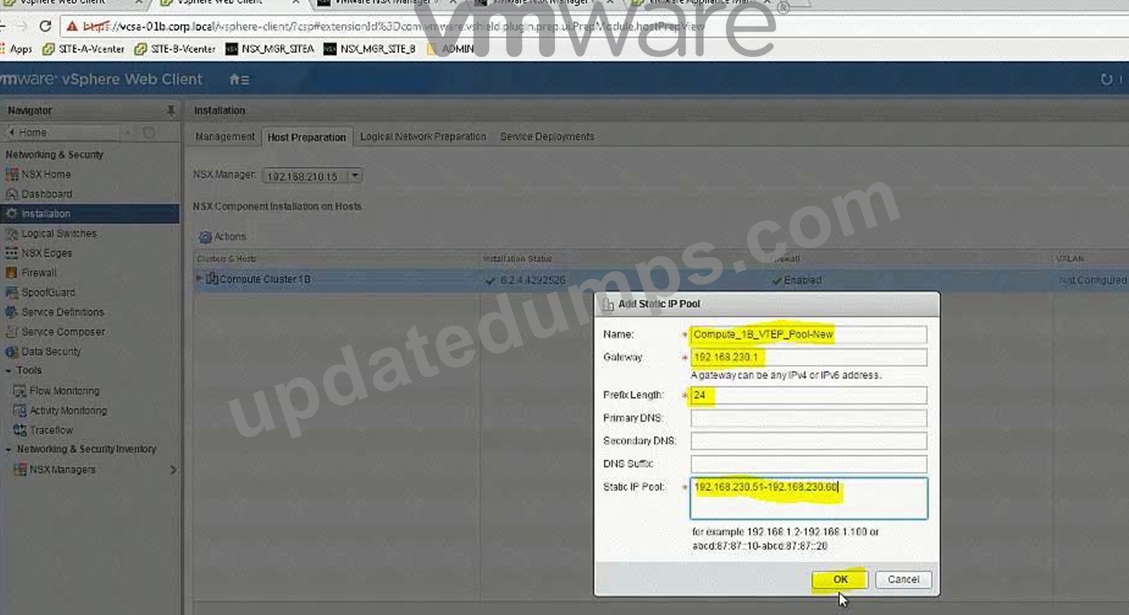
NEW QUESTION 21
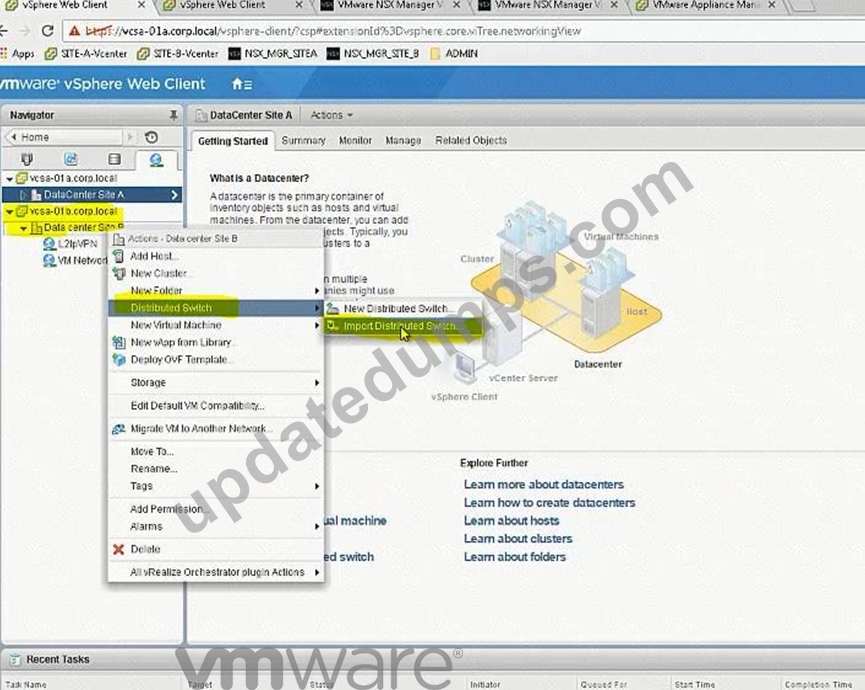
Management has approved an expansion of the virtual infrastructure. You have been tasked to prepare Cross vCenter configuration with the second vCenter Server. Another administrator has provided a pre-configured vDS configuration file located on the Control Center Server. All identifiers must be maintained.
Requirements:
vCenterB server: vcsa-01b.corp.local
Credentials: [email protected] / VMware1!
vCenterB VAMI Credentials: root / VMware1!
Cluster: Computer Cluster 1B
ESXI Hosts: esx-01b.corp.local, esx-02.corp.local
Platform service controller: psc-01a.corp.local(192.168.110.9)
NSX Manager: nsmgr-01b.corp.local (192.168.210.15)
Credentials: admin / VMware1!
Time Zone: US/Pacific
*Configure nsmgr-01b.corp.local for vCenterB and psc-01a.corp.local
*Ensure nsxmgr-01b.corp.local uses the same NTP server as psc-01a.corp.local with a US/Pacific TimeZone.
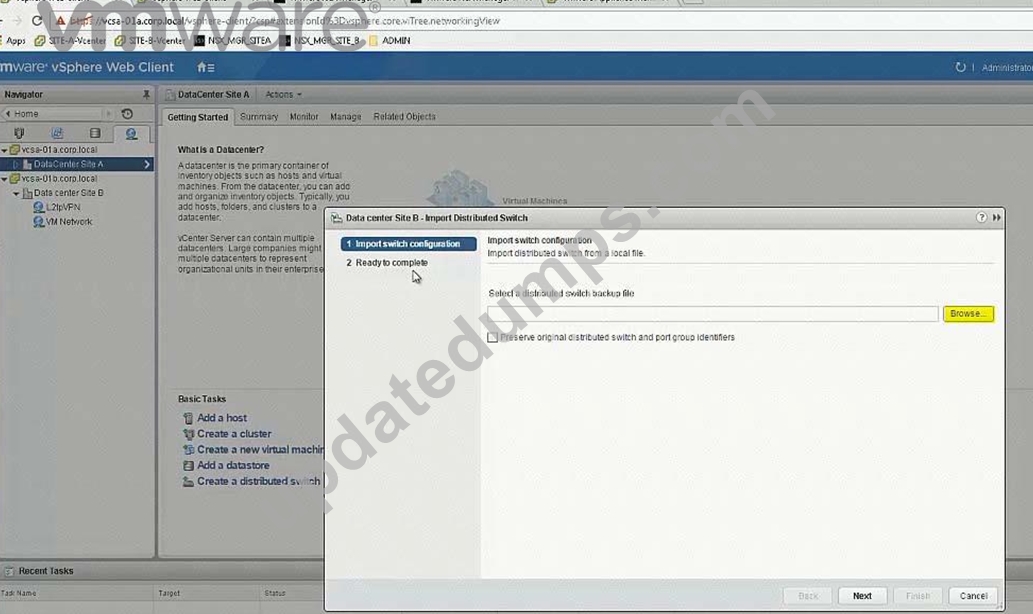
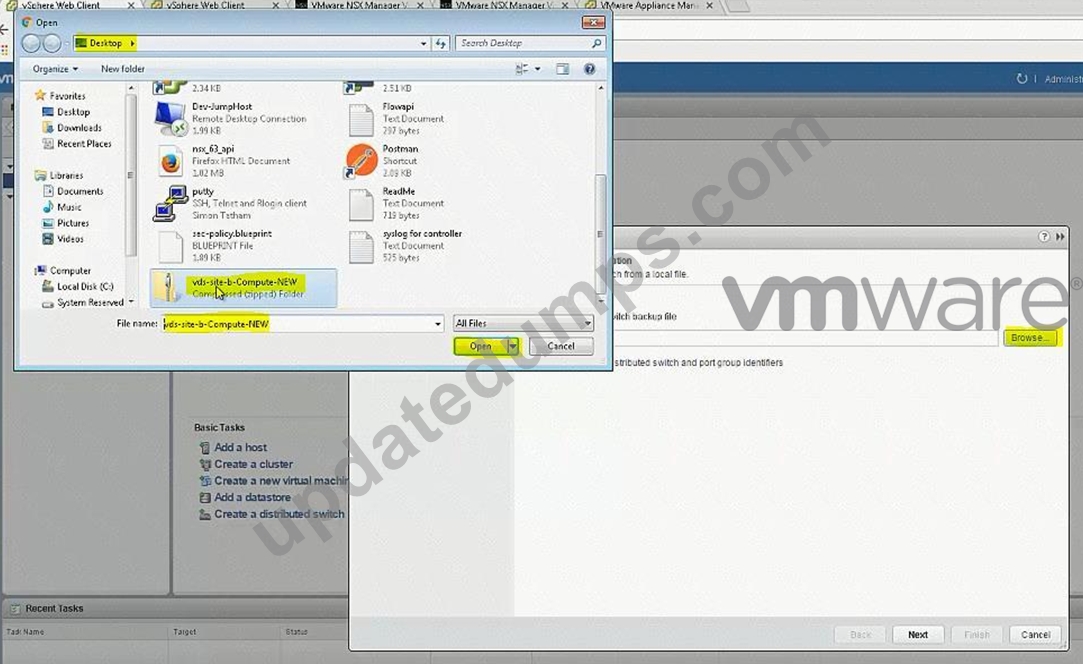
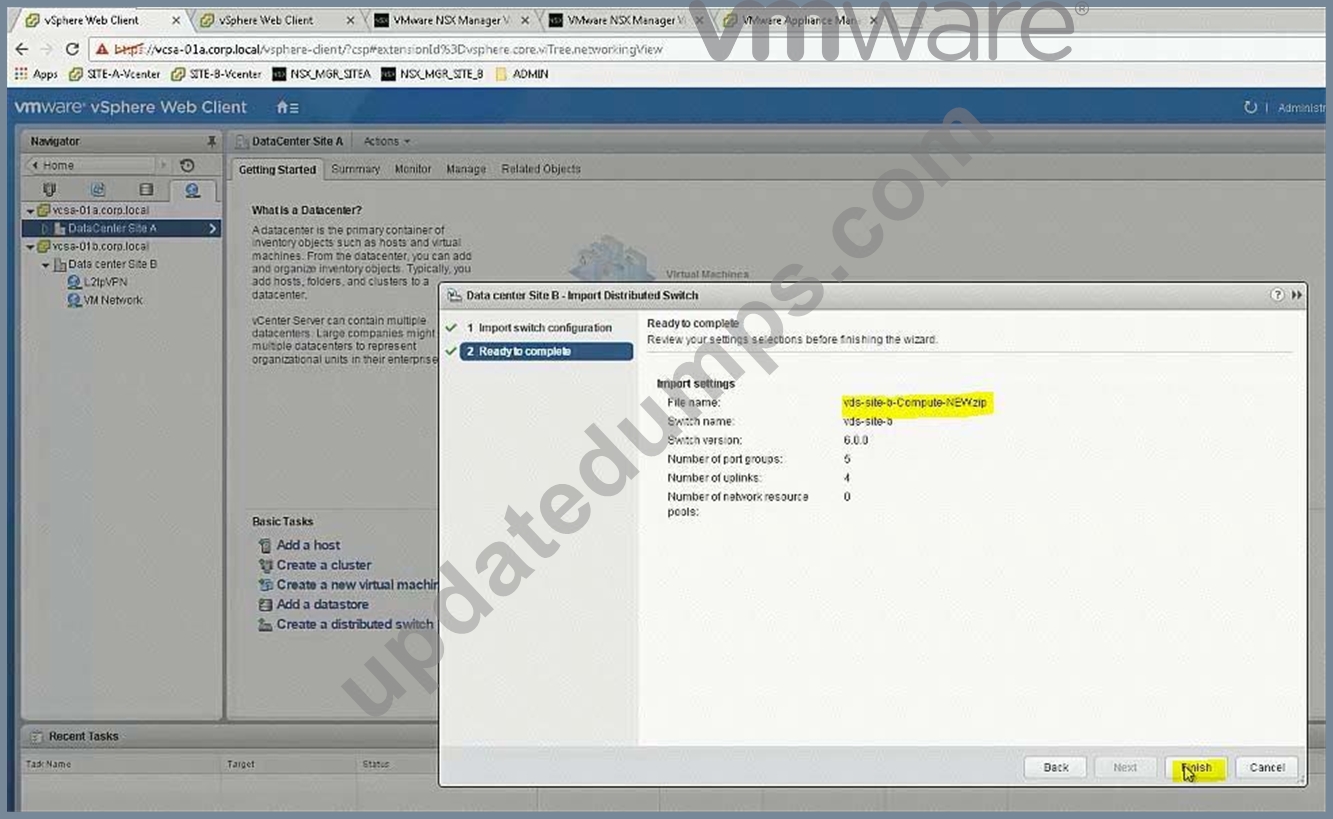
*Import the new vDS configuration vds-site-b-Compute-New.zip
All identifiers must be maintained.
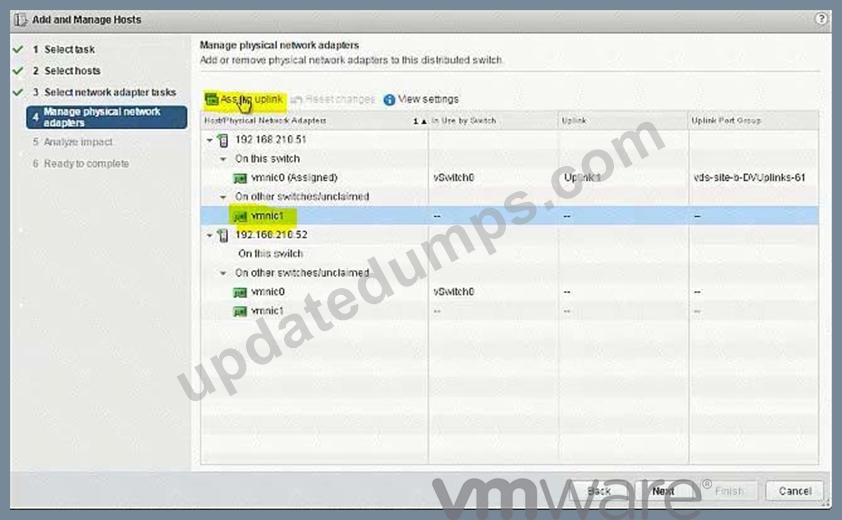
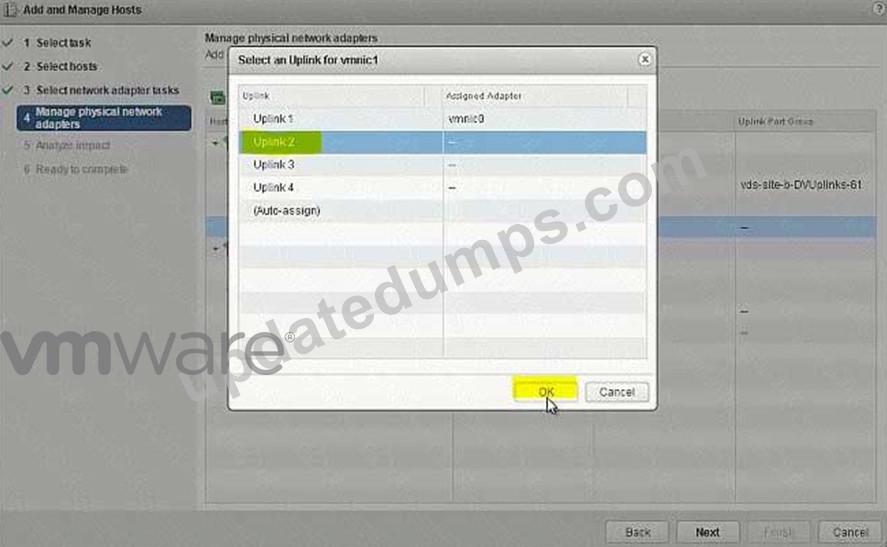
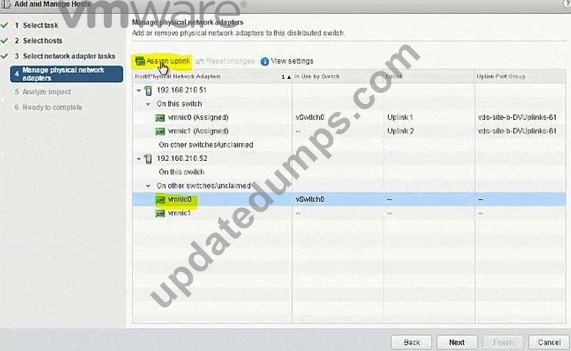
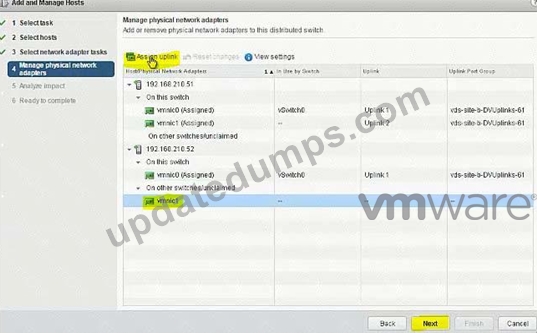
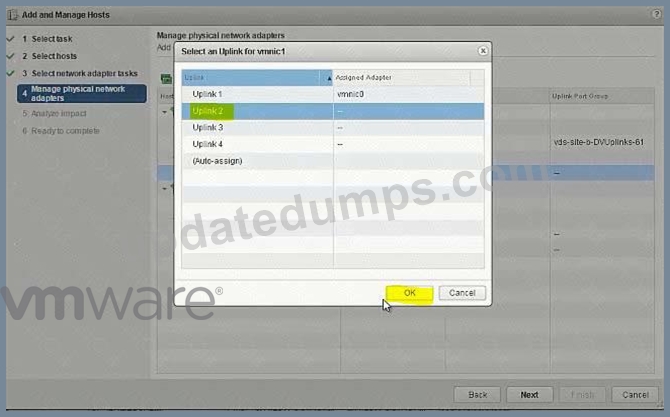
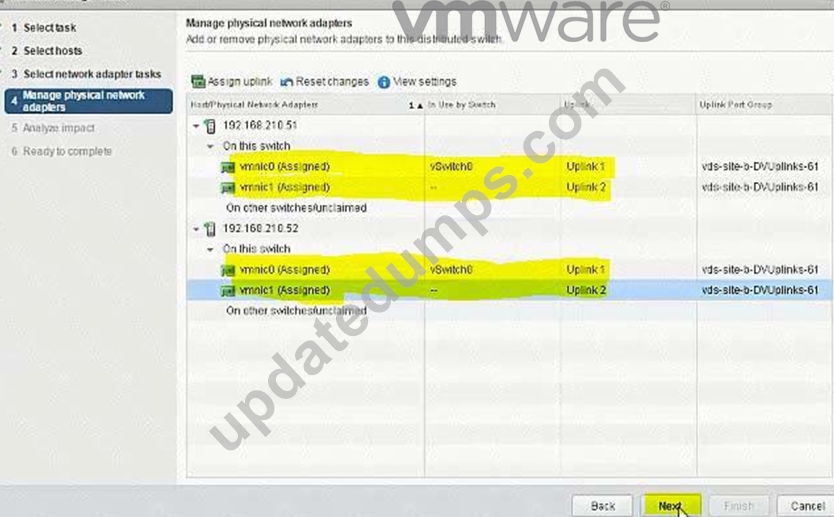
*Assign the remaining two used vmnics for the ESXi hosts to the newly imported vDS.
NOTE:
Do not migrate VMkernels from the standard switches on the hosts.
HOL LAB for Practice:
a http://docs.hol.vmware.com/hol-isim/HOL-2019/hol-1903-01-nsxinstall-p1.htm HOL-1903-01 Page 16 or you can directly Open a NSX manager in the lab and edit the existing settings bOpen PSC and NSX manager in HOL-1903-01 and look for NTP Server loand cation cExport existing vDS config and Import back the config for practice in HOL-1903-01 dNo Lab Module available See the explanation part for complete solution.
Answer:
Explanation:
SOLUTION:
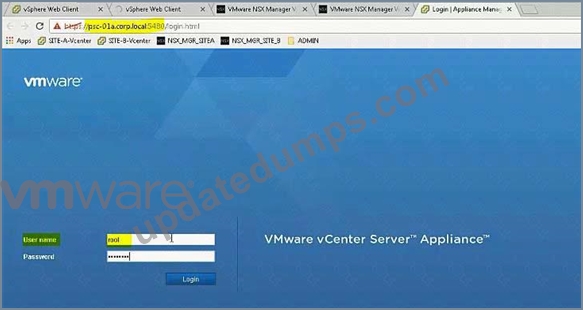
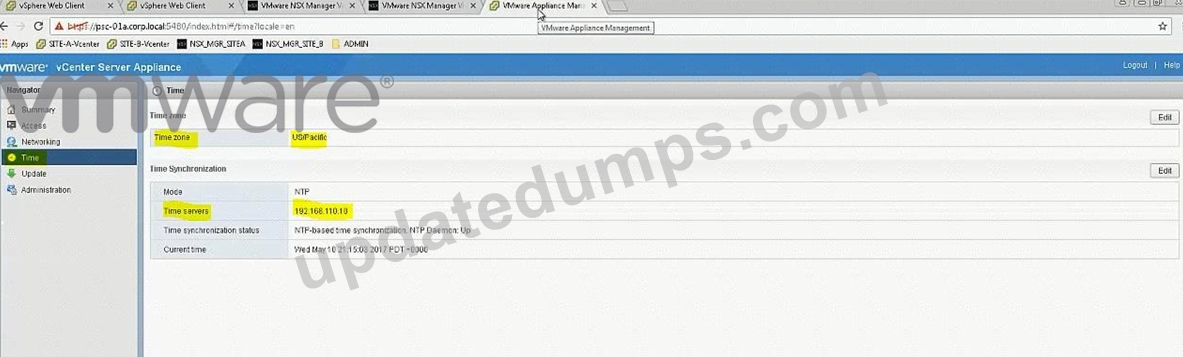
Step 1: Login to PSC using VAMI credentials and note down the time zone and server details and use the same in SiteB NSX Manager time settings.
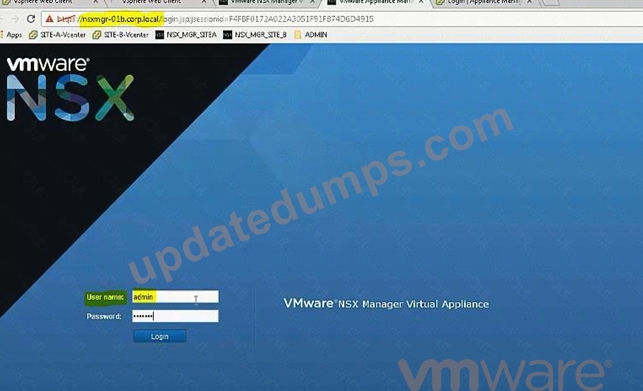
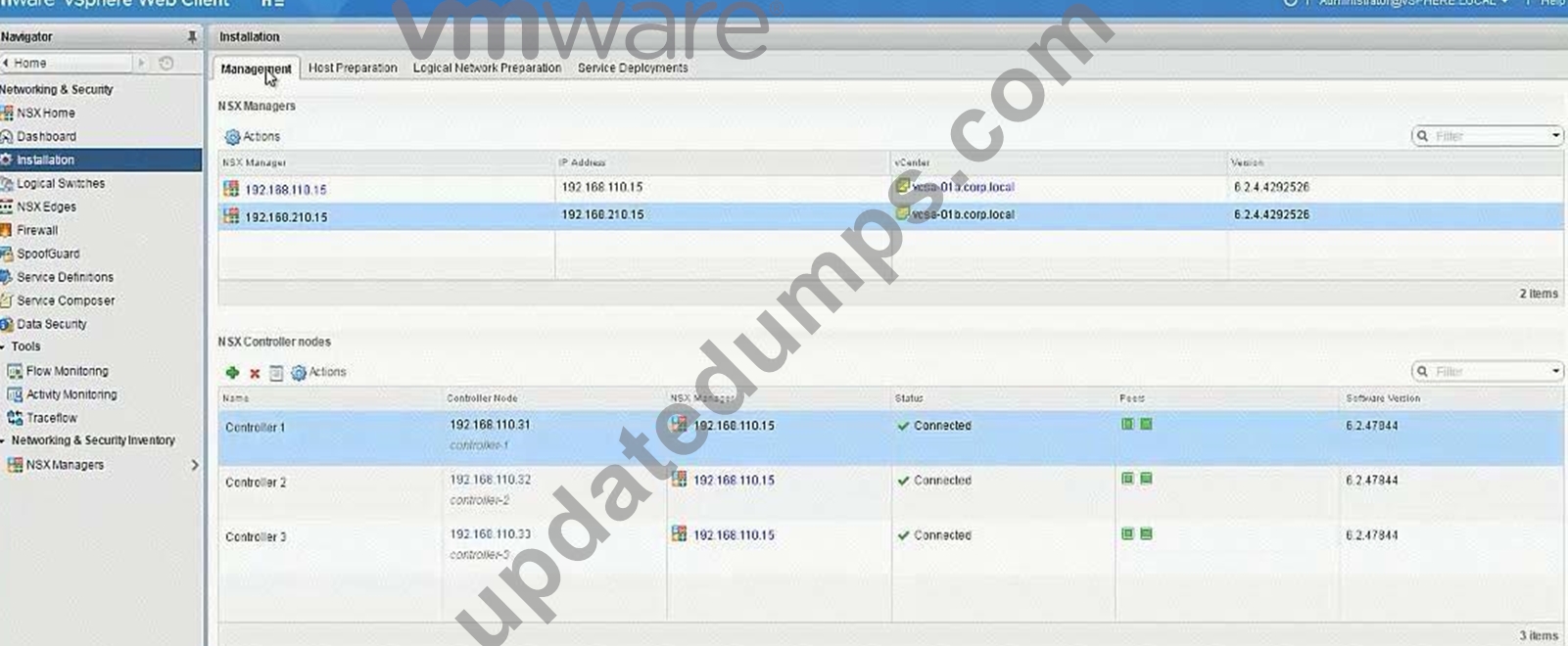
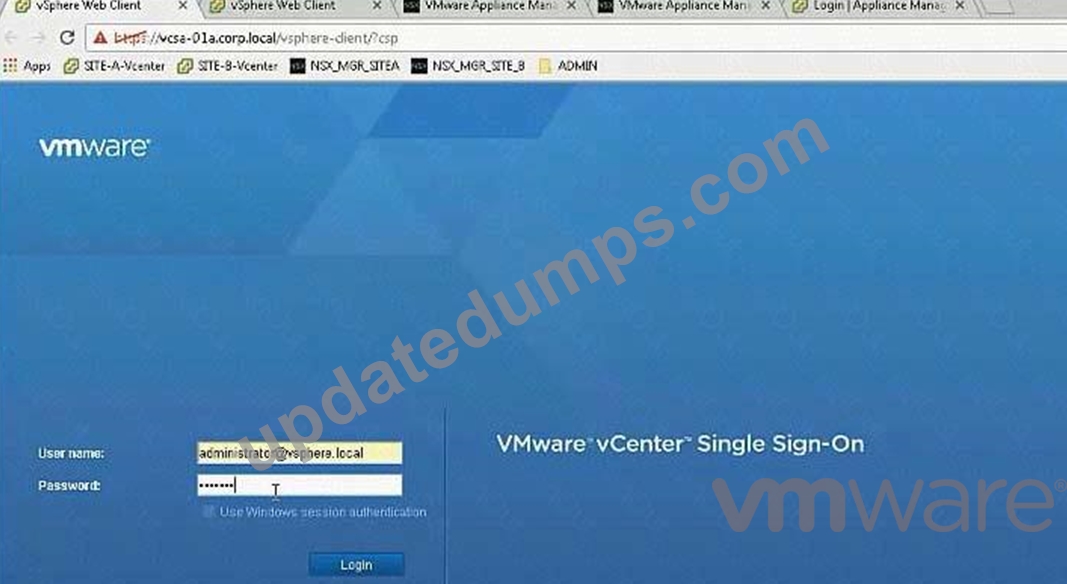
Step 2: Update the time settings, complete lookup service configuration, associate SiteB NSX manager to SiteB vCenter. Check the status from SiteA vCenter Webclient -> Networking & Security -> Installation -> Management.
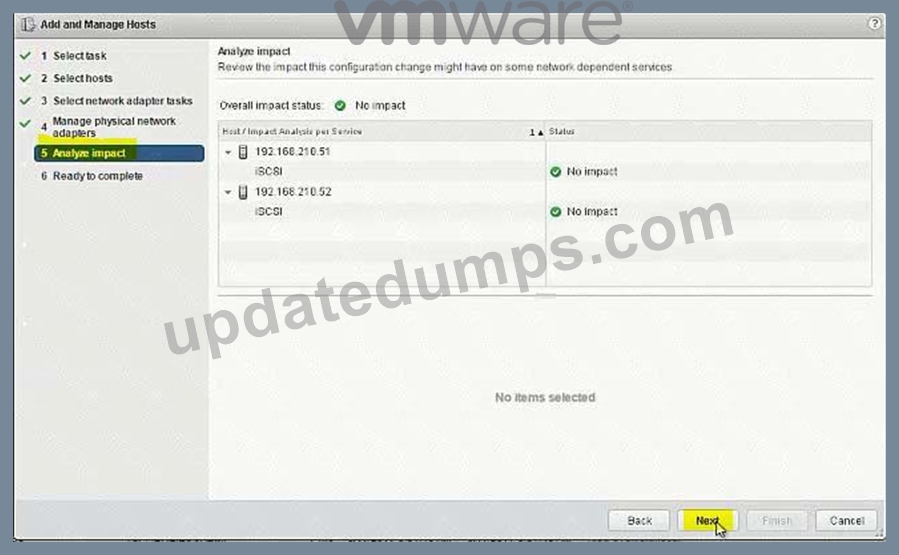
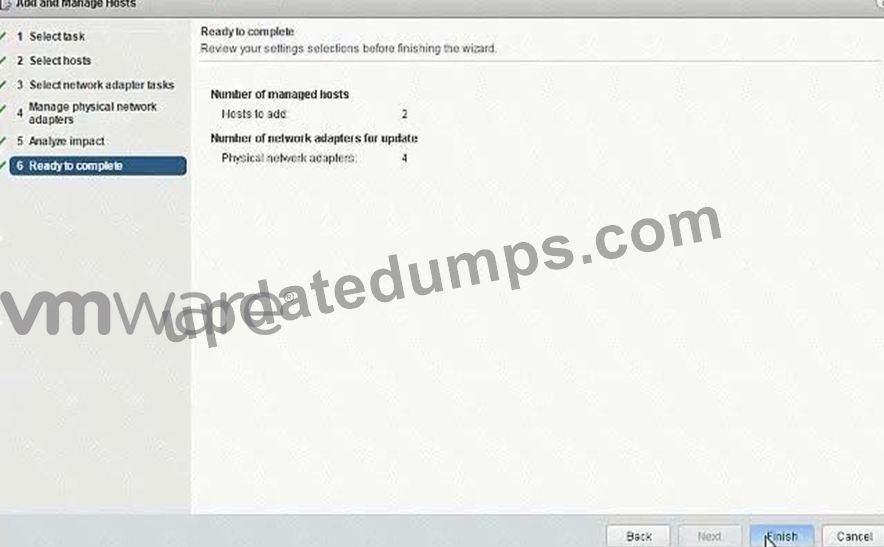
Step 3: Import the Distributed switch to Cluster B, add the hosts & assign the interfaces.
Login to https://psc-01a.corp.local:5480/ to check the NTP server details and note it down. Use the VAMI credentials given to login. Need to click on Edit to see the server details in here as it is not showing up in the main page (In exam, it is showing in the main page itself).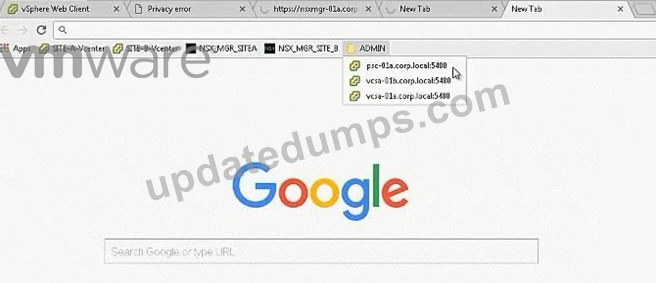
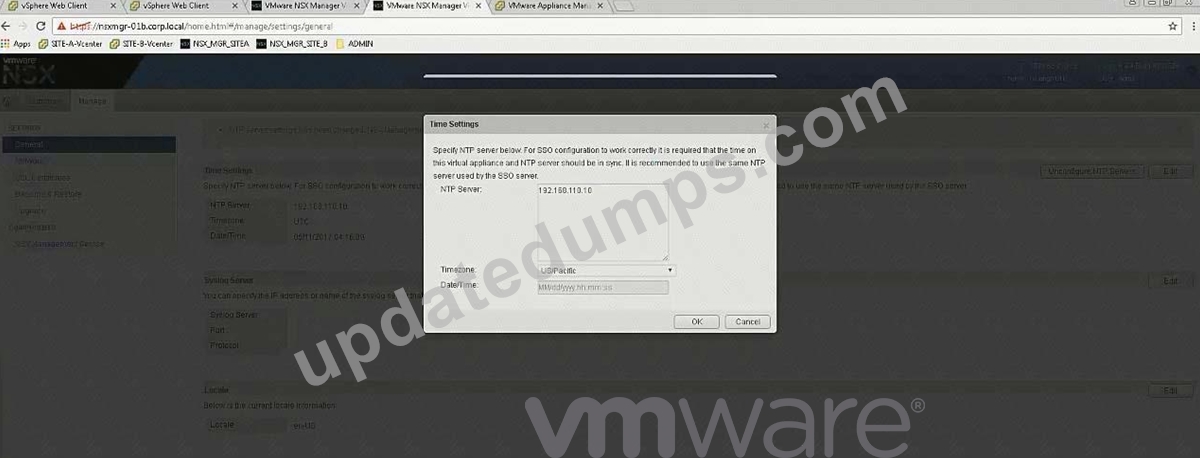
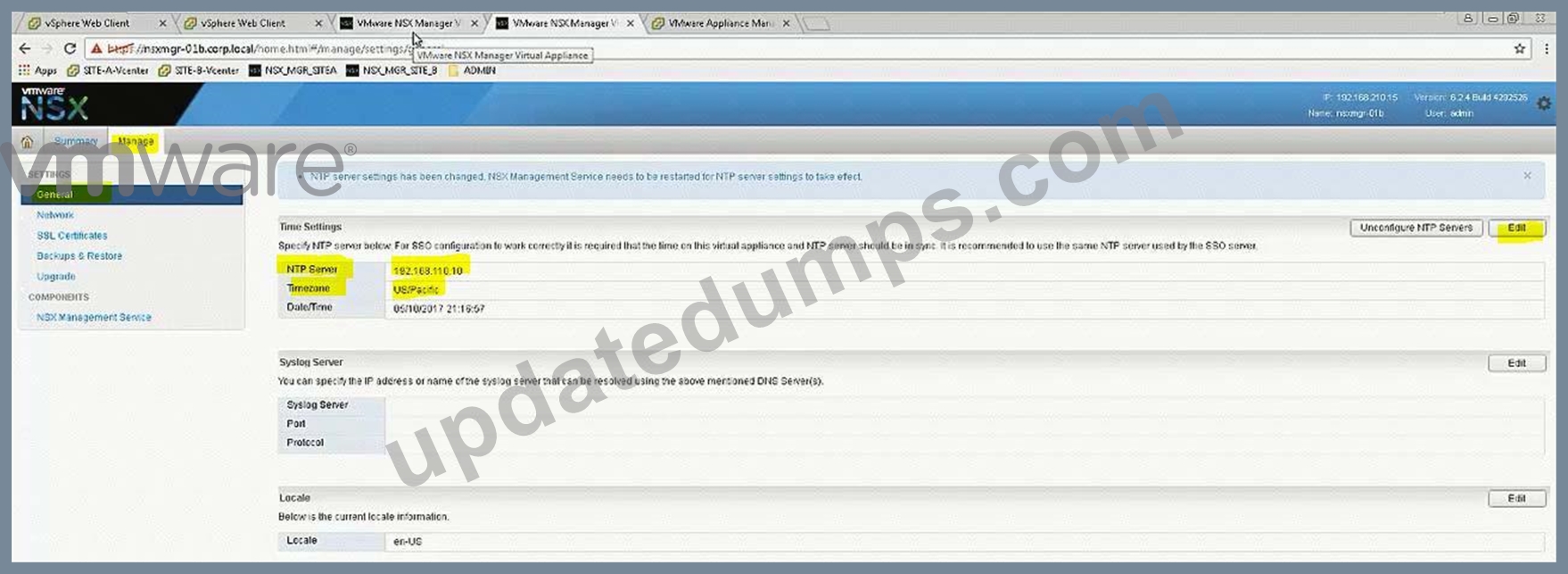
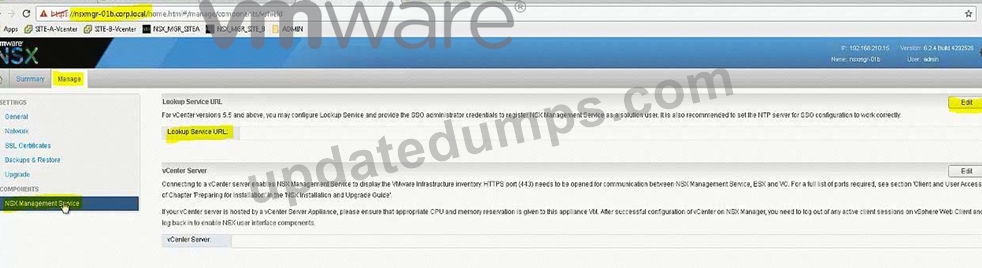
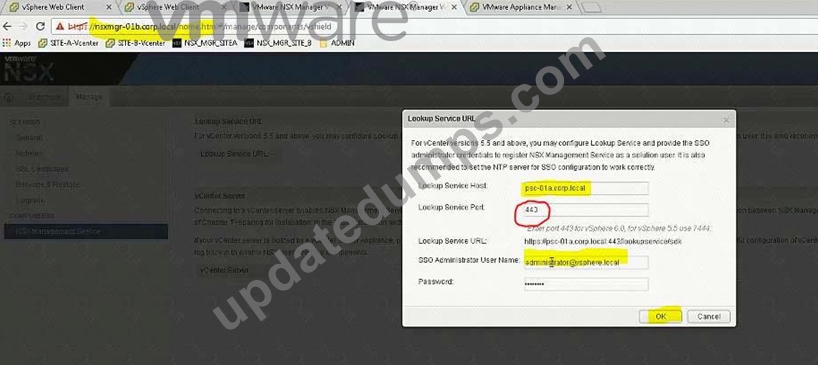
Important NOTE:
In exam change Lookup Service Port according to NSX Manager of Site A which is working one.
It's 7444 in exam.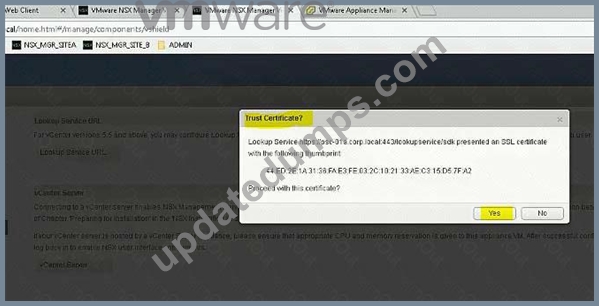
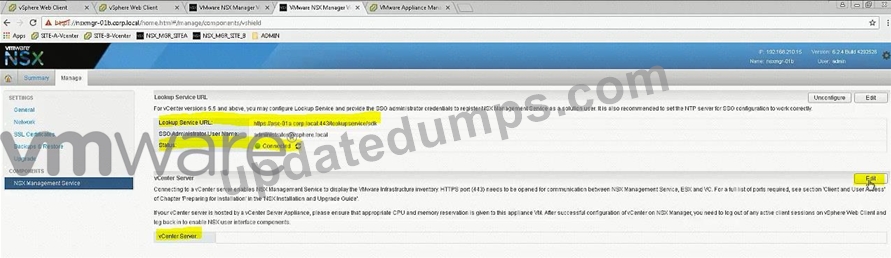
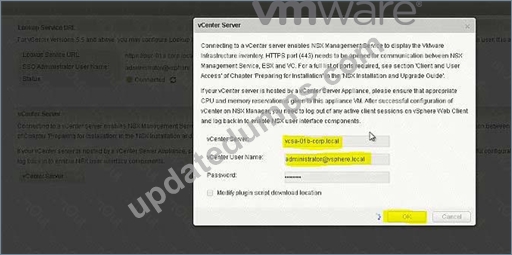
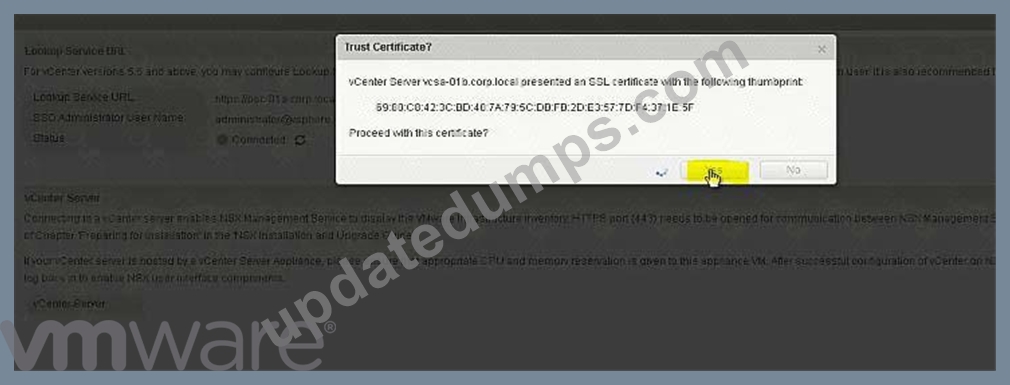
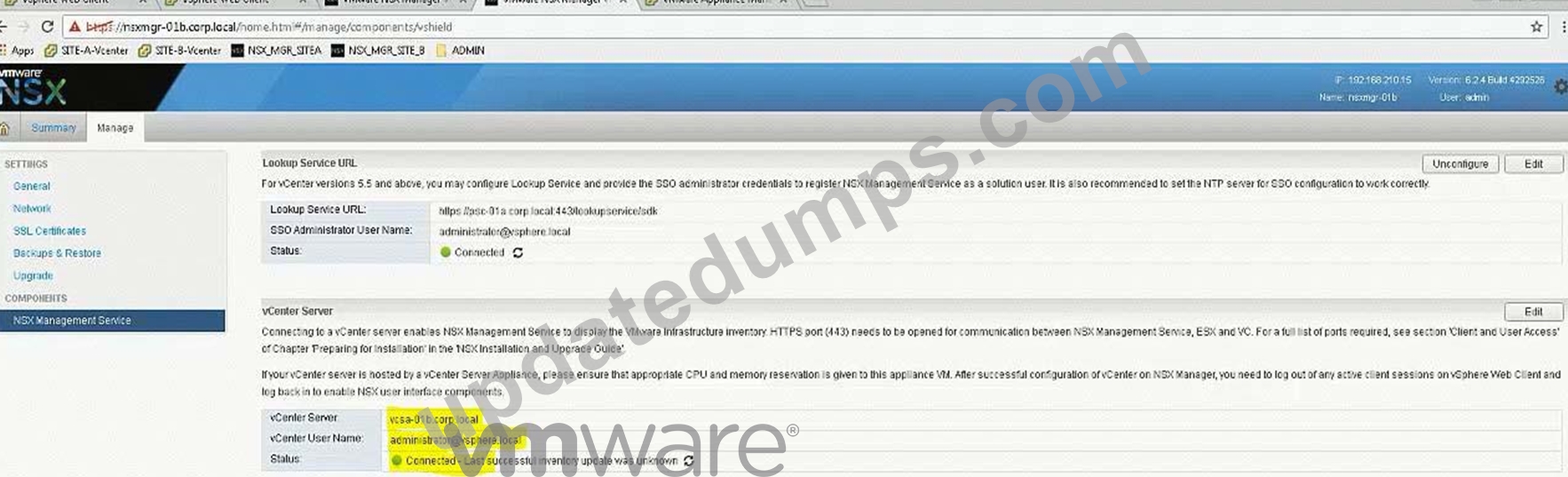
Click refresh if in case it shows as disconnected.
Login to SiteA vCenter using Web Client and confirm the status of both the NSX Managers: Installation -> Management.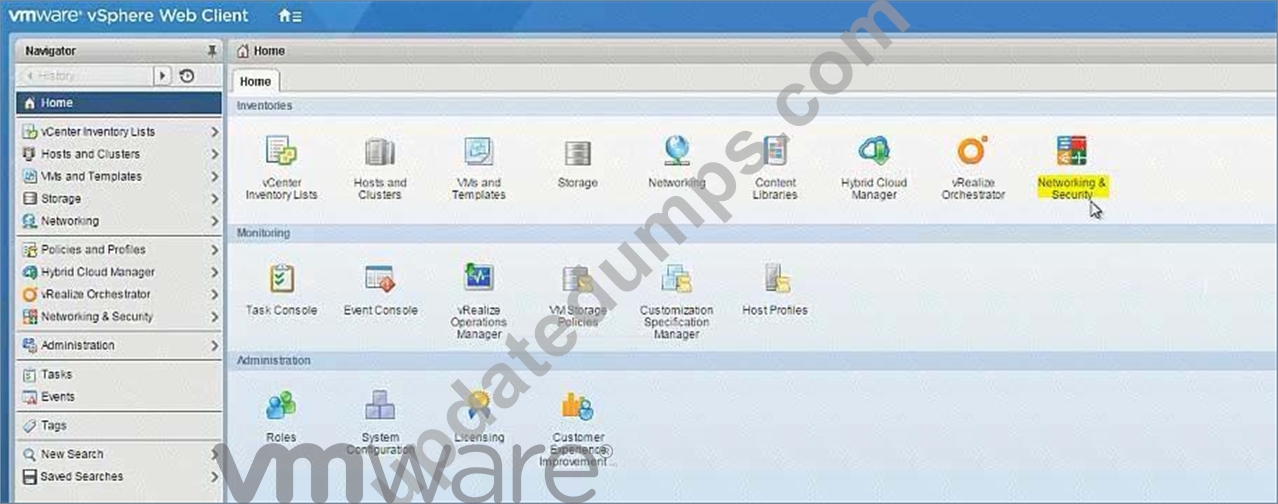
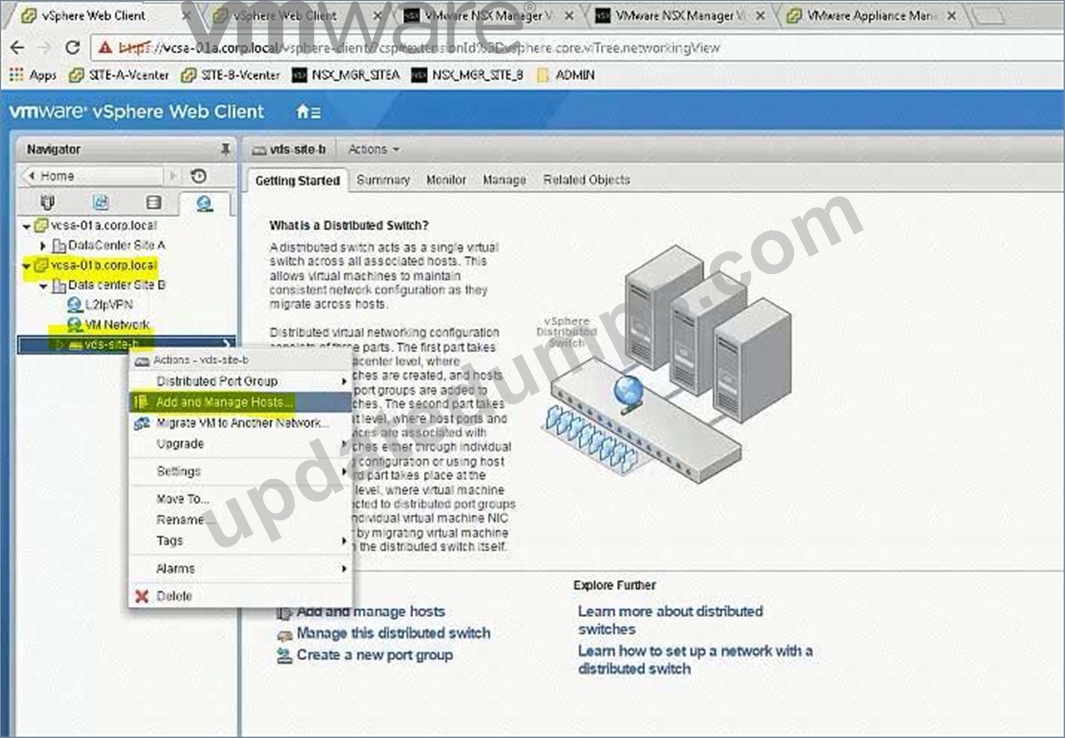
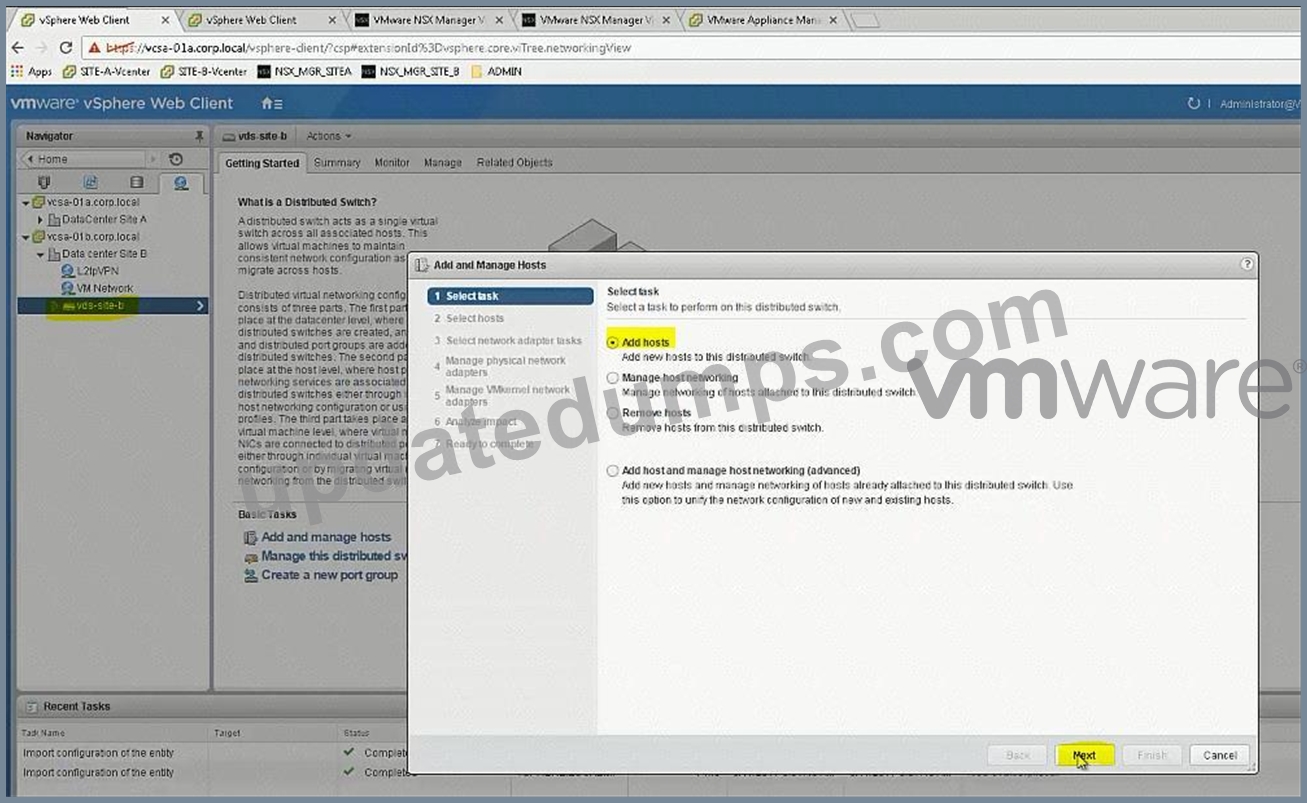
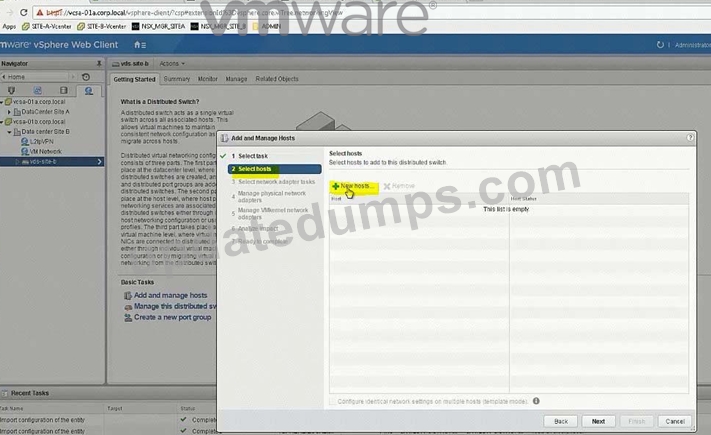
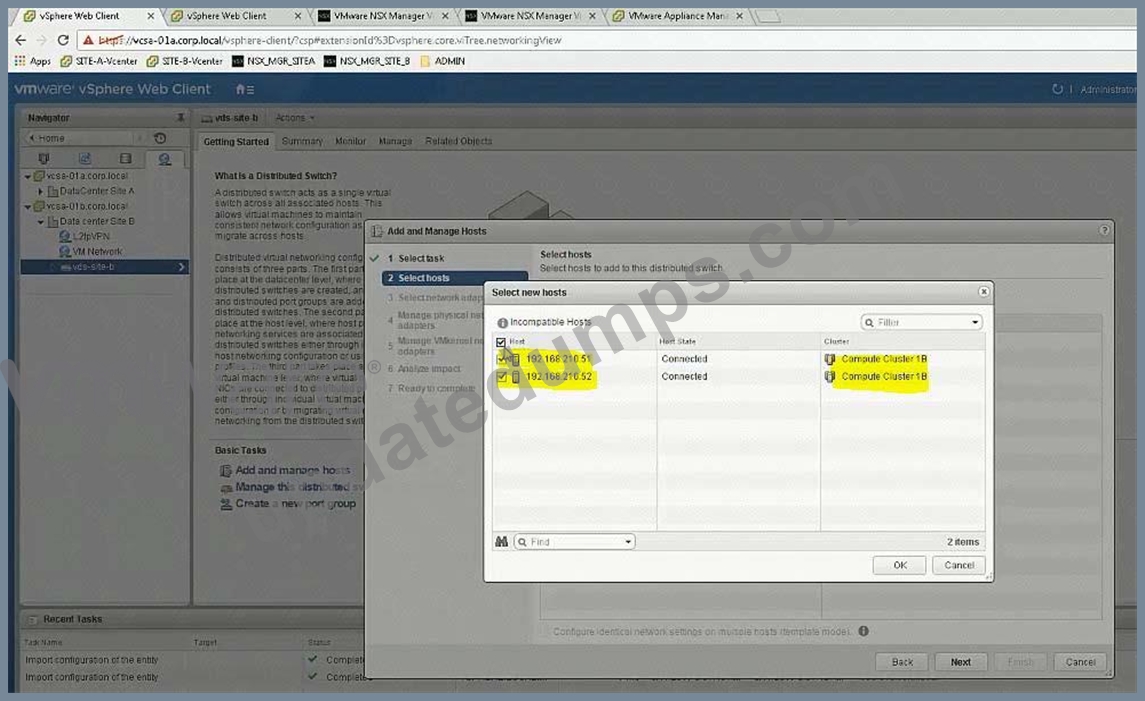
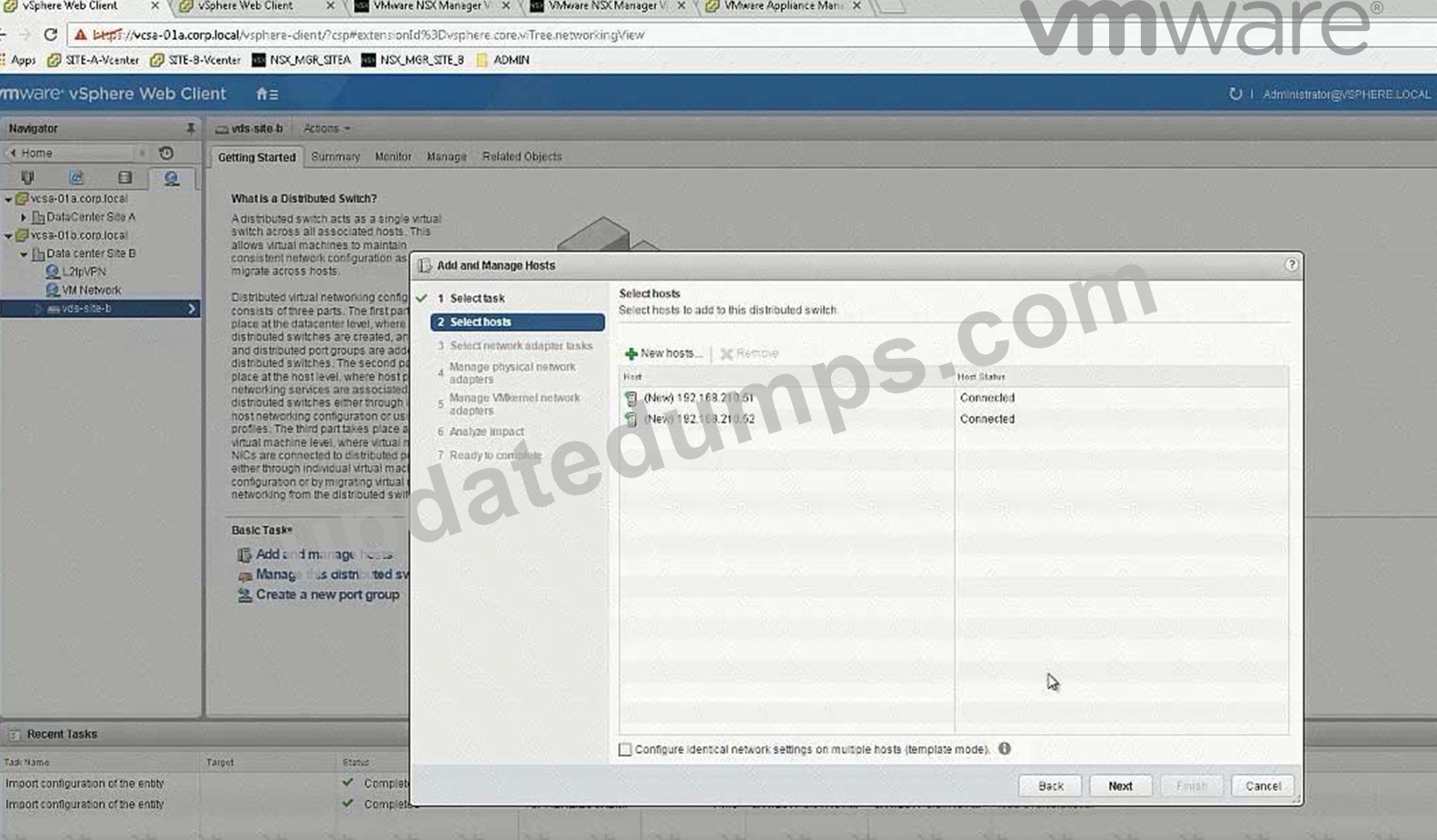
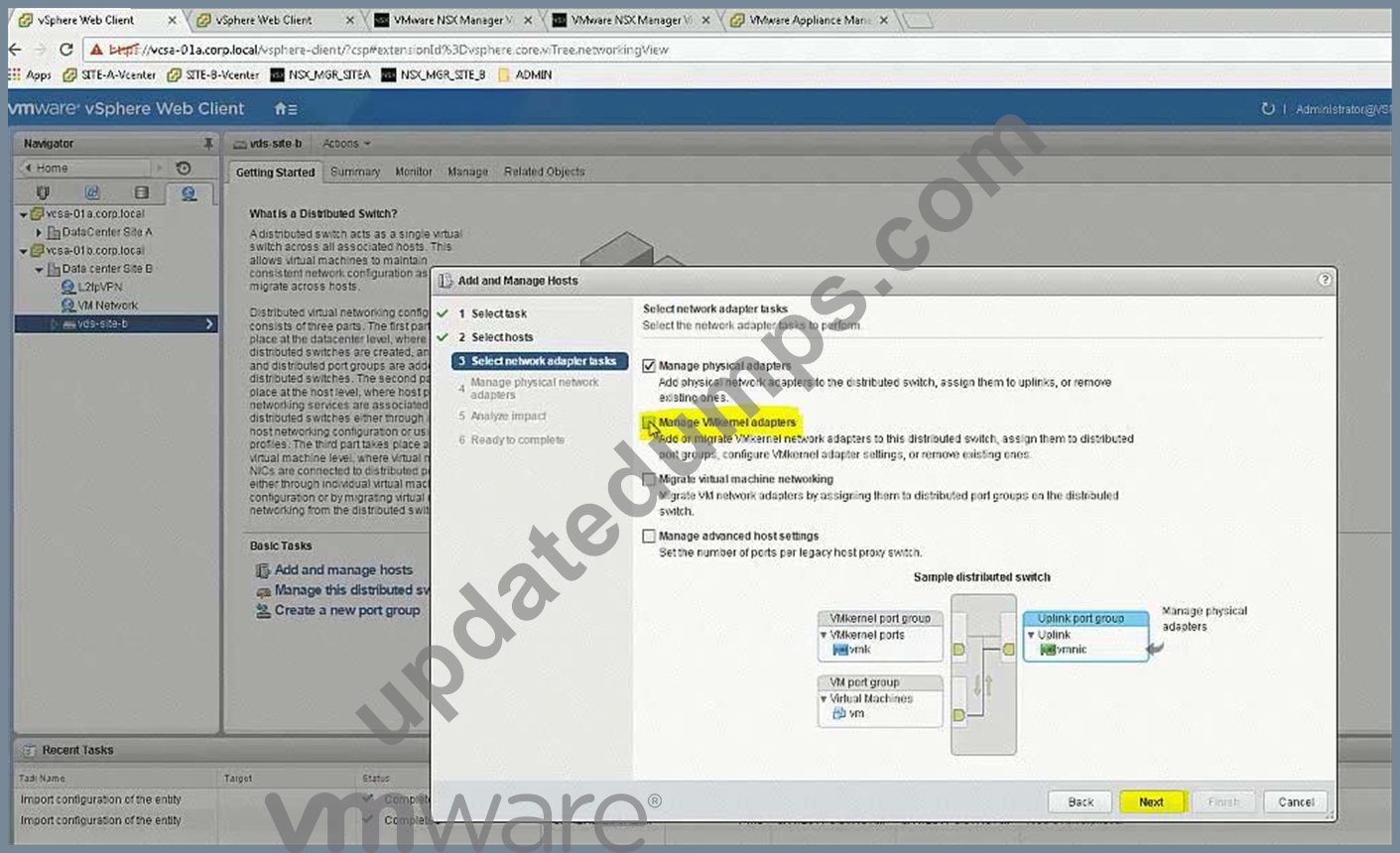
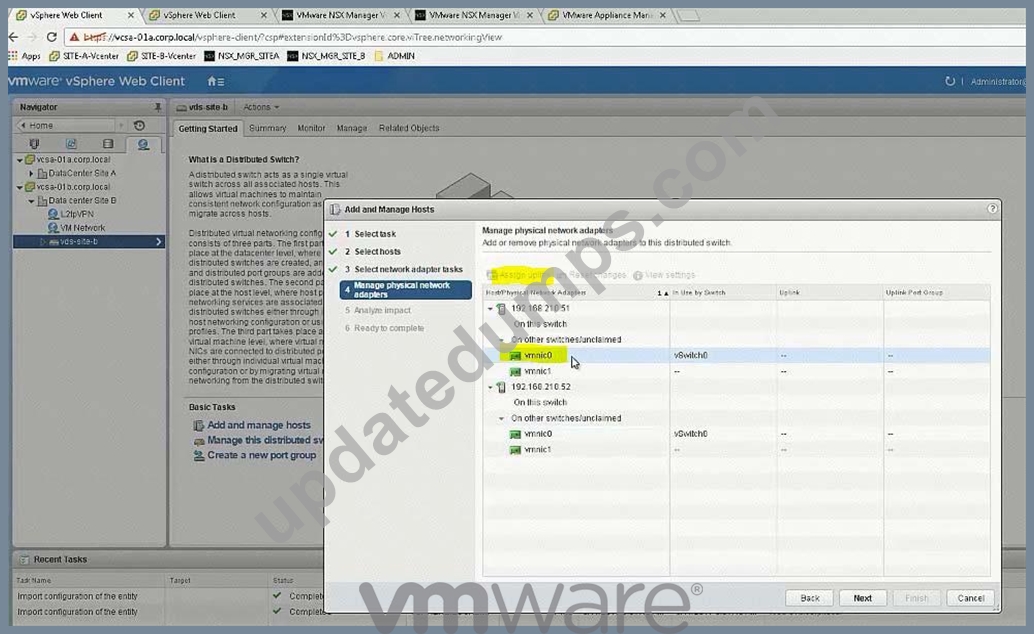
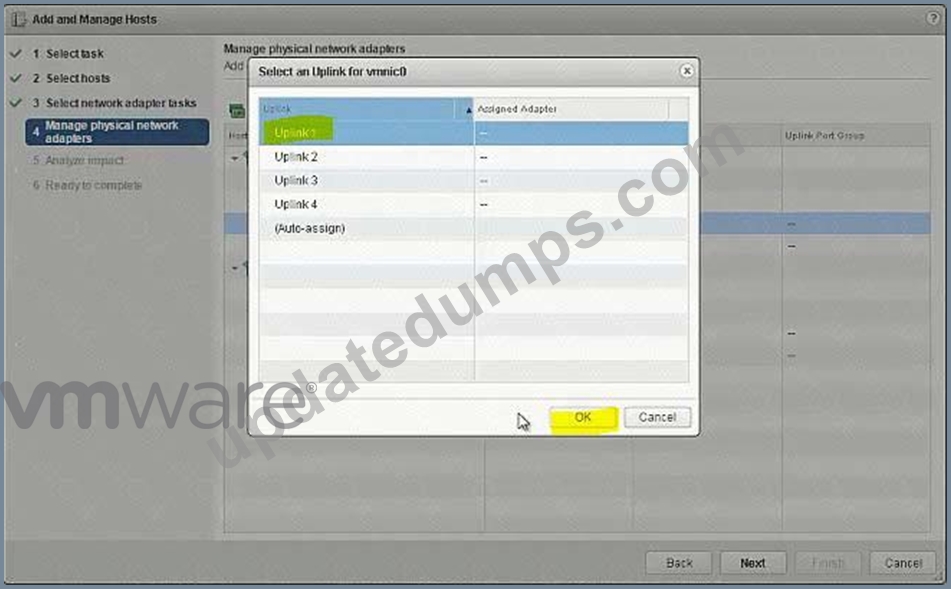
NEW QUESTION 22
......
Pass Your VMware Exam with 3V0-643 Exam Dumps: https://prepaway.updatedumps.com/VMware/3V0-643-updated-exam-dumps.html